Why break a system that is working?
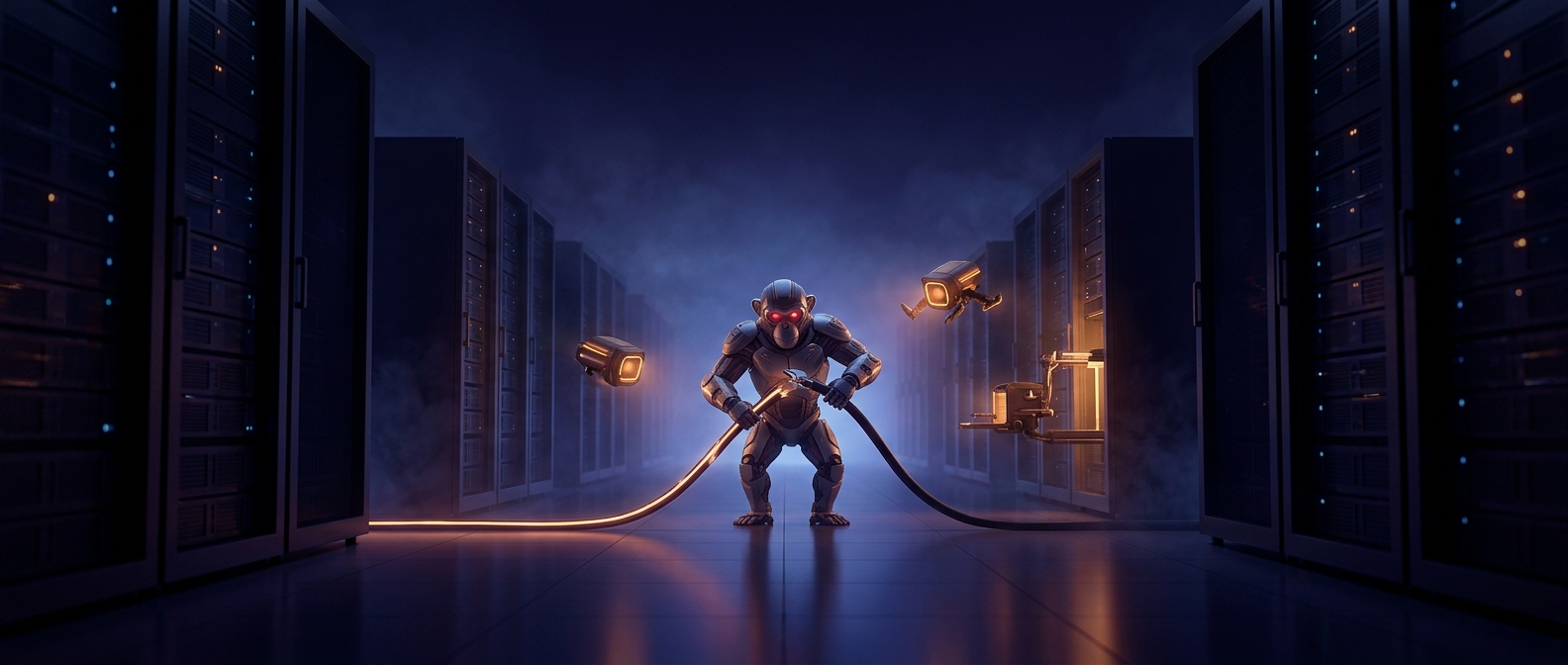
A service can look healthy until one of its supporting pieces fails: a server stops responding, a network connection drops, or a software component becomes unavailable. If the remaining systems cannot cope, a small fault can spread into a wider outage. Netflix’s Chaos Monkey is designed to expose those weaknesses before an ordinary failure does.
The tool deliberately causes failures in production—the live systems serving customers—so engineers can see how their infrastructure behaves under real conditions. That makes the exercise more revealing than a test confined to a simplified environment, where dependencies and traffic may differ from the real service.
Turning failure into a test
When a component disappears, other parts of the system must respond: detect the problem, shift work elsewhere, and bring replacement capacity online where needed. Chaos Monkey tests whether those responses actually work, rather than merely existing on paper. It can also reveal hidden dependencies: a component may seem replaceable until another service quietly relies on it.
The point is not to cause disruption for its own sake. A useful test has a limited scope and engineers watch what happens, so they can fix weak recovery paths before a failure occurs unexpectedly. The key test is not whether a server can be lost, but whether the service can keep functioning when it is.
What the practice changes
This approach treats reliability as something to demonstrate repeatedly, not assume from a system’s design. It encourages teams to build for components that may fail and to make recovery automatic enough to work under pressure. The practical payoff is that a failed machine can become an ordinary event for the infrastructure—not necessarily a visible interruption for the person watching.