A fortress built to guard a sea route
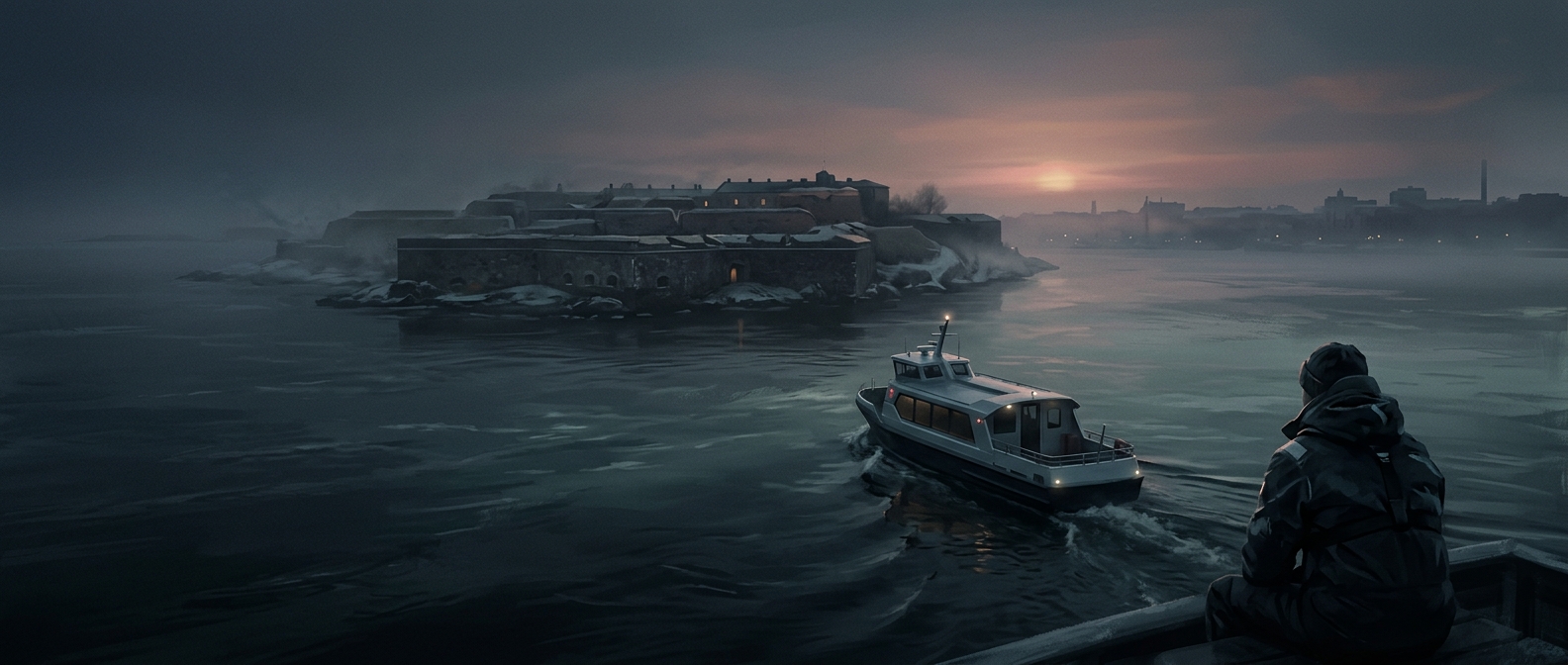
Suomenlinna spreads across islands just off Helsinki, where a chain of rocks could help protect the approaches to the Swedish realm’s eastern coast. Construction began in 1748, when Finland was part of Sweden. The fortress was meant to resist Russian expansion, but its position also made it a working harbor: ships needed places to shelter, provision, and undergo repairs.
That practical role shaped the islands. Thick defensive walls and artillery positions faced the sea, while a large dry dock—a basin that can be drained so a ship’s hull can be repaired—served the fleet. The fortification was not a single wall around an empty military site; it was a network of harbor works, barracks, storage buildings, and routes between them.
Military ground becomes a neighborhood
The islands changed hands when Russia took the fortress in 1808. Later, after Finland became independent, Suomenlinna remained a military area for decades. As military use receded, historic buildings and spaces were adapted for civilian life rather than cleared away. Today, residents live among the old defenses, and the dry docks still support ship repair.
That overlap is the unusual part of a visit: a passageway built for soldiers may lead past ordinary homes, while a harbor basin still carries out a working task. The fortress has not simply been preserved as a frozen exhibit; its older structures remain part of an inhabited place.