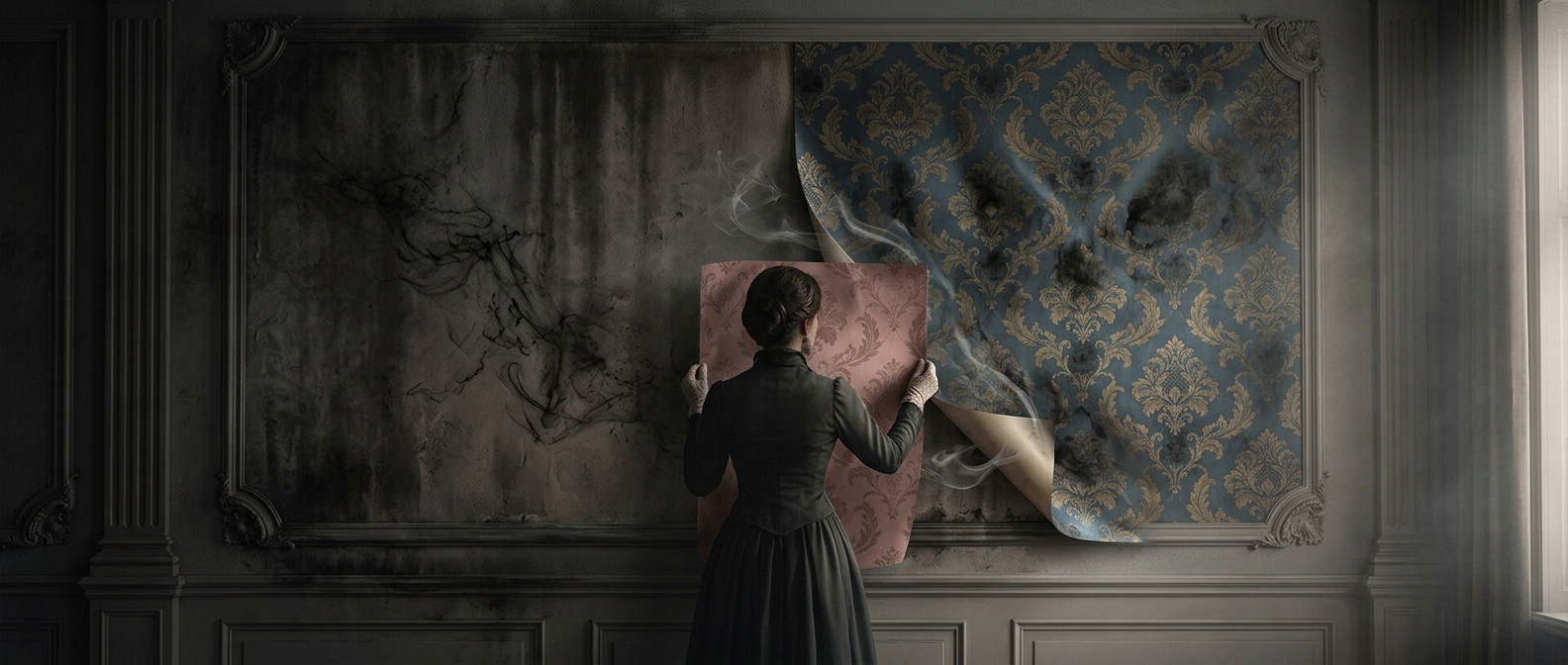
How soot turned into a decorating problem
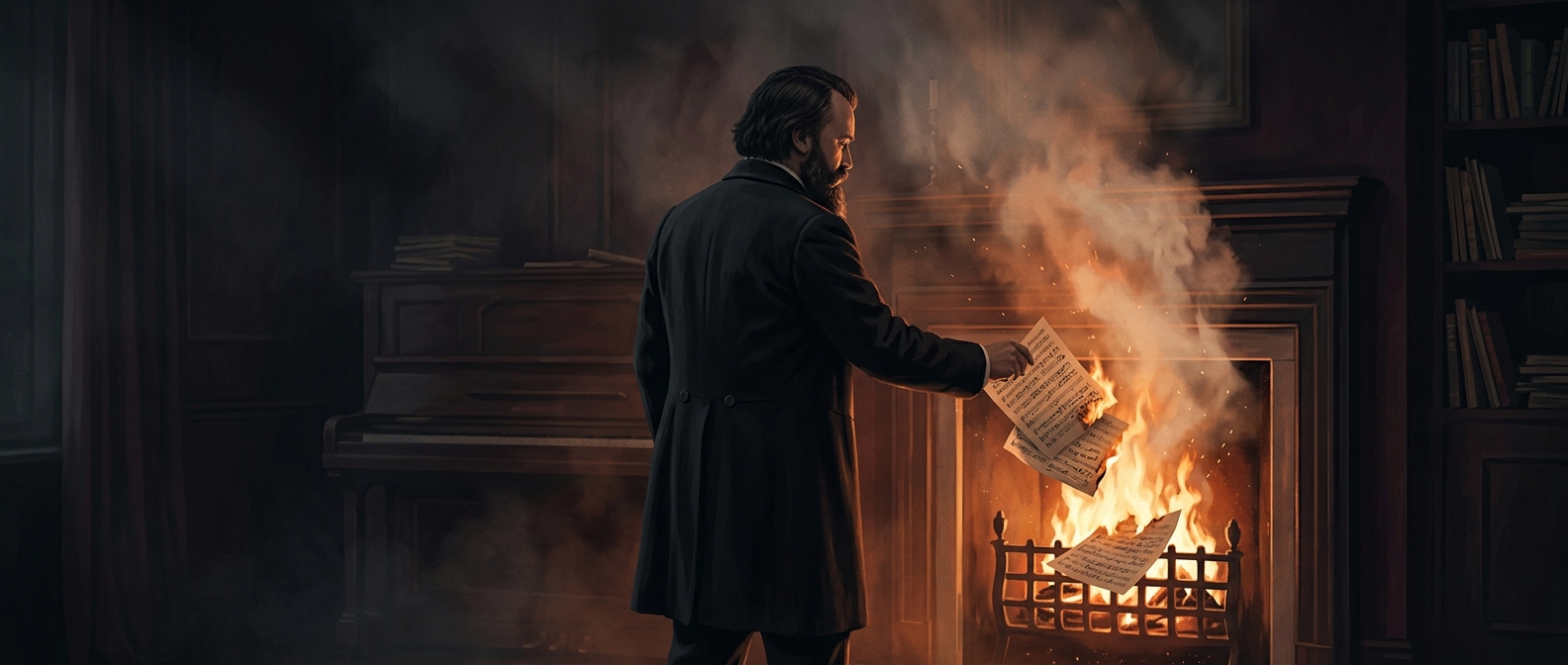
In rooms heated by open fireplaces, smoke did not always travel cleanly up the chimney. Some escaped into the room, leaving fine soot on walls and ceilings. The deposit was especially visible on pale, plain surfaces, and rubbing or washing it away could be laborious—and risk damaging the finish beneath.
Paper hid stains without cleaning them
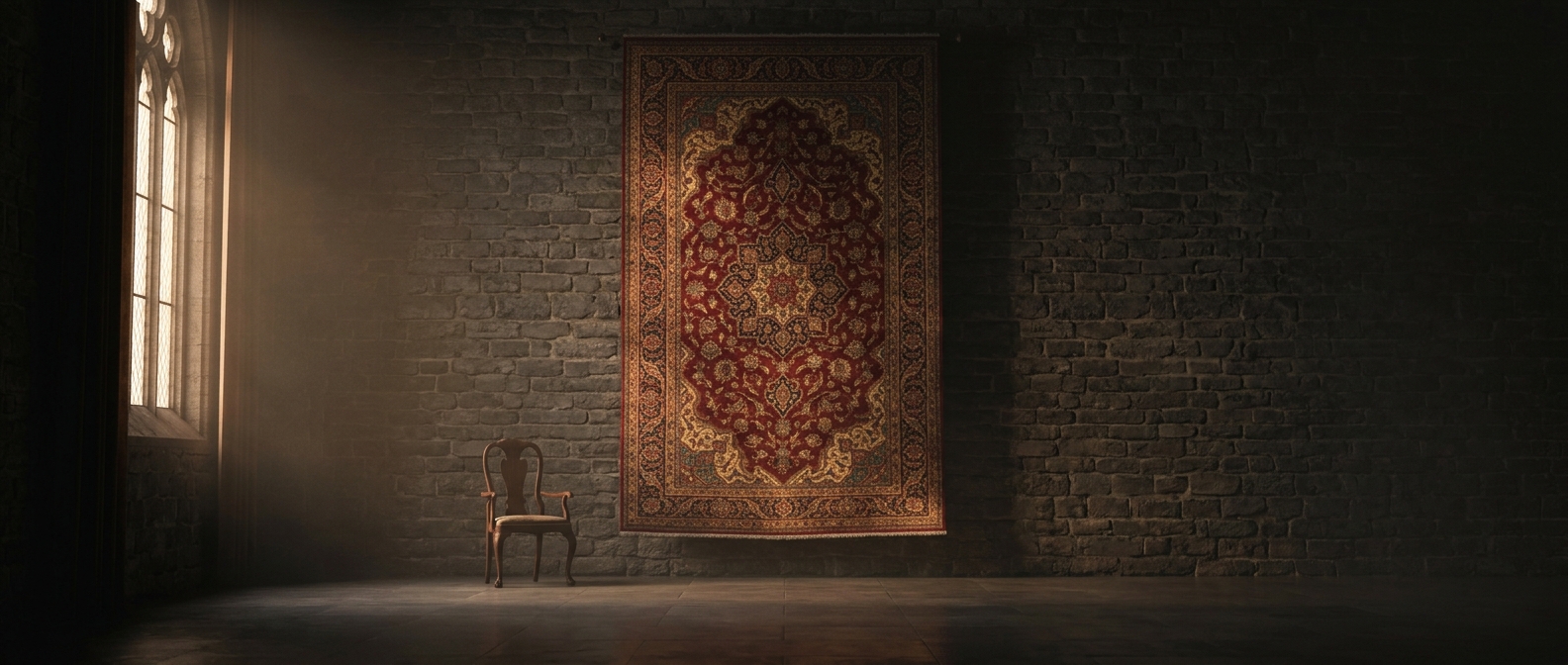
Wallpaper offered a practical layer between the marked wall and the eye. A pattern could break up the dark smudges, while fresh paper could cover a surface that had become difficult to make presentable. That did not remove soot or solve a smoky fireplace; it made the room look renewed with less effort than scrubbing the wall back to an even finish.
The choice also changed what “clean” could mean indoors. Instead of restoring the original wall, a household could replace its visible surface. Wallpaper was therefore both decoration and a form of upkeep: when smoke marked the room, redecorating could conceal the evidence as well as change its appearance.
A quick fix with a tradeoff
Covering stains was useful, but it was not a cure. If smoke continued to escape into the room, new paper could eventually be marked too. The fireplace remained the source of the mess; wallpaper simply made the next round of cleaning—or redecorating—more manageable.