When a Carpet Was Too Precious for the Floor
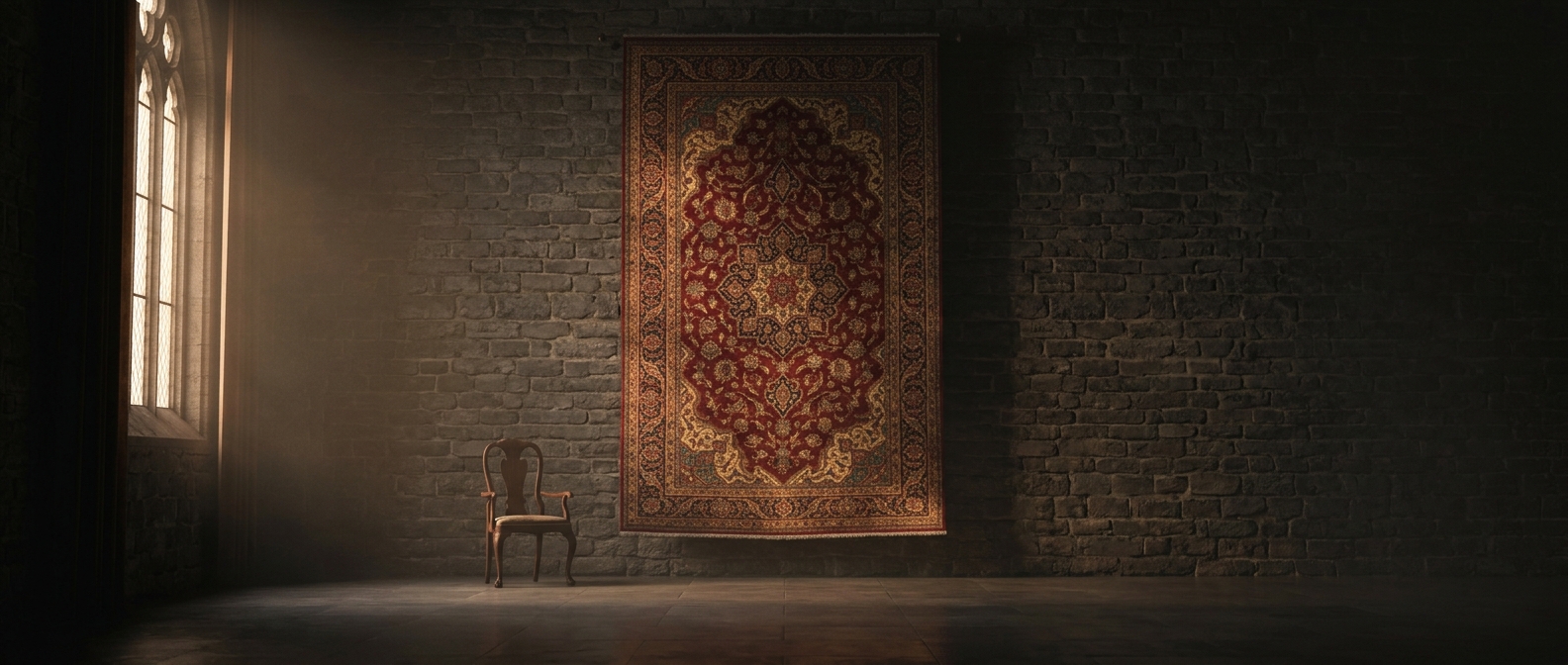
In rooms with bare stone or wood, a woven carpet could serve as decoration without being walked on. Hung on a wall, it displayed intricate patterns at eye level and helped soften the look—and feel—of a cold, hard-walled room. On the floor, the same textile faced grit, muddy shoes, and constant wear.
That distinction mattered because a finely woven carpet represented a great deal of skilled labor. Keeping it clean and intact was easier when it was lifted out of reach. A wall hanging could also be rolled or moved when a household changed rooms or needed to protect it.
From Display to Everyday Furnishing
Carpets were not exclusively wall decorations: people used them on floors in different times and places. But where rugs were scarce or costly, placing one underfoot was a luxury. Bare floors were practical, even if they made a room colder and less comfortable.
As floor coverings became more accessible and domestic habits changed, rugs increasingly became furnishings to walk on rather than objects reserved for display. The shift changed what a carpet was expected to do: its durability mattered alongside its pattern. A textile once protected from dirty shoes could become the very thing laid down to catch them.