A monument made useful at a desk
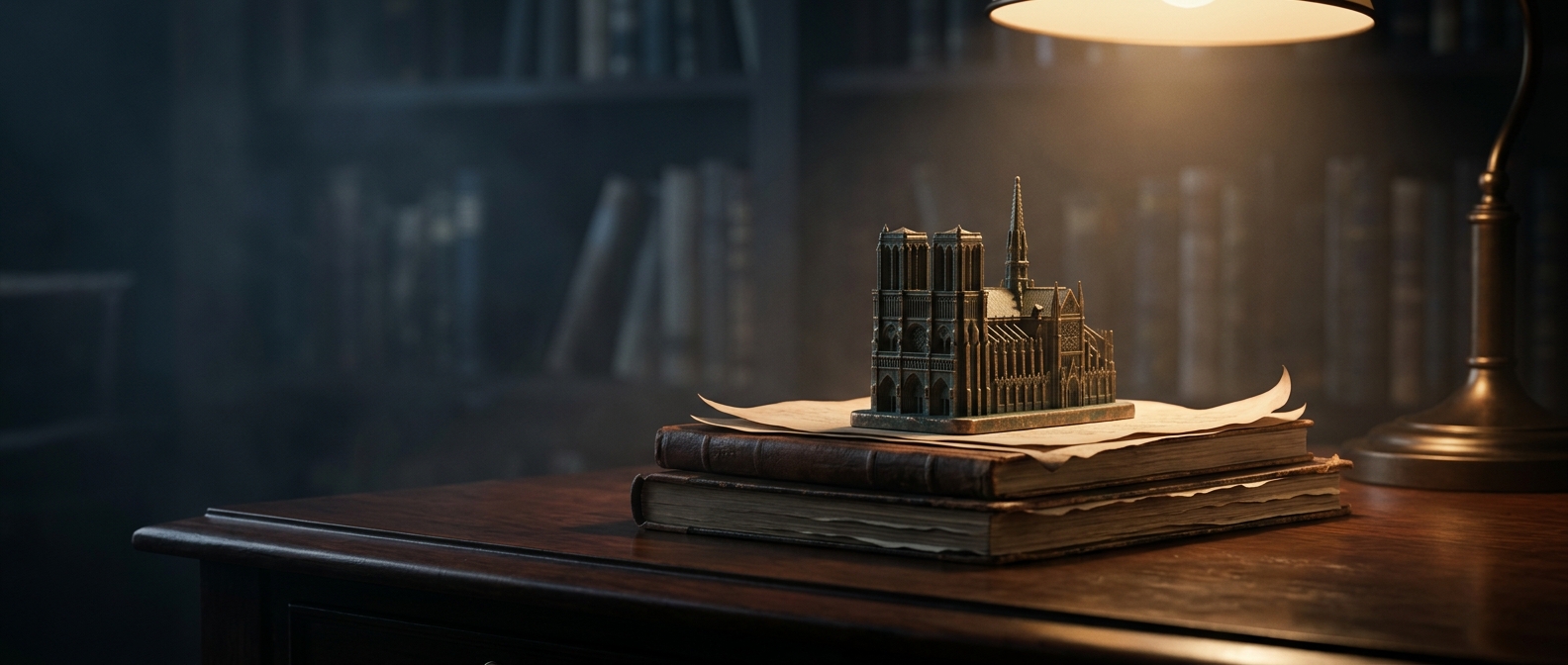
A miniature cast building could do two jobs at once. Its weight held down papers, while its outline and architectural details made it recognizable as a particular monument. In a foundry, molten metal was poured into a shaped mold; once cooled, the small casting had enough mass for office use and enough form to serve as a likeness.
That combination helps explain why these objects could move from workplaces into tourist shops. A souvenir did not need a new shape: the landmark was already there. What changed was the reason someone wanted it. An office worker valued the weight; a traveler could value the same object as a portable reminder of a place.
When utility became part of the keepsake
The practical function was not simply discarded when the audience changed. A paperweight could sit on a desk and still prompt memories of a journey, making it more useful—and more likely to be displayed—than a purely decorative token. Its small scale also turned a large public structure into something that could be carried home.
The transformation is a reminder that souvenirs do not always begin as souvenirs. Sometimes a familiar object acquires a second life because its existing shape already carries meaning. These tiny monuments preserved both roles: they evoked public landmarks while quietly keeping private papers in place.