How a Penny Became a Chicago Souvenir
At the 1893 exposition, visitors could turn an ordinary penny into a keepsake bearing the fair’s identity. The appeal was partly practical: instead of buying a separate souvenir, they brought a coin they already owned and watched it become something tied to the event.
Pressure Put the Fair on the Coin
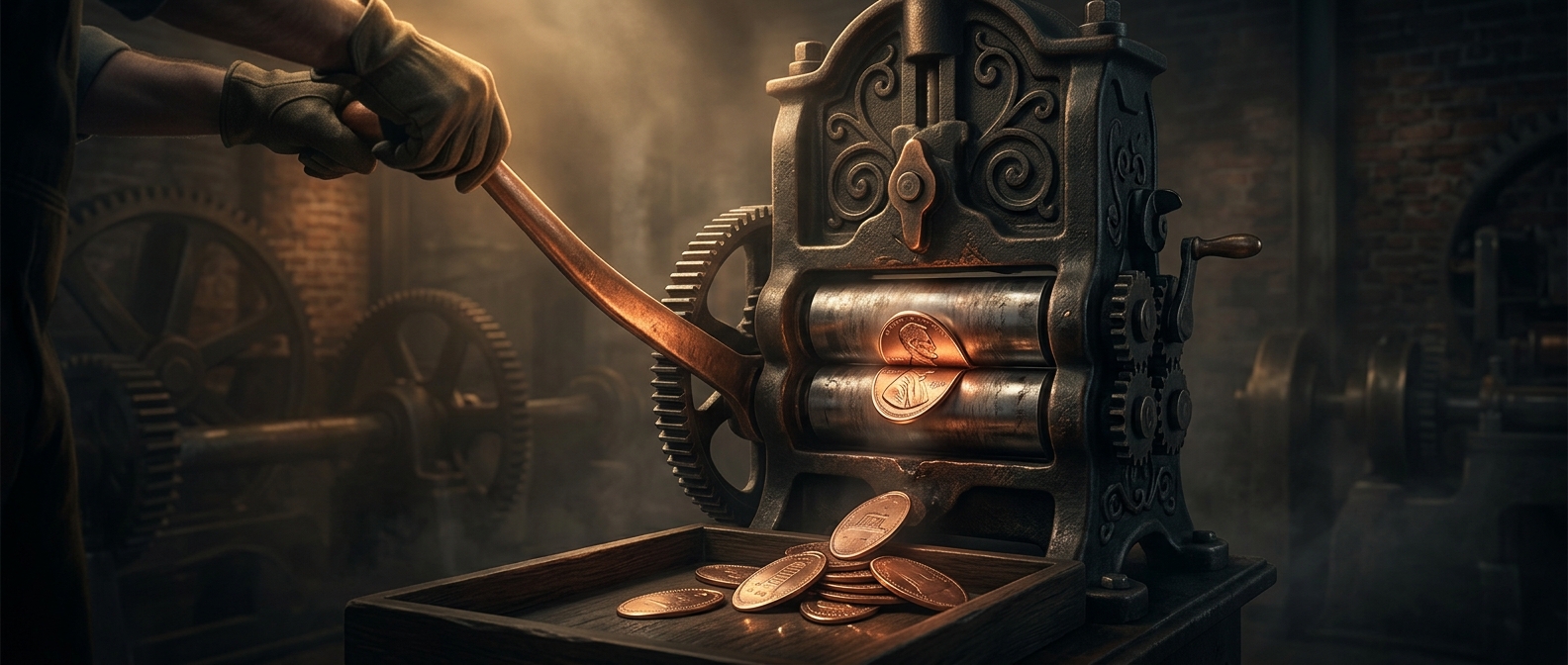
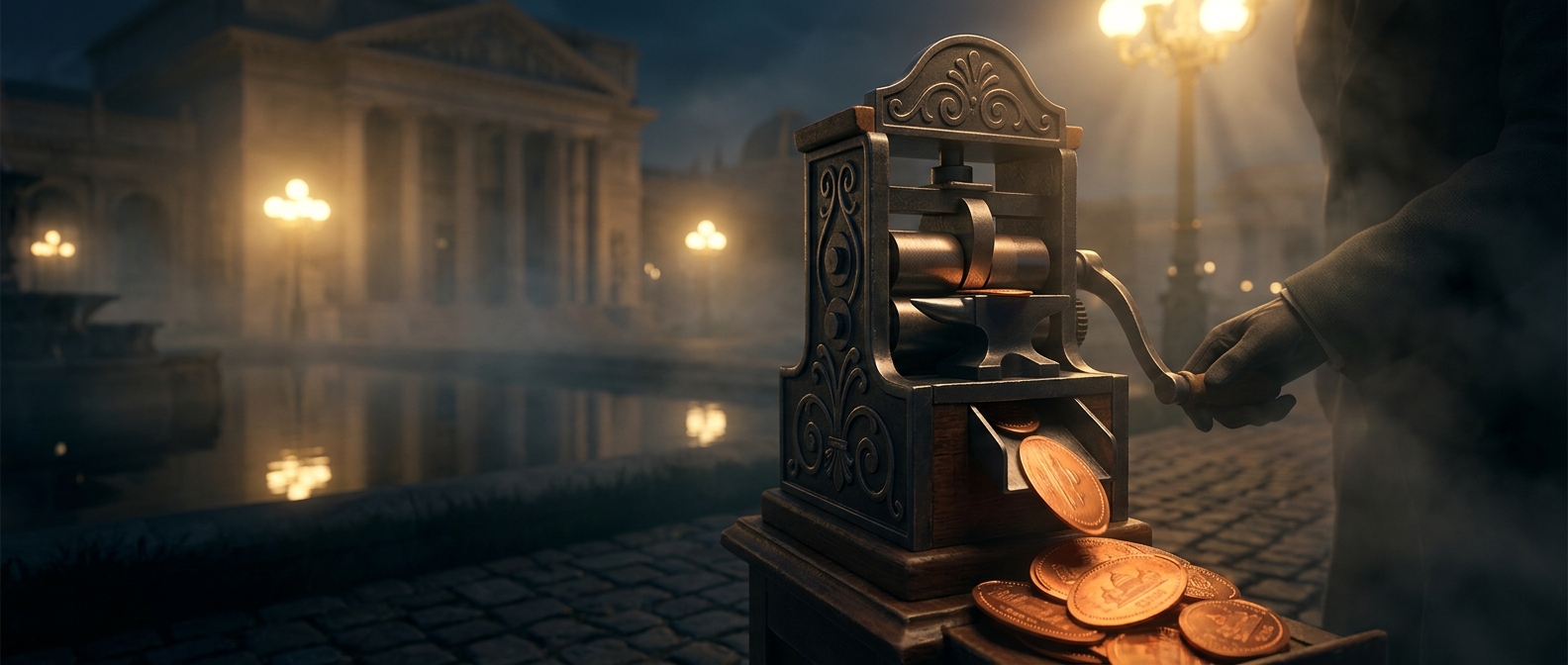
The machine flattened the penny and stamped it with the exposition’s branding. In other words, it changed both the coin’s shape and its surface: the original money became a small, portable record of where its owner had been. The transformation happened in front of the visitor, making the souvenir feel less like a purchase off a shelf and more like something made on the spot.
That personal step mattered. A visitor supplied the coin, operated the machine, and left with an object produced from their own money. The process joined a mass public event to an individual memento: the same fair could be remembered through a small object each visitor had helped create.
A Souvenir Made by Its Owner
The idea’s lasting charm lies in that simple exchange. The penny was familiar; the stamped design made it specific to Chicago’s exposition. Visitors did not just carry home a token of the fair—they carried home a coin they had watched the fair transform.