How a Coin Becomes an Elongated Souvenir
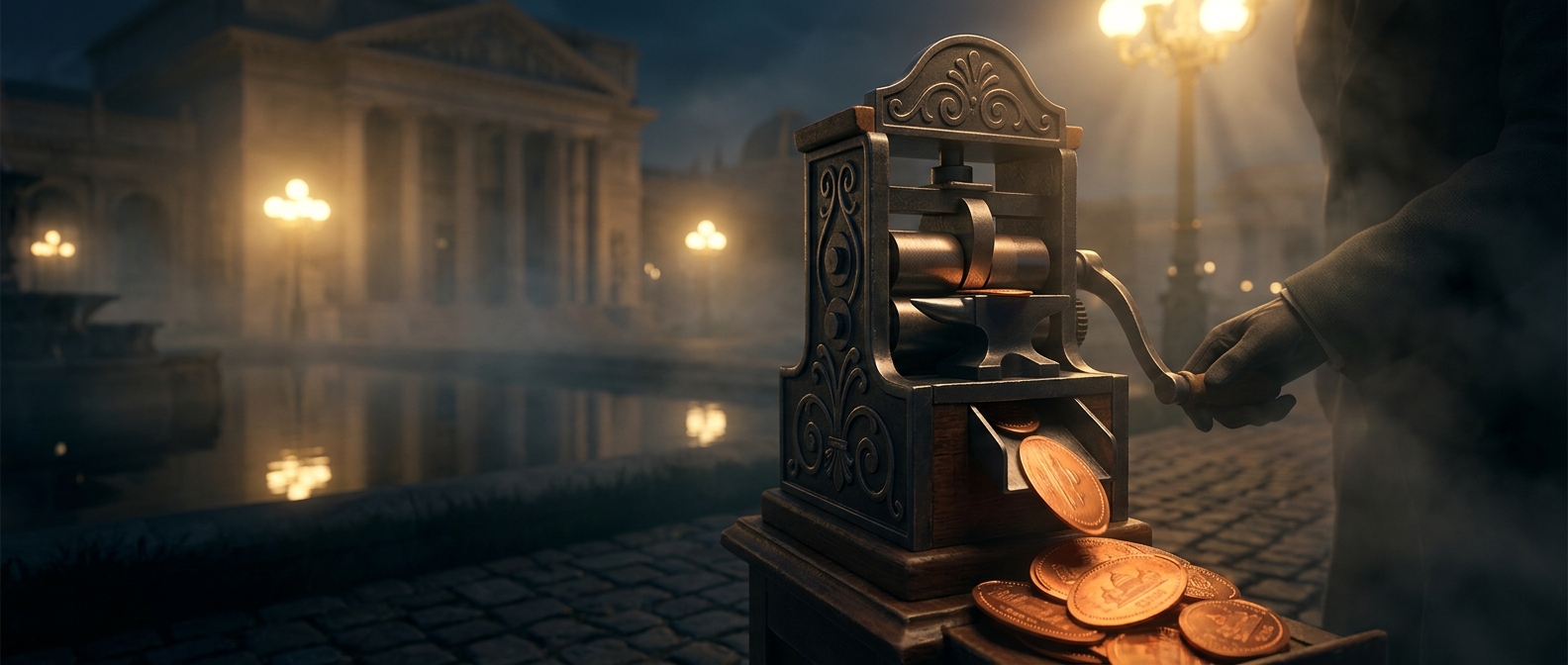
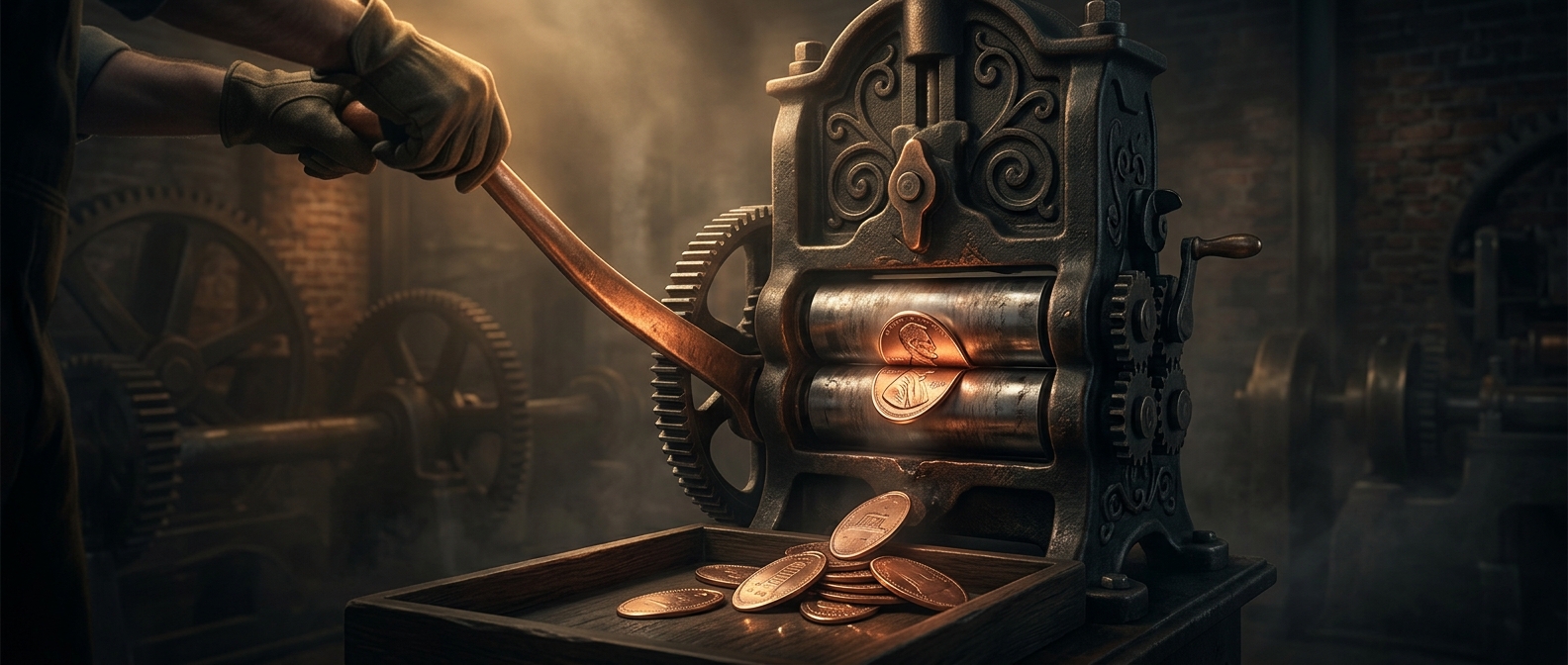
Inside a pressed-penny machine, the coin is fed between two hardened steel rollers. One roller carries a raised design; as the rollers turn, they squeeze the coin against it. The metal does not simply acquire an image on its surface: under the force, it spreads and thins, stretching into an oval while the design is pressed into it.
That change depends on pressure concentrated into a small contact area. The rollers must resist bending and wear, while their patterned surfaces must press hard enough to move the coin’s metal without losing the design’s detail. A crank and gears let a person supply the turning motion; the machine’s rolling mechanism multiplies that effort into a powerful squeeze.
Why the Result Is More Than a Stamp
A conventional coin is struck between dies in a brief impact. An elongated coin is shaped as it travels through a narrow gap, so the rollers both deform the metal and carry the design across it. The finished souvenir preserves a trace of that process: its stretched outline and flattened relief show how the coin moved through the machine.
That is why the keepsake feels unusually tangible. It is not a picture printed on a coin, but the coin itself reshaped by the machine—its original form traded for a small, durable record of where it was pressed.