A table assembled when dinner began
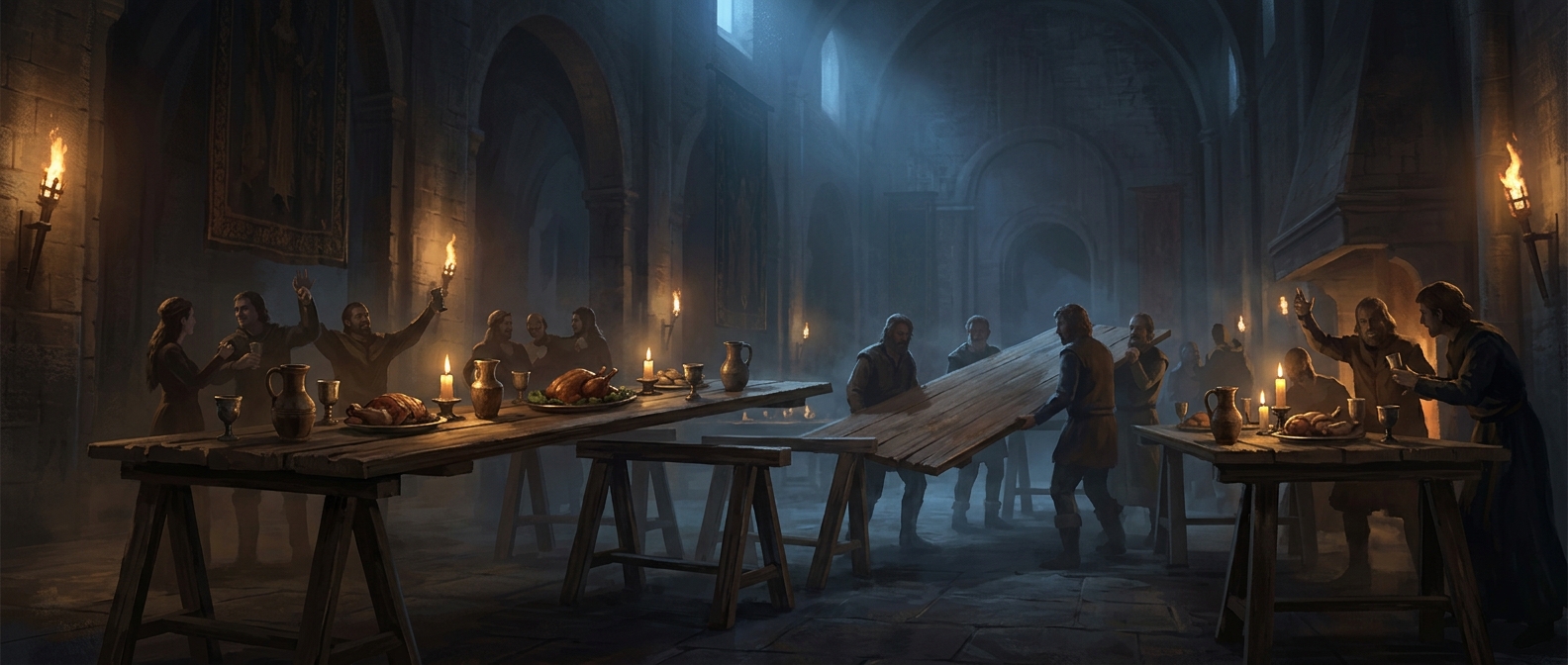
A trestle table was less a piece of furniture than a temporary arrangement: wooden boards rested across paired supports, or trestles, to make a surface. The boards did not have to be permanently joined to the supports. That made the table easier to put together, take apart, and move than a heavy fixed table.
The convenience came with a wobble
The same loose construction that made the table portable also left it vulnerable to movement. A hard bump could shift a board on its supports; if one side slipped or tilted, dishes and food could slide off with it. On a dirt floor, a spilled meal was especially difficult to recover cleanly.
This was a practical tradeoff, not simply poor craftsmanship. In settings where rooms and furnishings had to serve more than one purpose, a surface that could be assembled for a meal and removed afterward was useful. But it demanded care from the people gathered around it: a rowdy shove could turn the whole tabletop into a spill.
The memorable detail is that the “table” could disappear in pieces. Once dinner was over, the boards and trestles could be carried away, leaving the room open again.