A Place for a Habit Guests Might Not Hide
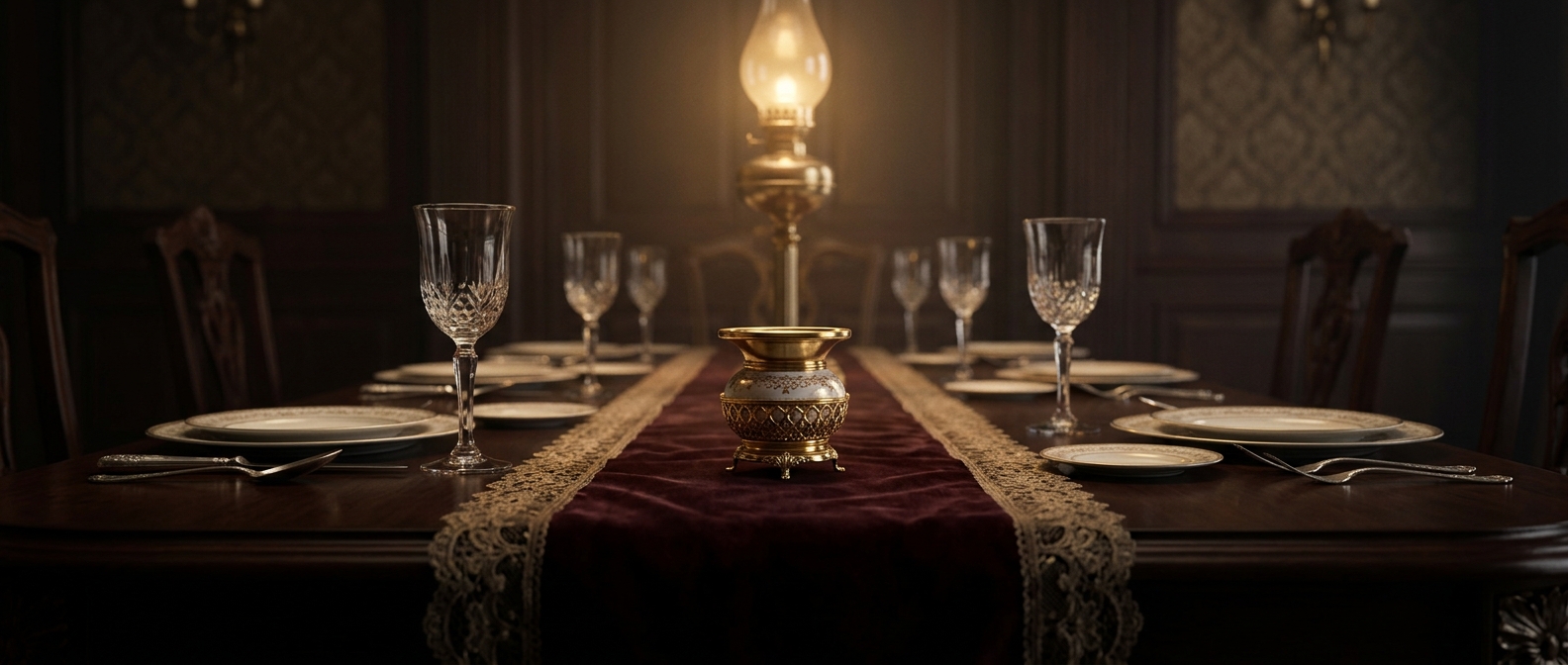
A spittoon was a bowl made to catch spit, often placed where people could use it without aiming at the floor or a fireplace. Its presence beside formal tableware can look like a clash between refinement and bodily mess. To a Victorian host, though, manners did not always mean pretending the habit did not exist. They could mean giving it a designated place.
Tobacco Helped Make the Bowl Useful
Chewing tobacco produced saliva that users commonly spat out. In a culture where spitting was more openly practiced than it is today, a meal or visit did not necessarily make the urge disappear. A nearby receptacle offered a practical alternative to spitting on the ground or into a corner—and made the behavior more manageable for everyone sharing the room.
The bowl’s material mattered, too. Porcelain could be wiped clean and was less conspicuous than an improvised container. Set among polished dishes and serving pieces, it turned an ordinary bodily need into something the household could contain and clean up.
Refinement Had Practical Limits
Victorian standards of politeness were not simply a demand for spotless surfaces; they also involved managing social situations. A host who expected guests might use a spittoon could provide one rather than leave them to improvise. That did not make spitting universally welcome, or mean every dining room had a bowl. It shows how table manners adapted to habits that later generations would find startling.
The striking detail is that the spittoon was not an accidental intrusion into a formal meal. It was part of the room’s practical equipment: even a carefully set table could be arranged around what guests were likely to do.