From the cooking pot to the meal
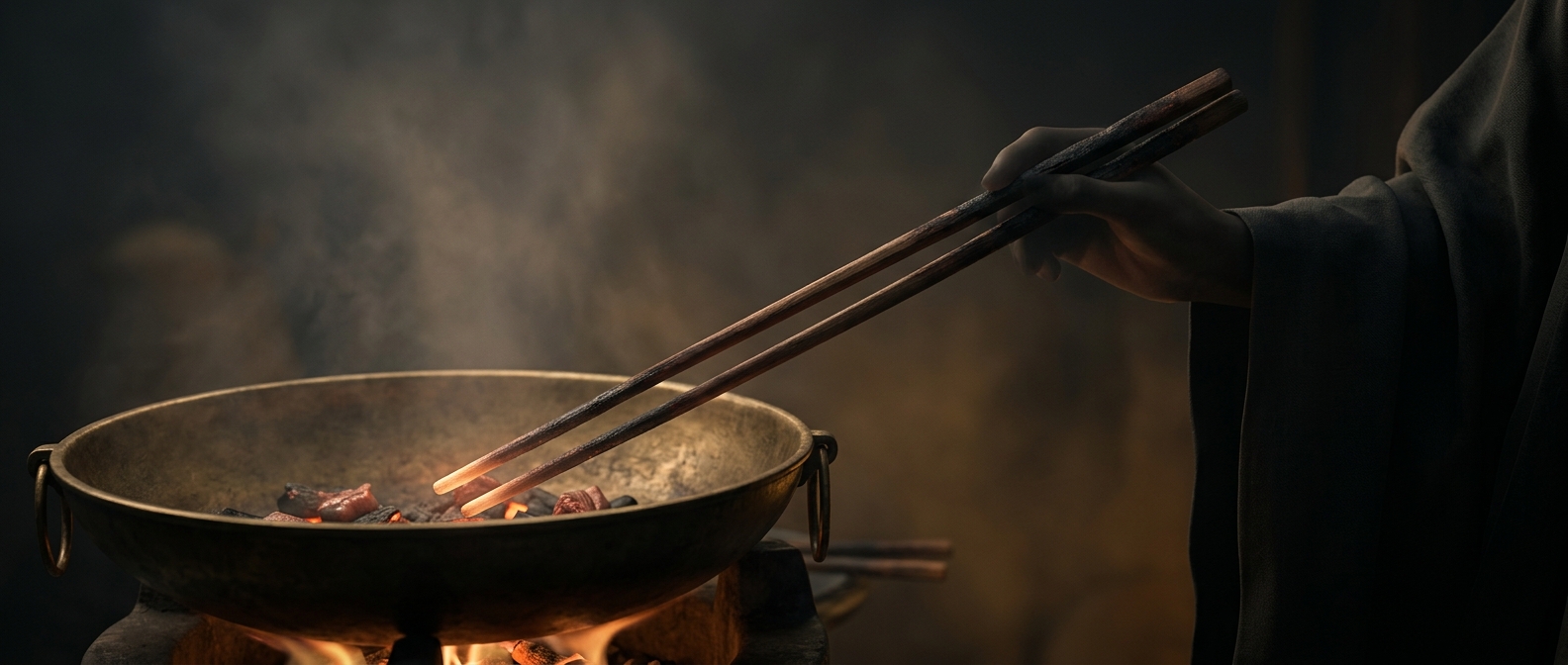
A pair of sticks is useful wherever food needs to be grasped, turned, or lifted without a hand going into a hot pot. In the kitchen, longer chopsticks gave cooks reach: they could retrieve pieces from boiling liquid while keeping their fingers farther from the heat. That practical job made the tool familiar before it became part of eating.
At the table, the same pinching motion worked on food already cut into manageable pieces. Diners could pick up a morsel directly, so a utensil made for handling food during cooking also suited eating it. The shift did not require a new design so much as a new setting.
A tool shaped by how food was served
Chopsticks are especially handy for moving small pieces between a shared dish and an individual bowl. Their usefulness depends on the food being prepared for that kind of handling; they are less suited to cutting a large piece at the table. As chopsticks became eating utensils, they fit into a broader pattern of preparing food in the kitchen and picking it up in small portions at the meal.
That path from pot to place setting is why chopsticks are more than a way to carry food to the mouth: their form preserves the motions of cooking—gripping and lifting—in every bite.