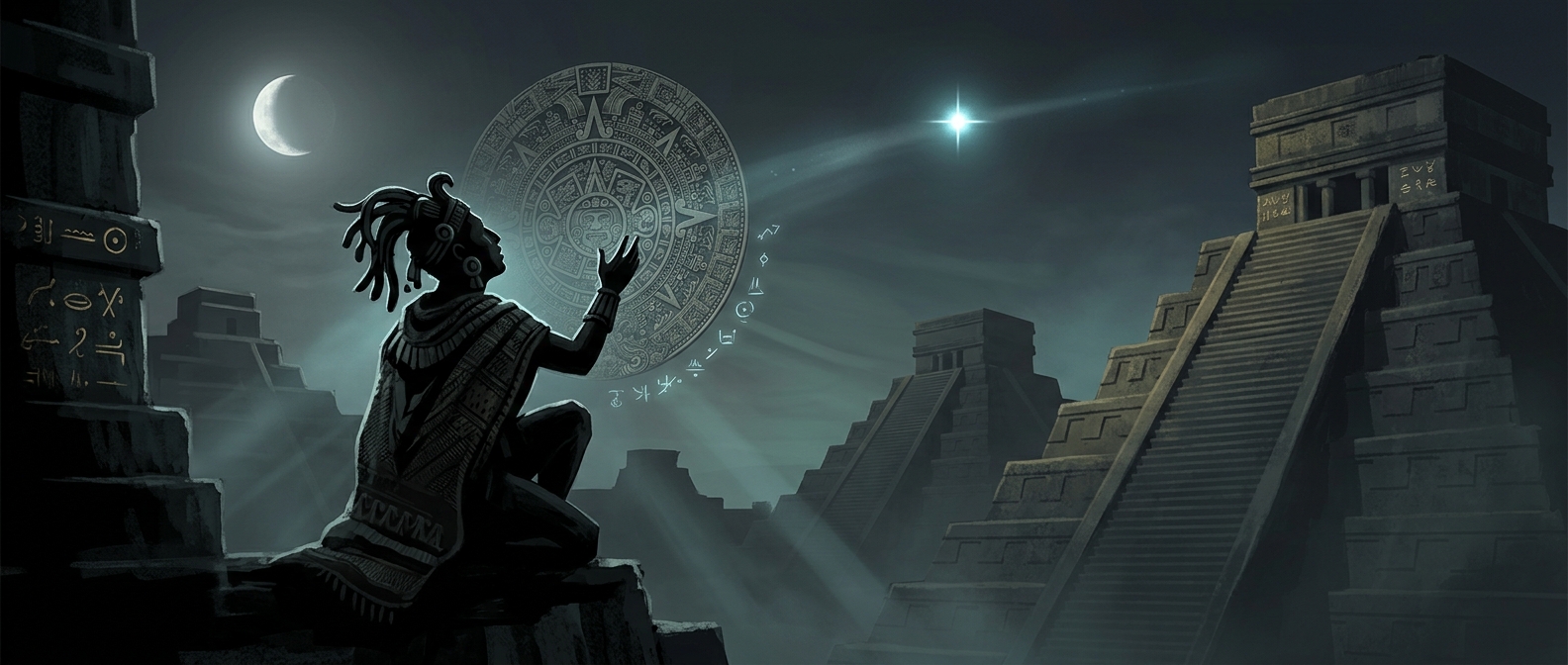
The days outside the calendar’s ordinary order
The Maya Haab’ calendar divided a 365-day year into 18 months of 20 days each, then added a short period of five days called Wayeb’. Those five days completed the count but did not belong to any of the regular months. They were a threshold between one year and the next, not simply an ordinary final week.
That unusual status gave the period its reputation for danger. In Maya understandings of time, the calendar organized more than dates: it helped mark the order of daily and ritual life. Days outside its familiar sequence could be treated as especially vulnerable or unpredictable. The exact customs varied, but some accounts describe people staying close to home and avoiding routine acts such as washing.
Why doing less could feel safer
Staying home and setting aside ordinary tasks were ways to limit exposure during a precarious interval. Washing, traveling, or taking up other everyday activities meant moving through a world whose usual calendar protections were thought to be unsettled. The precautions made the boundary tangible: for five days, people reduced their contact with the risks associated with the year’s transition.
The practice was not a universal rule followed identically by every Maya community. But the calendar’s structure made the five-day pause memorable: the year was complete in its count, while its most unsettled days remained outside the regular months.