The First Bite Was a Political Safeguard
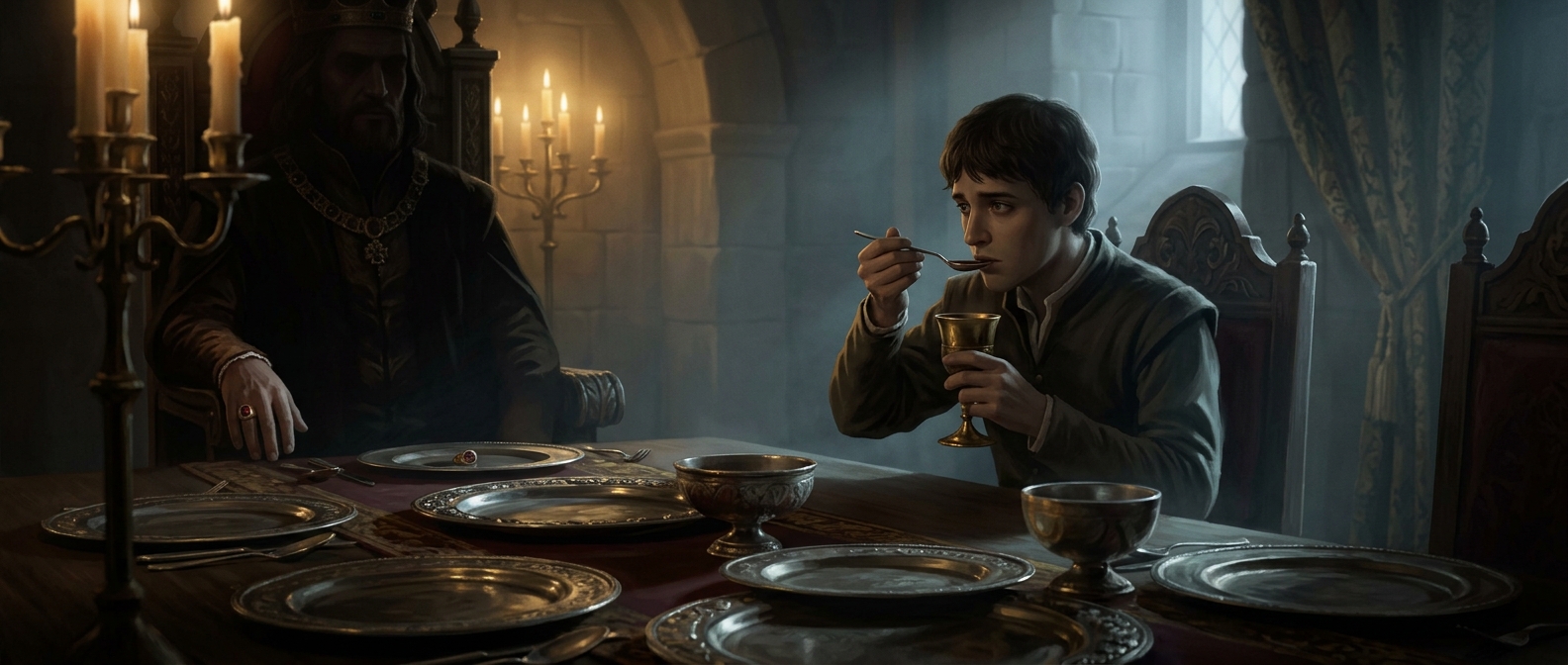
A ruler’s meal passed through many hands: cooks, servants, suppliers, and anyone with access to the table. In a court where rivals might benefit from a monarch’s death, that chain of access made food a possible route for attack. A food taster added a human checkpoint before the ruler ate.
The role was less a laboratory test than a gamble made under watch. If the taster became visibly ill, attendants could stop the meal before the monarch touched it. The delay also gave the court a chance to notice trouble. But a healthy taster could not prove that every portion was safe: a harmful substance might be unevenly mixed, or its effects might take time to appear.
Trust Was Part of the Protection
The safeguard depended on more than tasting. Someone had to choose the food, oversee its preparation, and decide when the taster had waited long enough. The taster, meanwhile, had to be considered trustworthy—or at least expendable enough to take the risk. The practice exposed the sharp imbalance at court: a ruler’s safety could be bought with another person’s uncertainty.
It was therefore a visible precaution, not a guarantee. Its most concrete consequence was simple: before a monarch could eat, someone else had to accept the danger first.