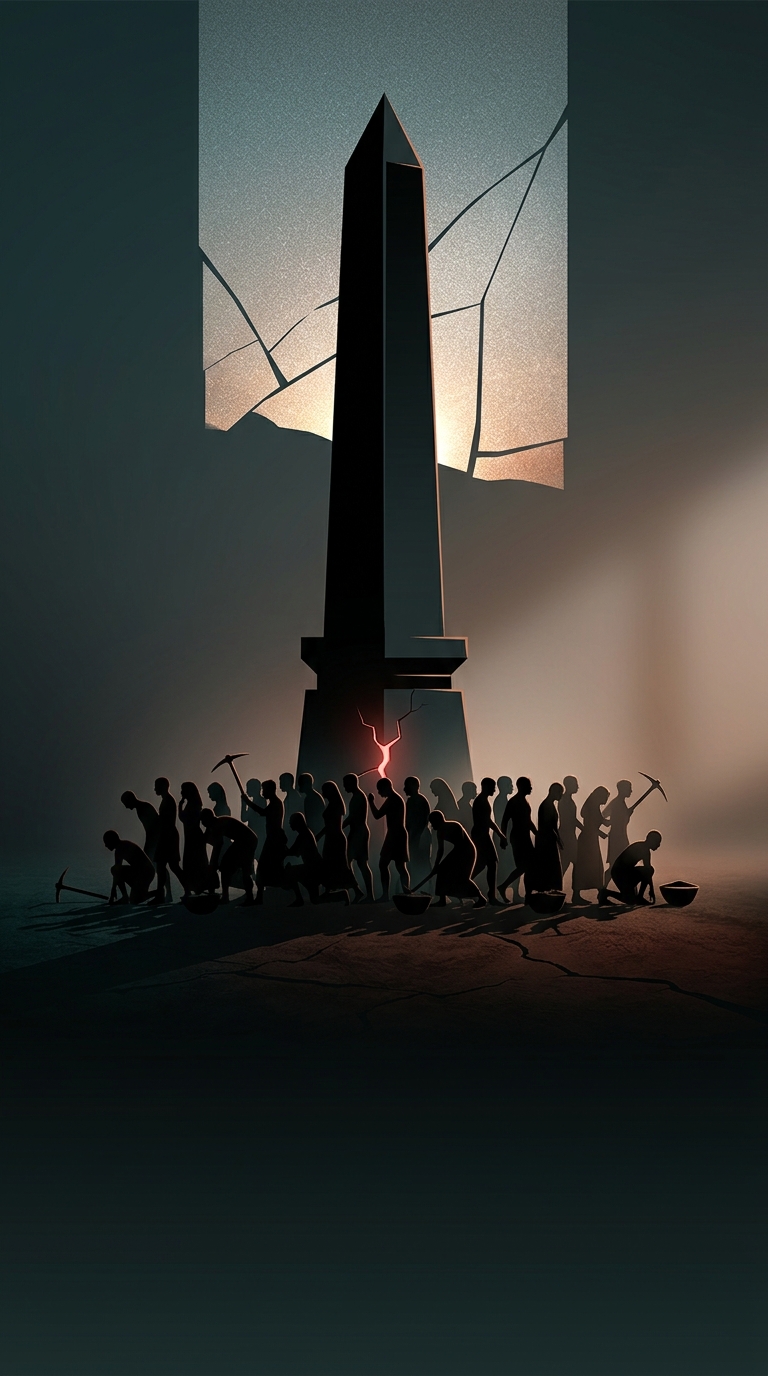
The builders were Egyptian workers
The Great Pyramid was built for Pharaoh Khufu during Egypt’s Fourth Dynasty, around 4,500 years ago. The evidence points to a large, organized Egyptian workforce—not a mass of enslaved people driven to the site in chains. Archaeologists have found workers’ settlements and burials near Giza, along with signs of the food preparation and administration needed to support construction.
That does not mean the work was easy or voluntary in the modern sense. Egypt’s state could call on people for labor, and pyramid building demanded strenuous work. But the remains suggest a managed workforce with food, shelter, and recognized burial places, not the pop-culture image of an anonymous slave army.
A construction project on a national scale
The pyramid required more than skilled stonecutters. Crews had to quarry limestone, move blocks across the plateau, and raise them into position. Officials organized supplies and labor; workers were divided into teams, some of whose names survive in marks inside the monument. Nile transport helped bring stone from farther away, while locally quarried blocks made up much of the structure.
The exact system used to lift the blocks remains uncertain. Ramps are a leading explanation, but archaeologists have not established one complete design that accounts for every stage. That open question is about engineering, not who did the work: the scale of the project depended on coordination as much as brute force.
The evidence changes the story
The pyramid was not simply a pile of stones raised by coerced outsiders. It was the product of an Egyptian government able to gather labor, provisions, and technical knowledge for a shared royal project. The workers’ settlement makes that organization tangible: behind the monument’s smooth faces stood kitchens, housing, tools, and teams whose labor kept construction moving.