When the sky became reachable
For much of human history, the Moon was visible but inaccessible: a body overhead that could be watched, named, and woven into stories, but not physically entered. The Apollo 11 landing changed that relationship in a few hours. A place that had belonged to the realm of observation became a place where people could walk, collect material, and leave traces.
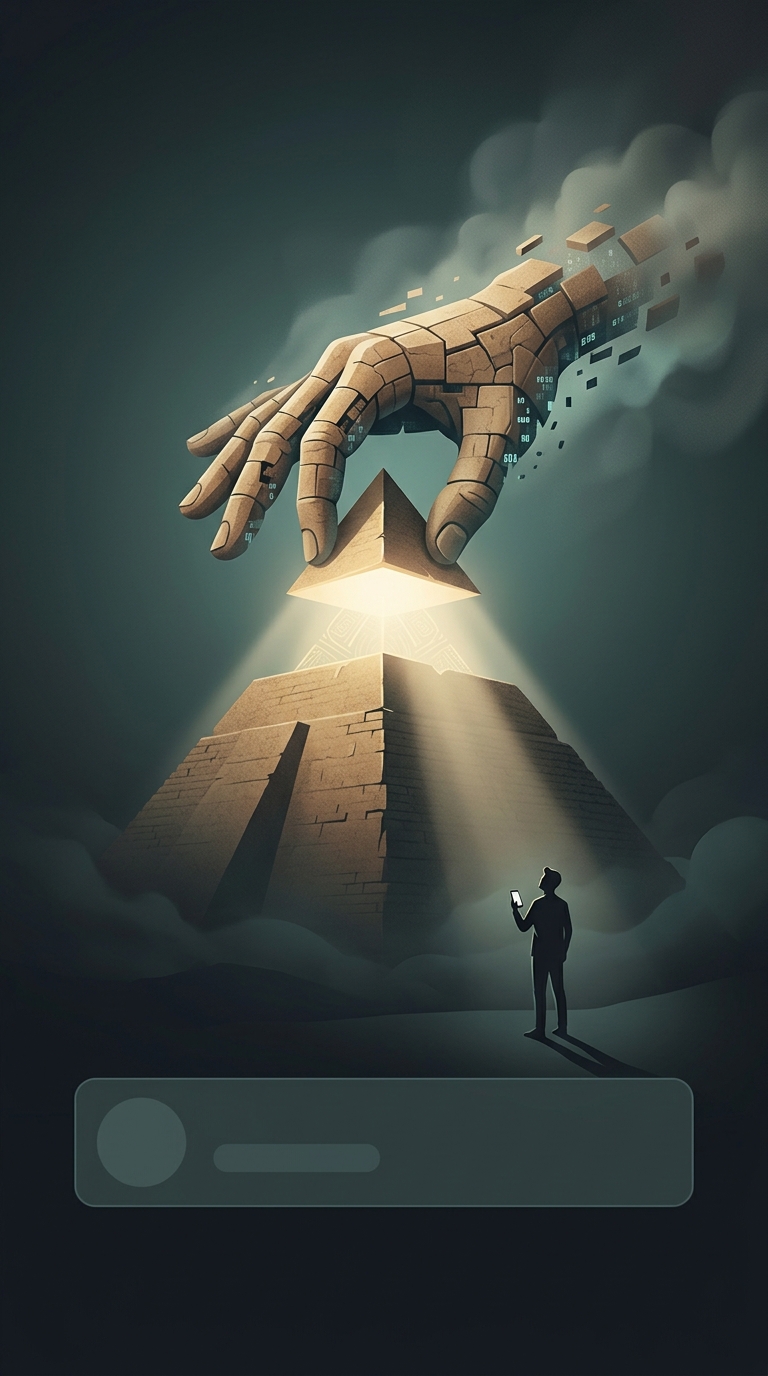
That shift could carry more than one meaning. In traditions where the heavens were understood as sacred territory or the home of powerful beings, a human landing might feel less like exploration than a crossing of a boundary. The reaction was not universal—cultures have never shared a single account of the Moon—but the possibility of trespass shows how strongly people can attach moral meaning to a landscape, even one above the Earth.
A distant event became a public encounter
Television made the landing unusually immediate. Viewers did not have to hear about the astronauts afterward: they could watch distant figures move across a grainy lunar scene as the mission unfolded. The broadcast did not erase older beliefs; it placed two ways of understanding the Moon side by side. One treated it as a destination reached through engineering. Another could regard it as part of a meaningful cosmos, not simply an empty surface.
The contrast was sharpened by the evidence the astronauts left behind. A footprint is an ordinary mark on Earth, but on the Moon it demonstrated that a boundary once assumed to be absolute had been crossed. For some viewers, that was a human achievement; for others, it could unsettle a sense of distance, reverence, or rightful limits.
The collision was also about meaning
The landing did not make myths disappear, nor did science settle what the Moon ought to mean. It made a new question unavoidable: when technology gives people access to a place long held in imagination or belief, who gets to define what that access signifies? Apollo 11’s bootprints remain striking because they are both physical traces and a challenge to the old separation between earthly life and the sacred sky.