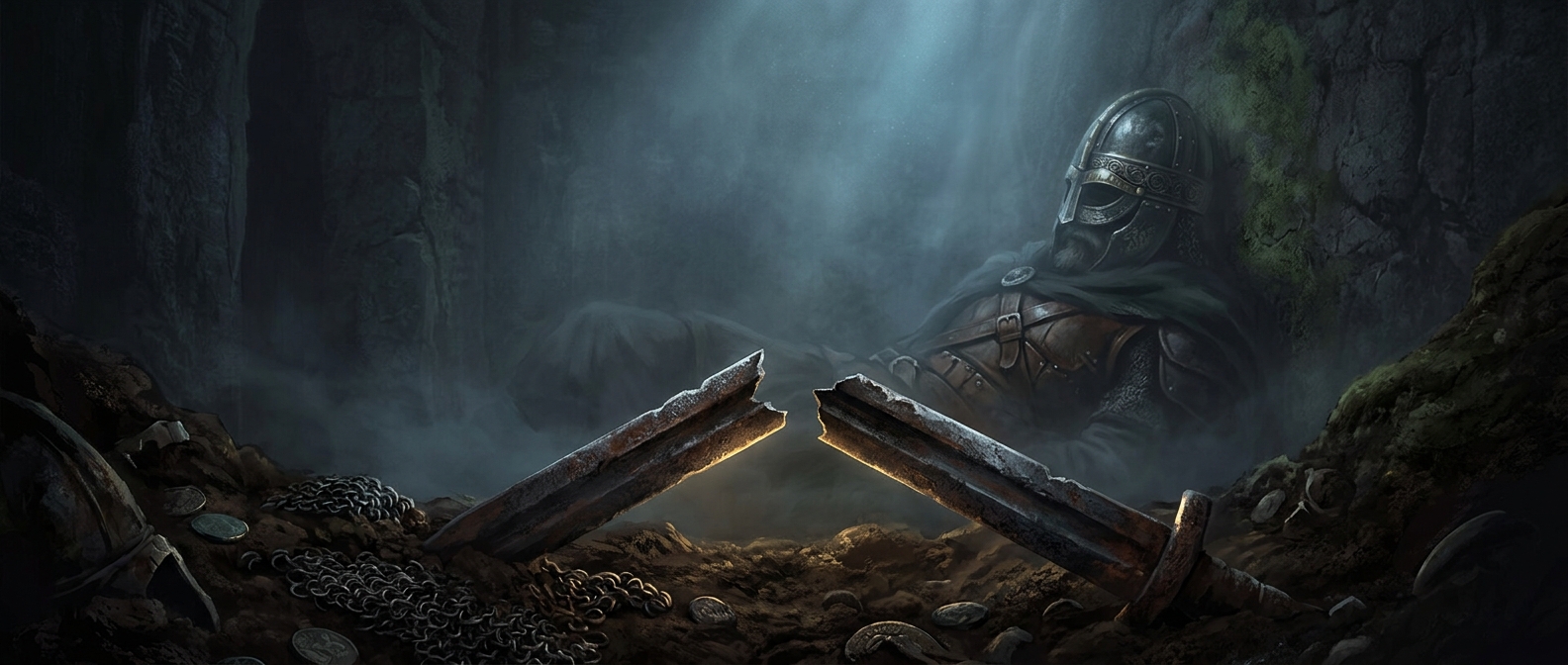
A weapon made unusable on purpose
A sword placed in a grave was not simply being stored for its owner’s next battle. Bending or snapping it changed what the object could do: a blade that had been a practical weapon became a deliberately disabled burial object. Breaking costly iron also meant giving up something valuable rather than passing it on for ordinary use.
The damage could serve a second purpose. A buried sword left intact might be dug up and reclaimed; a bent or broken one was harder to put back into service. The act therefore helped keep the weapon—and the authority and resources it represented—from returning to circulation among rivals.
From equipment to grave offering
For Merovingian elites, weapons could signal rank as well as serve in combat. Their placement with the dead made that status visible in the burial, while their destruction marked a change in ownership: the sword was no longer available to the living as a usable possession.
This was not simply careless burial or damage caused by time underground. Deliberate bending or snapping turned an expensive tool into part of the funerary act. The striking consequence is that a warrior’s grave could preserve a weapon’s importance precisely by making sure no one could readily wield it again.