A cemetery laid out under pressure
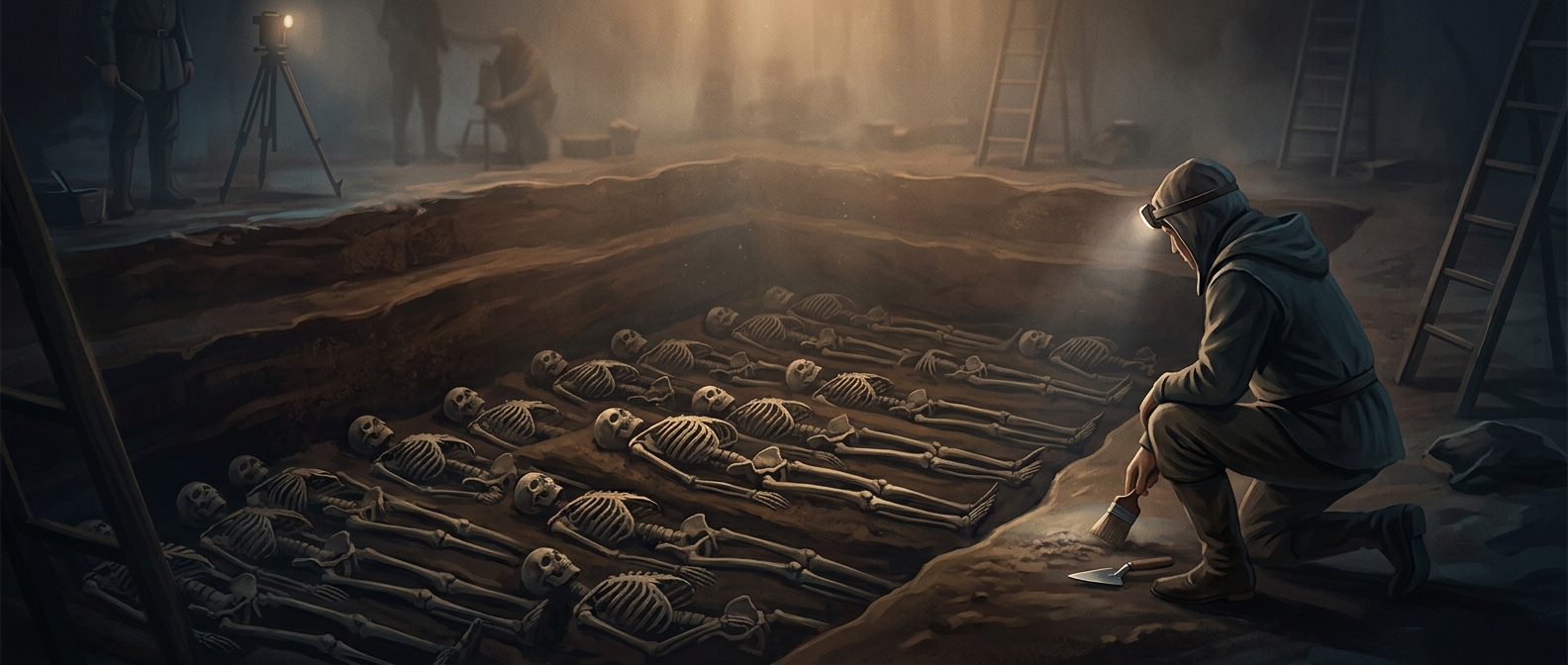
East Smithfield was created in London during the Black Death, when ordinary burial grounds could not absorb the number of people dying. Yet its graves were not simply thrown together in one disorderly pit. The bodies were placed in parallel rows, with space and consistent orientation between them.
That arrangement suggests a burial ground organized for repeated use. Workers could open separate graves in a planned area, place each body, and continue filling the cemetery in sequence. Rows also made the ground easier to navigate than a jumble of overlapping burials. The precise decisions behind the layout are not recorded, so the pattern cannot tell us exactly how the work was managed or who directed it.
Order did not mean the emergency was controlled
A graveyard’s layout could remain deliberate even as deaths overwhelmed the city. Plague made burial urgent, but it did not erase the practical need to mark where bodies had been placed or to treat burial as a communal and religious act. The cemetery’s plan is evidence of a response that retained structure—not proof that London had enough space, workers, or time for every ordinary custom.
That distinction matters: mass death need not leave only a mass grave. At East Smithfield, the rows show how people tried to impose a workable pattern on an extraordinary crisis, one burial at a time.