A treasure hunt at Meroë
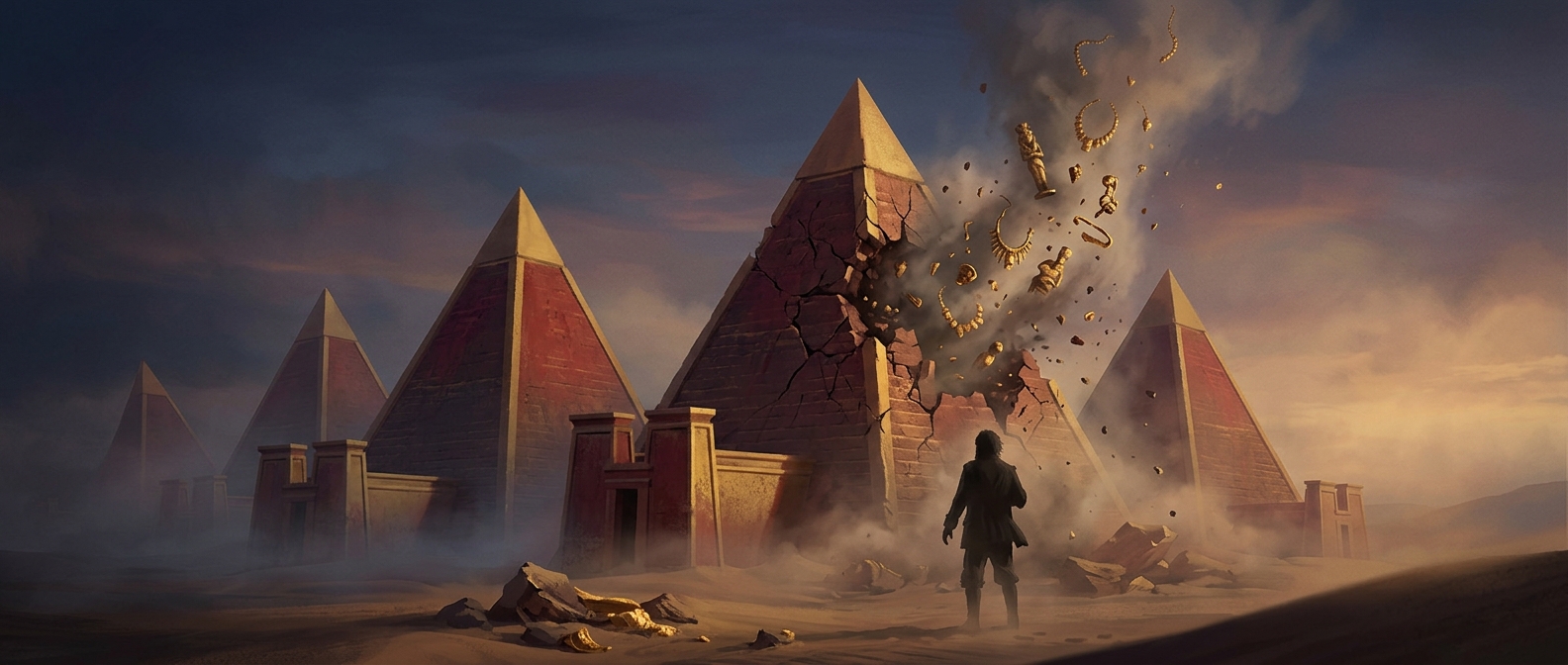
In 1834, Italian adventurer Giuseppe Ferlini arrived at Meroë, the ancient capital of the Nubian kingdom of Kush, in what is now Sudan. Its steep-sided pyramids marked royal burials, and their small size and distinctive shape set them apart from Egypt’s better-known pyramids. Ferlini believed they concealed valuable objects—and searched by force rather than careful excavation.
He blew the tops off more than 40 pyramids. In one, he found a cache of gold jewelry associated with the Kushite queen Amanishakheto. That discovery did not end the search: Ferlini continued demolishing other pyramids, apparently hoping they would yield similar riches.
What the damage destroyed
A pyramid was not simply a container for treasure. Its position, construction, and relationship to nearby tombs could help archaeologists understand who was buried there and how the cemetery was organized. Blasting away a summit could expose burial chambers, but it also broke the structure and disturbed the evidence around it. Once a tomb had been opened and its contents removed, important clues about their original placement could be lost.
Ferlini’s find made the hunt financially rewarding, but it could not make the method reversible. The gold jewelry survived; many of the pyramids he damaged did not survive intact. At Meroë, the search for one cache of wealth left a much larger record of Kushite royal burials permanently altered.