When the Camera Steps Outside the Scene
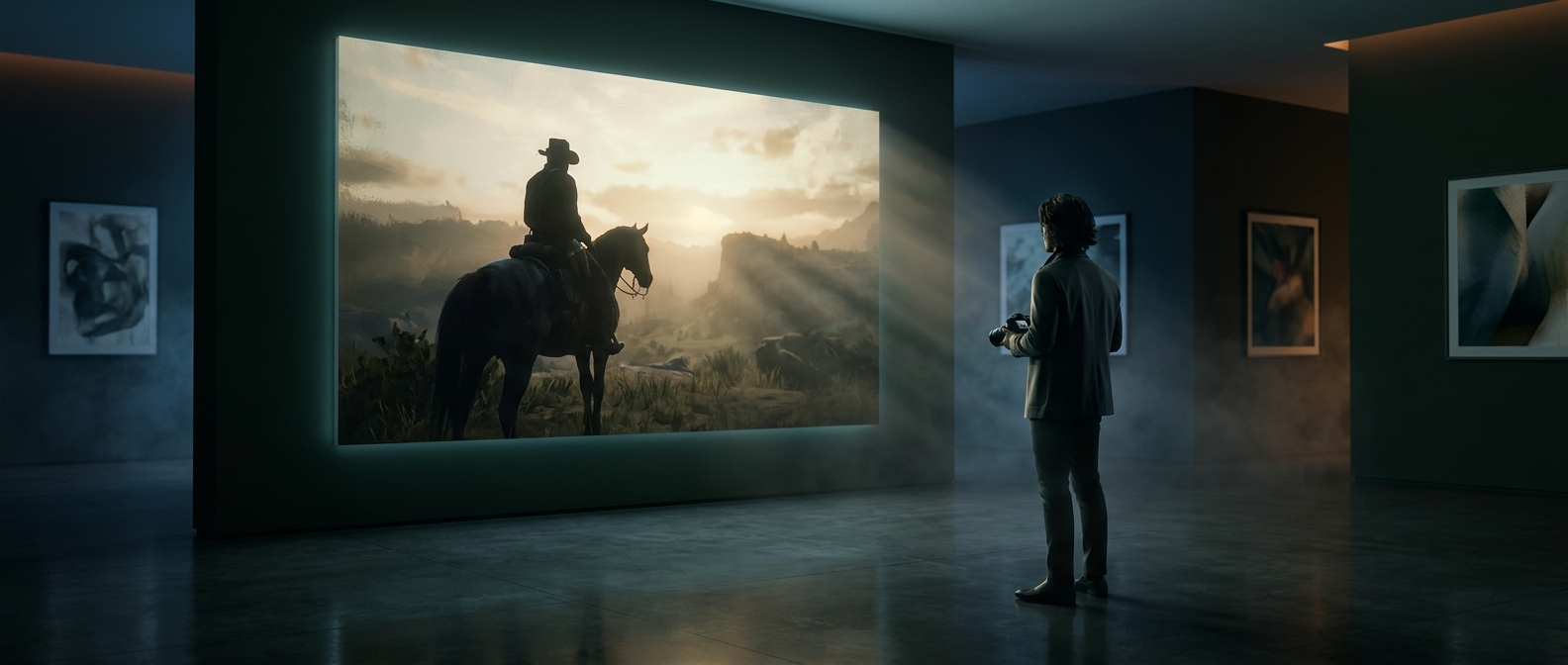
A photo mode turns a game’s camera from a storytelling tool into a player-controlled one. During ordinary play, the camera is carefully positioned to keep the character readable, guide attention, and preserve the scene’s mood. Photo mode may let players orbit that camera, hide interface elements, change the character’s pose, or pause the action. Those freedoms can make a striking image—but they can also expose how much the game’s drama depends on controlling what the player sees.
The Freeze-Frame Problem
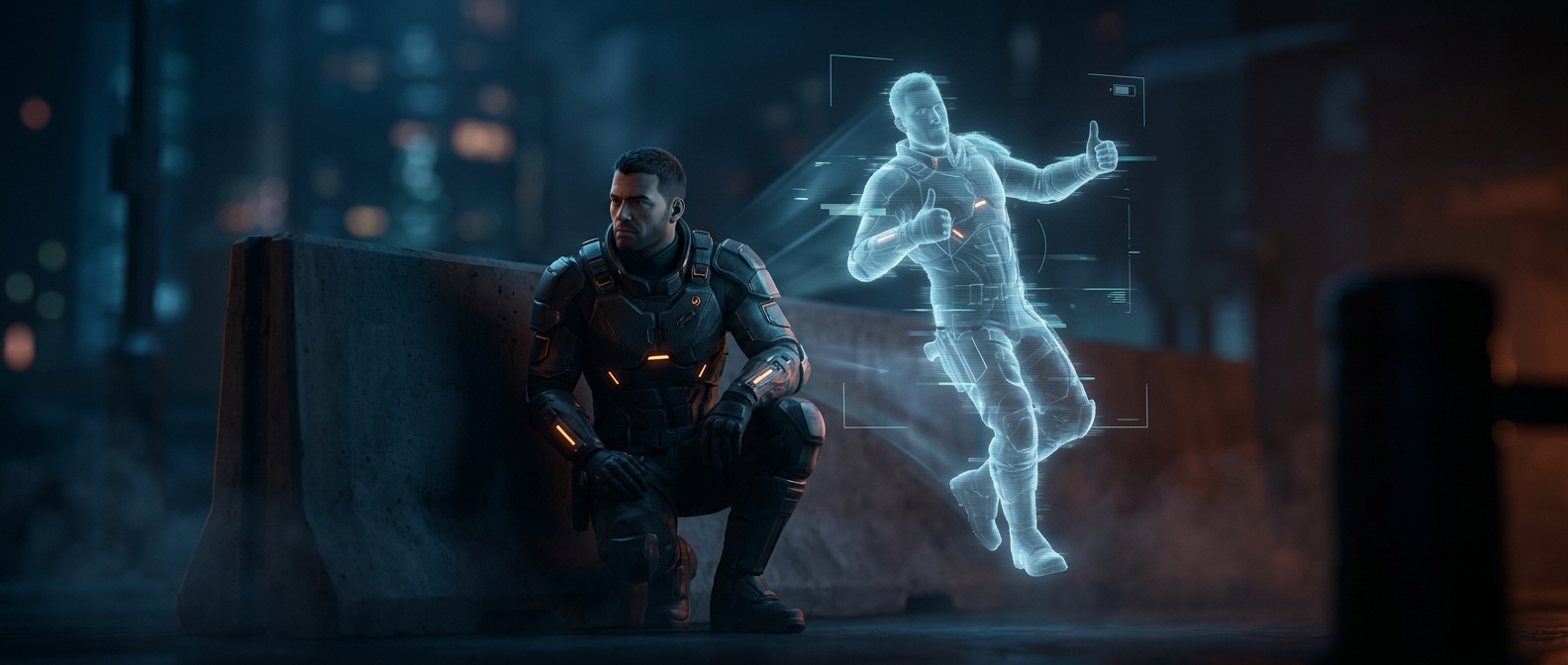
Pausing a shootout creates a useful still image, but it also strips away the forces that made the moment feel dangerous: movement, sound, urgency, and the possibility of failure. A burning vehicle becomes a backdrop. A character’s serious expression can look unintentionally comic beside a playful pose. The scene has not changed; the player’s new control over it has changed how it reads.
That contrast is especially sharp when the camera can move freely. A viewpoint that would be impossible during normal play may reveal the edge of a set, an enemy waiting just outside the intended frame, or a hero suspended in an awkward animation. The same freedom that helps players compose a polished shot can make the constructed nature of the scene visible.
A Choice About Control
Developers can limit photo mode to protect a scene’s pacing, or offer more tools and accept that players may use them irreverently. Freezing the world preserves the exact instant; letting it continue can retain motion but makes composition harder. Restricting camera movement maintains the intended viewpoint; unlocking it gives players room to discover unexpected angles.
There is no setting that guarantees both perfect dramatic control and complete creative freedom. A goofy pose beside the flames is funny partly because the game briefly stops directing the player’s attention—and lets them decide what the moment means.