A second camera hidden inside the game
A photo mode gives a player control over how a scene is seen, not just where the character moves. The game can freeze the action, hide interface elements, and let the virtual camera move independently of the player. That turns a passing view—a rain-lit street, a mountain ridge, a character’s expression—into a composition the player can study and arrange.
The controls borrow from photography. Focal length changes how much of the scene fits in the frame and how near or far objects appear. Aperture can imitate shallow depth of field, keeping one subject sharp while softening the background. Lighting or exposure adjustments can bring out details that ordinary gameplay leaves in shadow. These are rendered effects, not necessarily a simulation of a physical camera; the game’s graphics system produces the final image.
From navigation to composition
This changes the player’s task. During play, the camera usually serves movement and awareness: it must keep the action legible and avoid obstructing the view. In photo mode, those demands loosen. A player can move around a scene, wait for a pose, or place a landmark behind a character. The same digital environment becomes a set of visual choices rather than merely a route to cross.
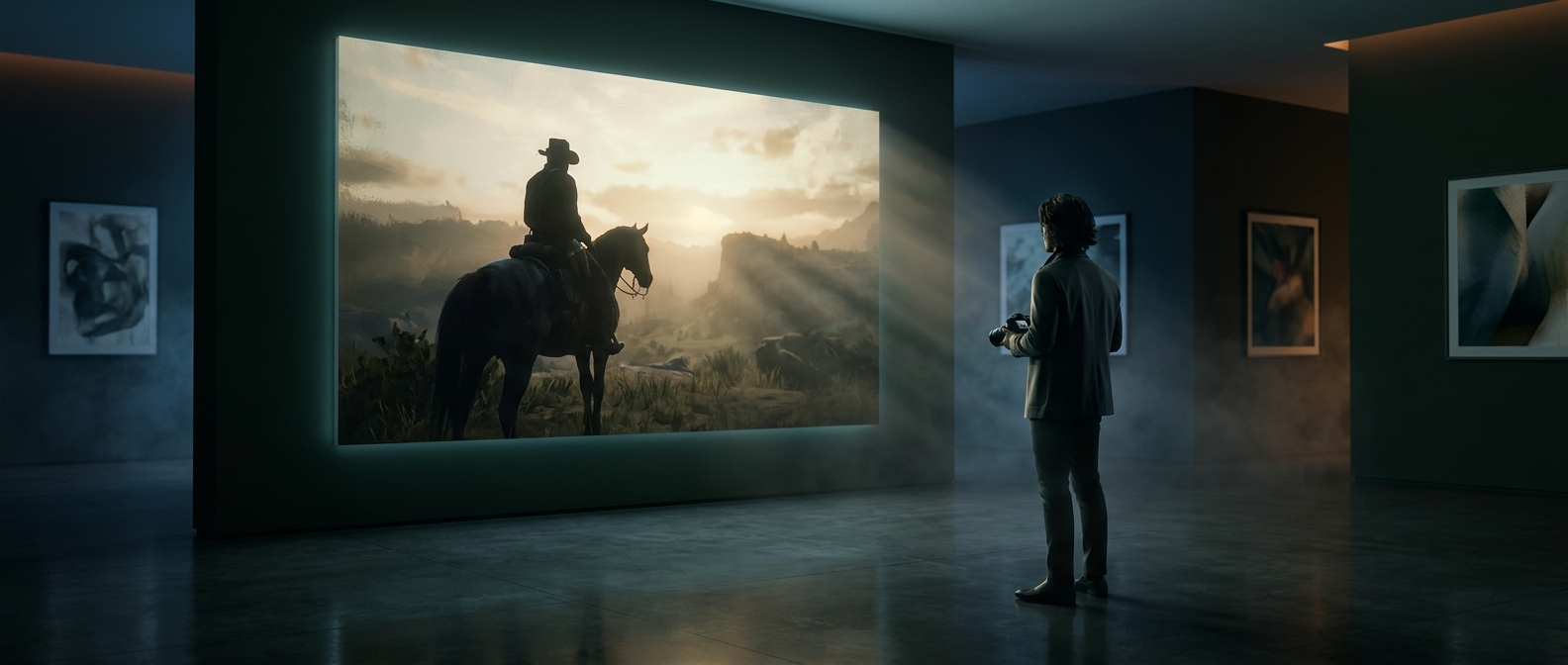
That is why virtual photography rewards more than finding a pretty backdrop. The photographer has to notice what the game’s lighting, architecture, and character animation make possible, then decide what to include and what to leave out. When players exhibit or compete with these images, they are showing a personal reading of a designed world—one the developers built for play, but that a still frame can make look newly observed.