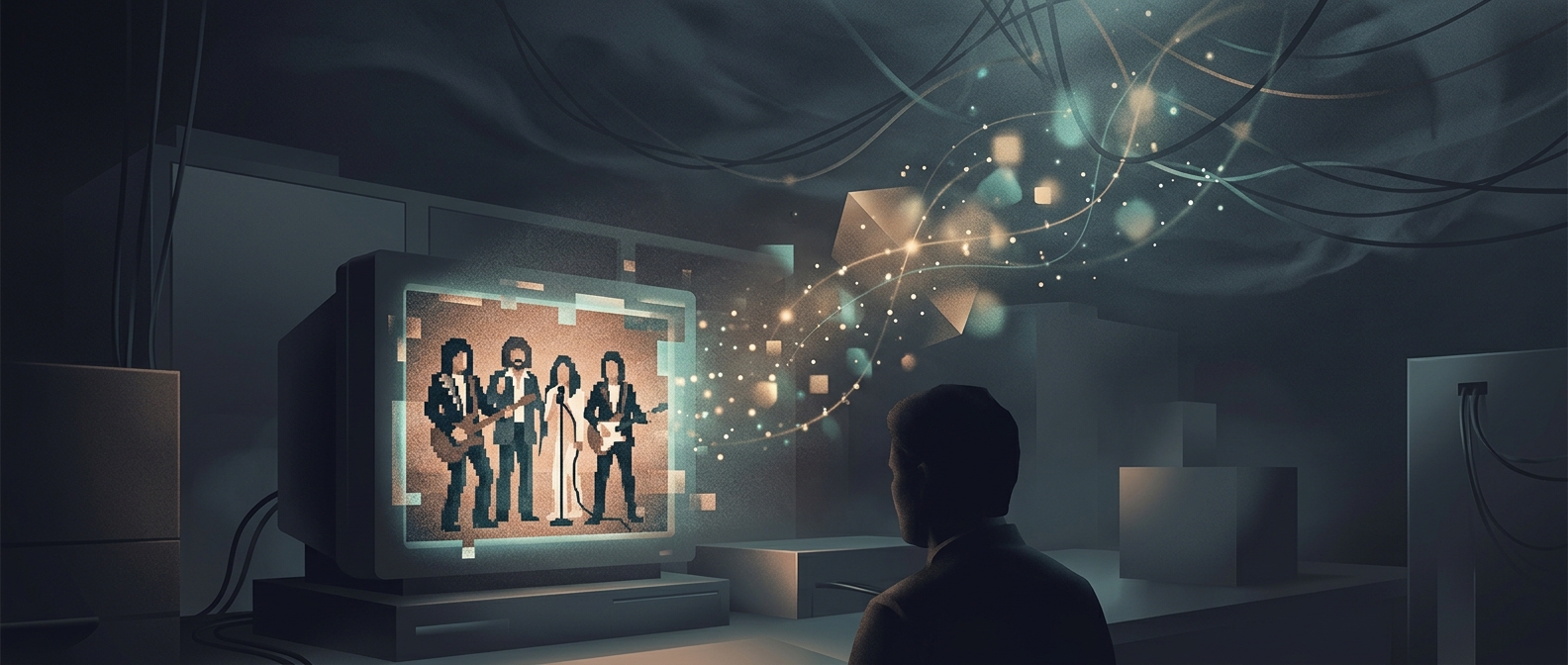
A band photo on a document-sharing network
In 1992, the World Wide Web was still a small project at CERN, built to help researchers find and share information. Its pages were mostly text. A JPEG of Les Horribles Cernettes—a parody pop band made up of CERN employees—showed that the new system could carry something more visual, too.
JPEG is a method of compressing photographs into files small enough to store and transfer more easily. Berners-Lee uploaded the image to a web server, making it available through the network. That did not mean it appeared inline in a modern-looking webpage: early web tools were limited, and images were often accessed separately from text.
Why this image became a milestone
The web was not the first way to send digital pictures, and the image did not transform the technology overnight. Its significance is more specific: it is widely recognized as the first photograph posted on the web. A casual band picture became an early example of what a web page could point to beyond words.
That small step anticipated a major change in how people use the web. Once images could be shared alongside information, pages could become more expressive and useful for audiences beyond researchers. The first famous web photo was not a scientific diagram or an official portrait, but a joke band’s snapshot—an early hint that the web could be a place for everyday culture as well as technical documents.