Why Choose a Swamp for Solitude?
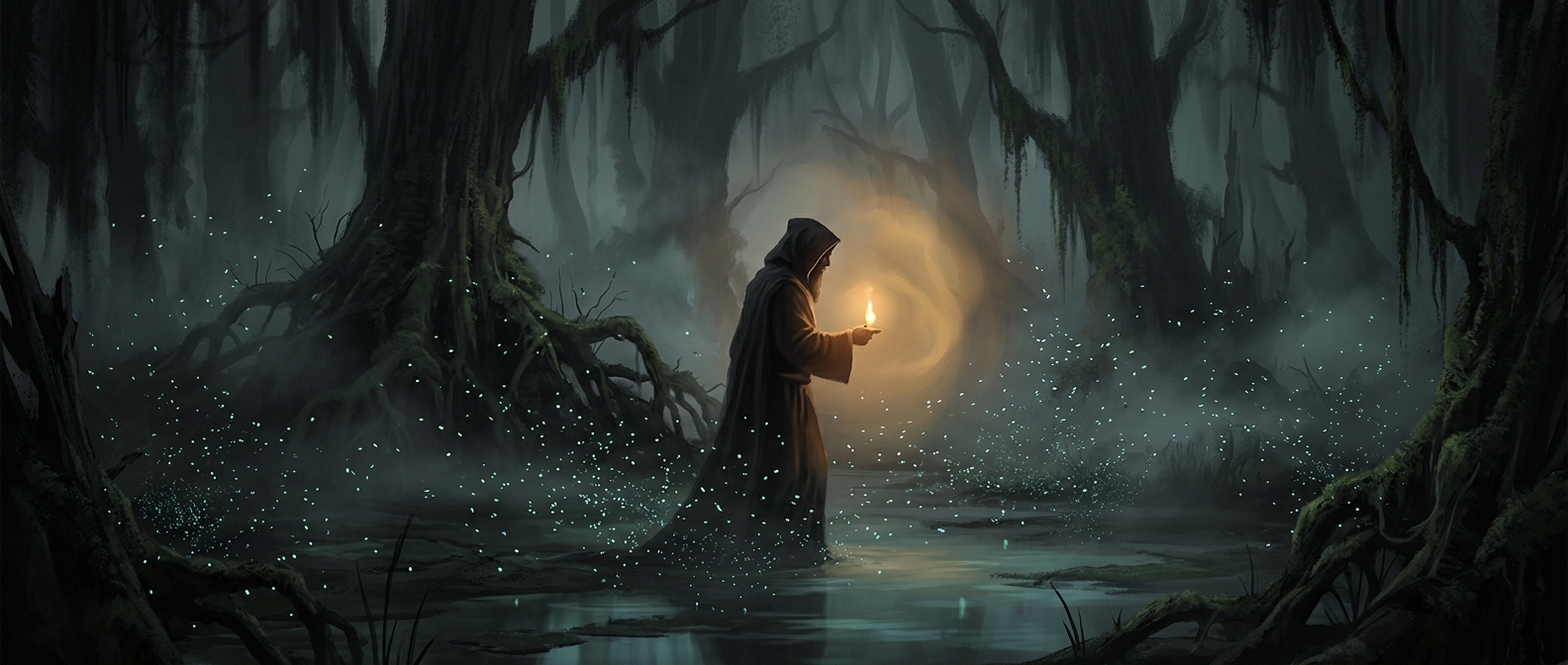
For some early hermits, isolation was not meant to be comfortable. A marsh crowded with biting insects turned an ordinary bodily need—relief from irritation—into a repeated test. The hardship was difficult to ignore precisely because it returned with every bite, day and night.
This kind of austerity belongs to a broader religious idea: spiritual discipline could involve refusing to let discomfort dictate one’s actions. The aim was not simply to prove toughness. In the hermit’s understanding, enduring an unwelcome sensation could train patience, restraint, and attention to prayer. A harsh place also helped separate a life of contemplation from the routines and comforts of settled society.
Hardship as a Daily Practice
Unlike a single dramatic ordeal, insect bites offered no neat finish. The ascetic had to meet the same irritation again and again, without being able to make the marsh pleasant. That repetition made the setting itself part of the discipline: solitude came with a physical cost, and accepting that cost was an ongoing choice.
The striking point is how deliberately ordinary the trial was. No grand spectacle was required; a cloud of insects could turn a remote retreat into a test renewed every moment.