Why the egg is unusually large
Most human cells are too small to see individually, but the egg is an exception. Its size comes largely from its broad interior, or cytoplasm—the cell material surrounding the nucleus. That space holds molecules and cellular machinery the egg needs as it begins development after fertilization.
The egg is commonly described as the largest human cell by diameter. Its scale does not mean it is a miniature embryo: it is one cell, with no limbs or other visible body parts. The speck a person might see is the whole cell, not a view of its internal structure.
A head start for early development
After a sperm and egg fuse, the resulting cell begins dividing. In the first stages, the embryo relies heavily on materials already present in the egg while its own development gets underway. The egg’s large interior helps provide that starting equipment; it is not simply extra space.
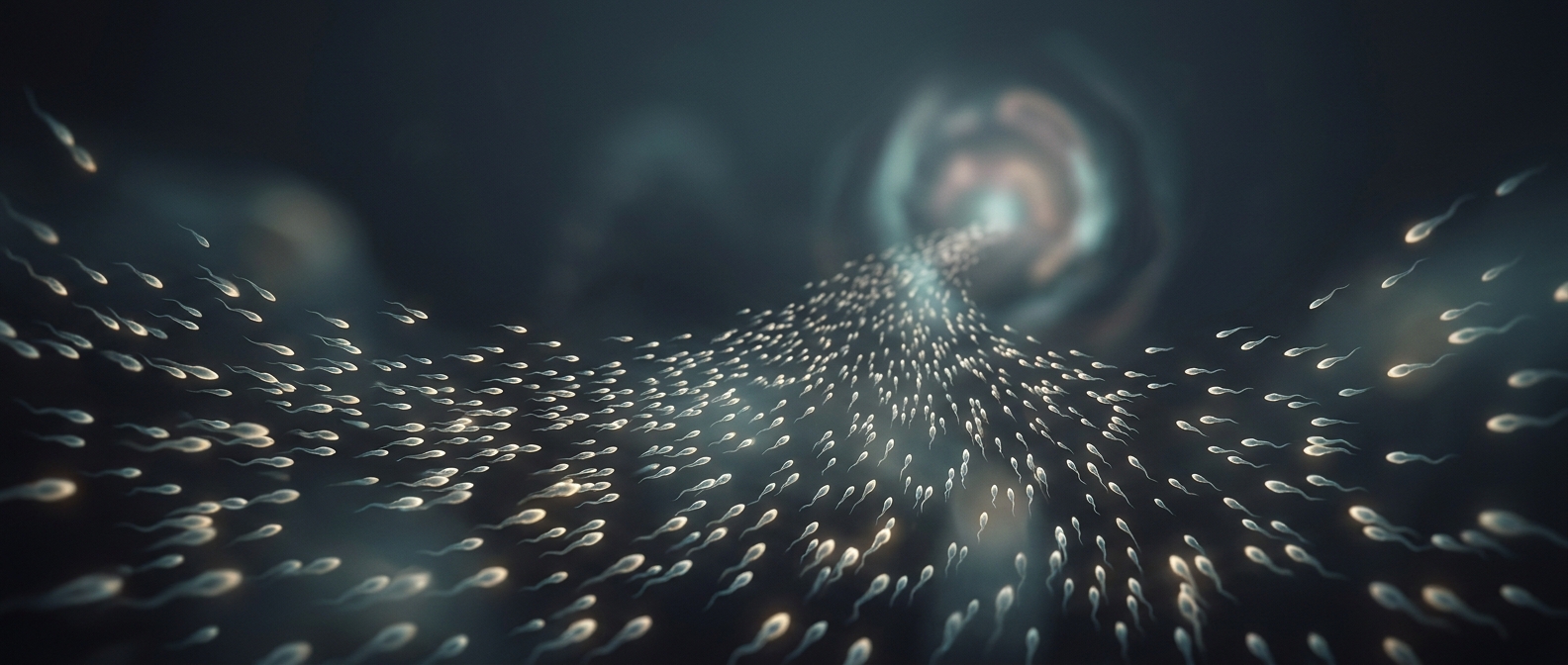
This also helps explain why the egg and sperm look so different. The egg contributes most of the early cell’s cytoplasm and its stored resources, while the much smaller sperm is adapted to deliver its genetic material. Their roles are unequal in size, but both contribute genetic information to the embryo.
Being visible to the naked eye is a reminder that “cell” does not mean “microscopic” in every case. Even so, seeing the egg as a tiny dot reveals none of the organized activity inside it—the crucial work begins at a scale too fine to watch without magnification.