Why a fence became a technology
A plain wire fence can mark a boundary, but it does little to stop a determined animal. Barbed wire added short, sharp points to strands of wire, making contact painful and discouraging cattle from pushing through. That simple change made it possible to enclose large areas without building a solid wall of lumber—a major advantage on the open, treeless stretches of the Great Plains.
As fencing spread, makers altered the wire’s construction and the shape, spacing, and attachment of its barbs. Those details mattered: a fence had to deter livestock while remaining practical to manufacture, string, and repair. The many designs reflect attempts to solve those everyday problems in different ways.
From open range to divided land
Fences changed more than how ranchers contained animals. They also turned open grazing country into a landscape of marked boundaries, affecting where livestock could roam and how people moved across the land. Barbed wire was inexpensive compared with a continuous wooden barrier, but its reach could be extensive: a few strands could divide a broad pasture.
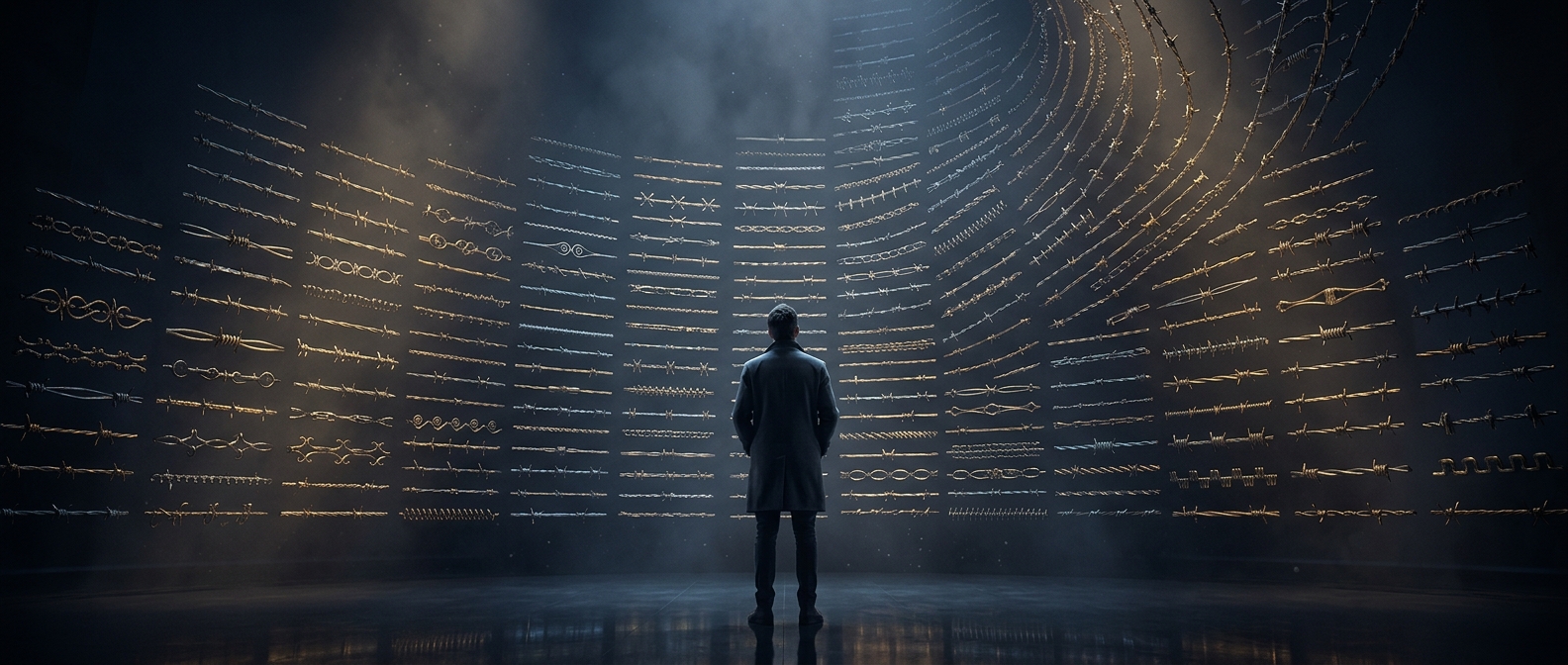
That tension—useful boundary for one landholder, obstacle for someone or something trying to cross—helps explain why the technology inspired so many variations. The museum’s collection makes that practical competition visible: each design is a small answer to the same question of how to control movement across open ground.
Reading the collection
The variety is easier to understand when viewed as a record of incremental engineering, not merely a display of unusual shapes. A change in a barb or the way wire was twisted could affect how the fence behaved in use. Taken together, the designs show how a modest material innovation helped redraw the working landscape of Kansas.