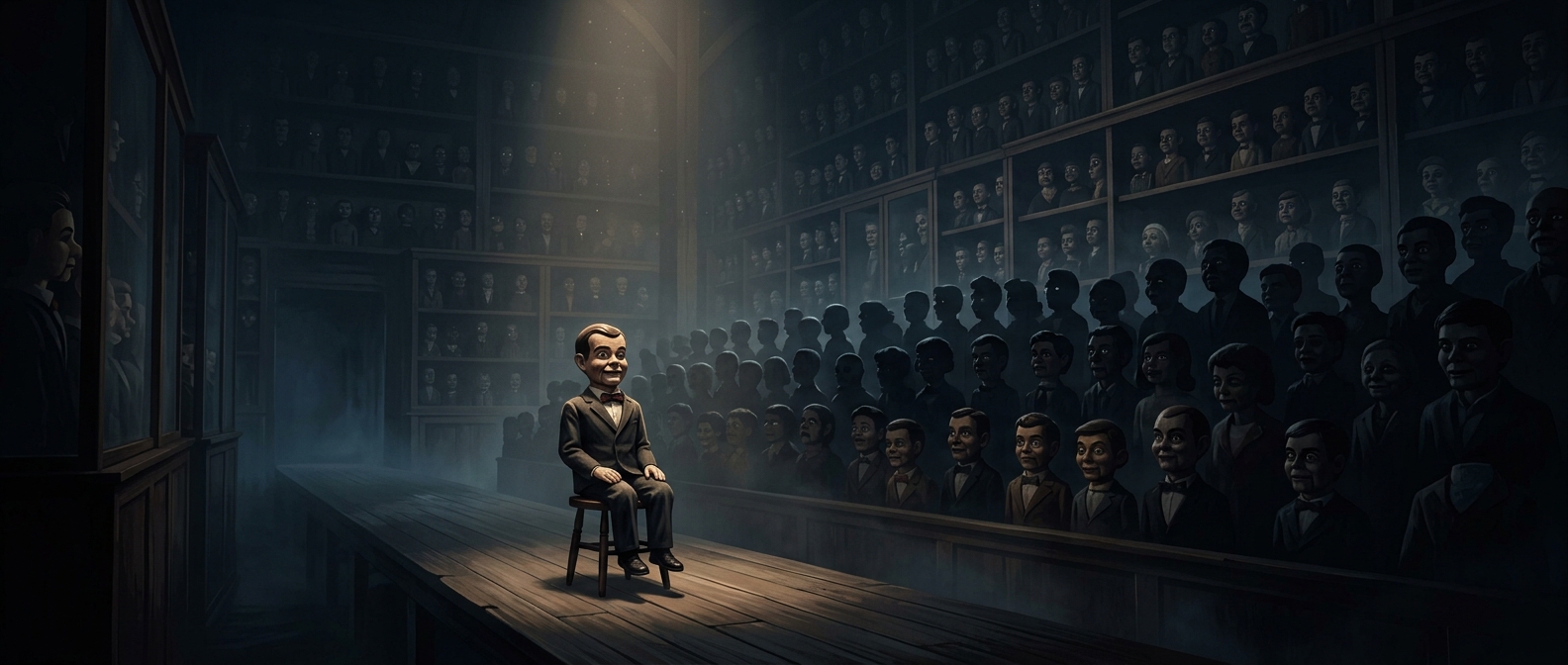
Wooden puppets preserve the mechanics of performance
A wooden puppet is more than a carved figure: it is an object built to move under someone’s control. Strings, rods, joints, and carefully balanced limbs let a performer turn a static body into a character. When the performance ends, those same moving parts become vulnerable to wear, breakage, and loss.
A museum collection can preserve both the figures and evidence of how this kind of theater worked. The wood records the carver’s choices—its shape, finish, and painted face—while the puppet’s construction shows how movement was made possible. Even without a performance, a puppet can reveal the practical decisions behind an art form: what needed to bend, what needed to stay rigid, and how a face could read from a distance.
Keeping an art form visible
Puppets are often tied to individual performers, workshops, or local traditions. As their original owners disappear, objects that once belonged to a working stage risk becoming disconnected from the people and skills that gave them purpose. Preserving a large collection keeps these handmade forms available for display and study rather than leaving them to deteriorate or vanish from view.
The uncanny effect of hundreds of faces looking outward comes from that tension: each figure was made to animate, but now stands still. The collection keeps the material traces of performance in the very moment after the performer has let go.