How a video stream avoids sending every pixel
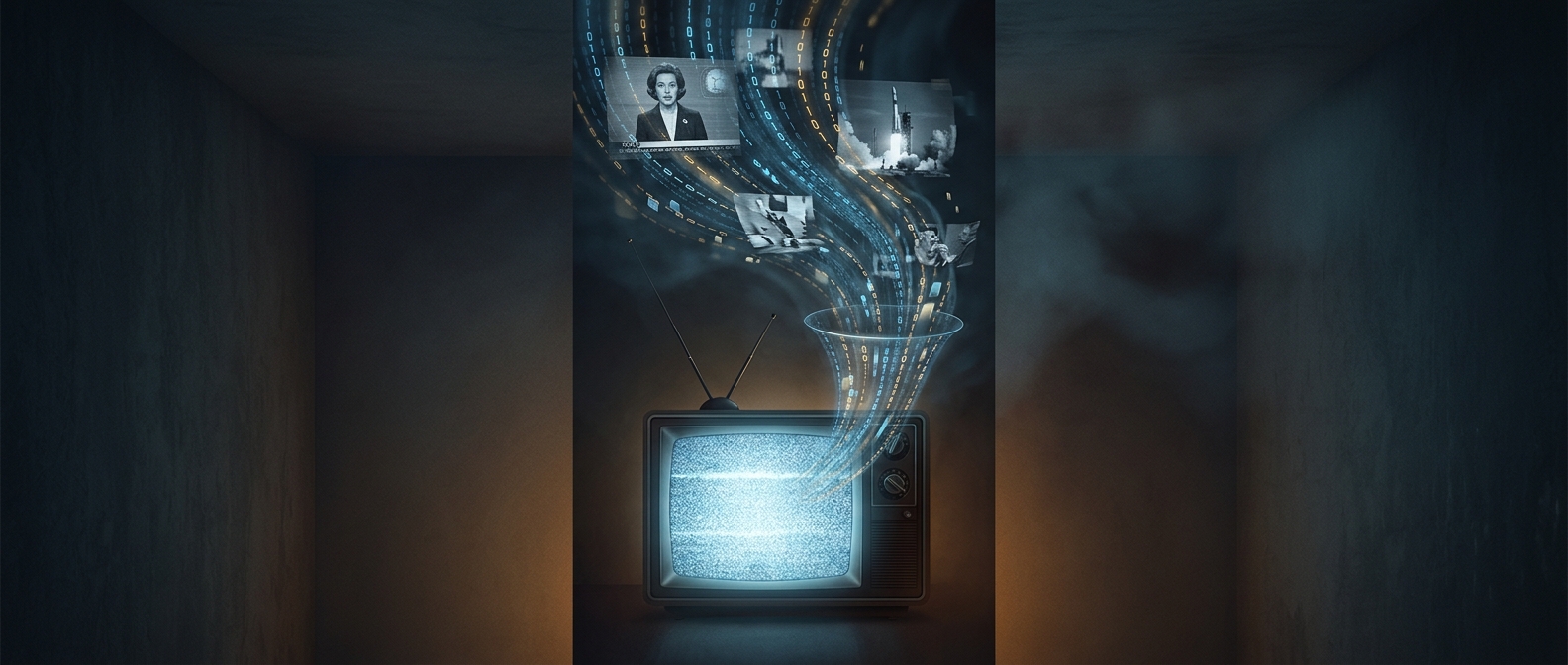
A television picture is a sequence of frames, but neighboring frames often share most of their content. A codec—the software rules used to encode and decode video—can therefore send a reference image, then describe how later images differ. If a camera pans across a mostly still scene, for example, the encoder may describe the movement and send only the new detail that appears at the edges.
The decoder reverses that process as the broadcast plays. It uses earlier or nearby frames as a starting point, applies the transmitted changes, and rebuilds the picture. This saves bandwidth, but it means the displayed image is partly a reconstruction rather than a direct copy of every original frame.
Why blocks appear in difficult scenes
To shrink the stream further, an encoder can discard visual detail that is less noticeable. In many compression methods, it analyzes small regions of an image and simplifies their patterns. When the available data is tight, those regions may be represented too coarsely. Their boundaries can become visible as square patches, especially across smooth areas such as a dark wall or a patch of sky.
Fast motion makes the job harder: more of the image changes between frames, so the encoder has less reusable information and must describe more new detail. If the stream also arrives with missing or corrupted data, the decoder may have to make do with an incomplete update until a usable frame arrives. The result is a visible reminder of the tradeoff: less data to carry can mean less precision in the picture viewers see.