Why curling needs stone that behaves predictably
In curling, a stone is not simply pushed toward a target. Players judge how far it will travel, how it will curl across the ice, and what will happen when it strikes another stone. Those judgments depend on equipment behaving consistently from throw to throw. If the rock’s material varies too much, a player may have difficulty separating a change in technique from an unpredictable response in the stone.
That is why the granite’s internal structure matters as much as its appearance. Water can seep into tiny spaces in stone; when it freezes and expands, it can contribute to cracking. Repeated collisions also put the rock under stress. Granite that resists water and holds up to impacts is better suited to a piece of equipment that must meet ice and other stones again and again.
From island rock to playing equipment
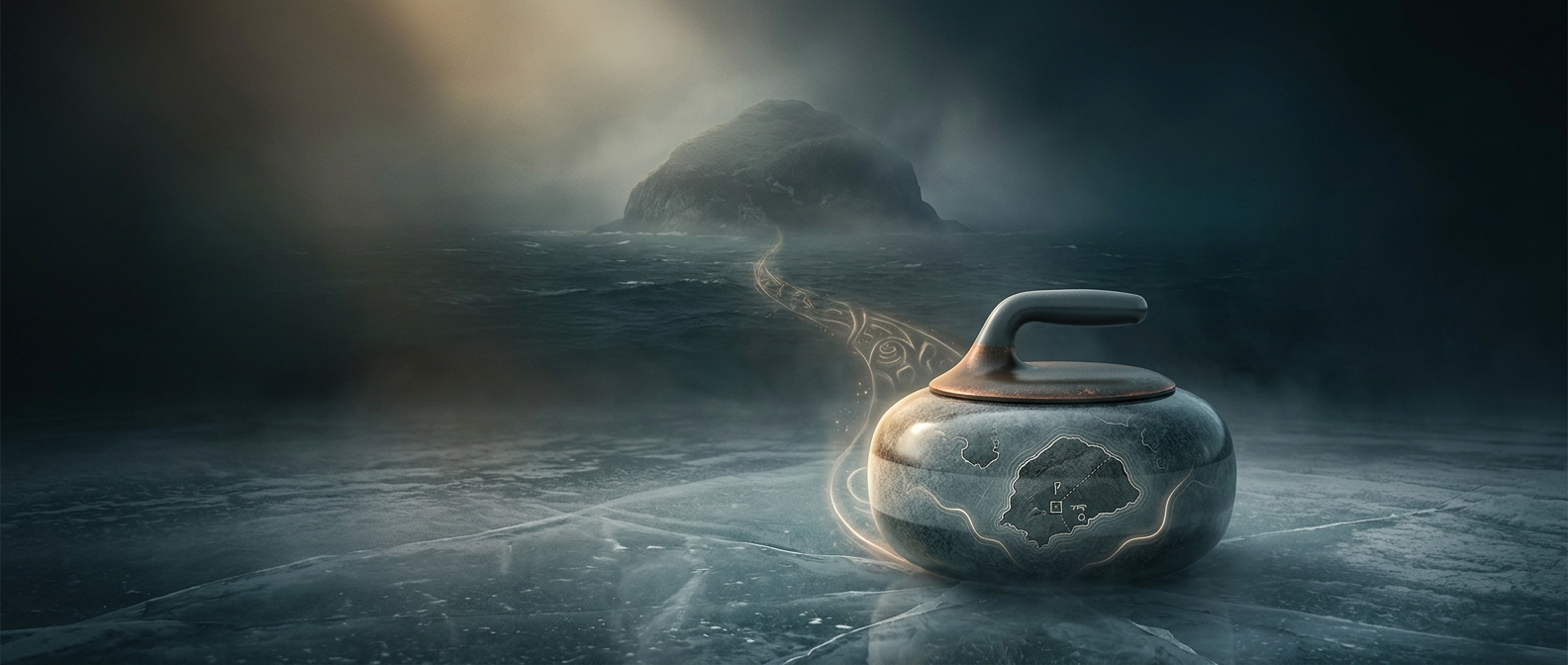
Ailsa Craig’s granite is prized because its qualities make it suitable for this demanding use—not because every piece of granite from the island is automatically a curling stone. The stone must be worked into a precise form, including a carefully shaped underside that contacts the ice. That small contact area helps make the stone’s movement manageable and repeatable.
The result is a striking change of purpose: material formed as part of a Scottish island becomes equipment for a sport built around fine control. At Olympic level, where a small difference in a shot can alter the position of several stones, the rock’s durability and consistency are part of the game’s precision, not merely a matter of tradition.