How a Tiny Air Sac Meets the Bloodstream
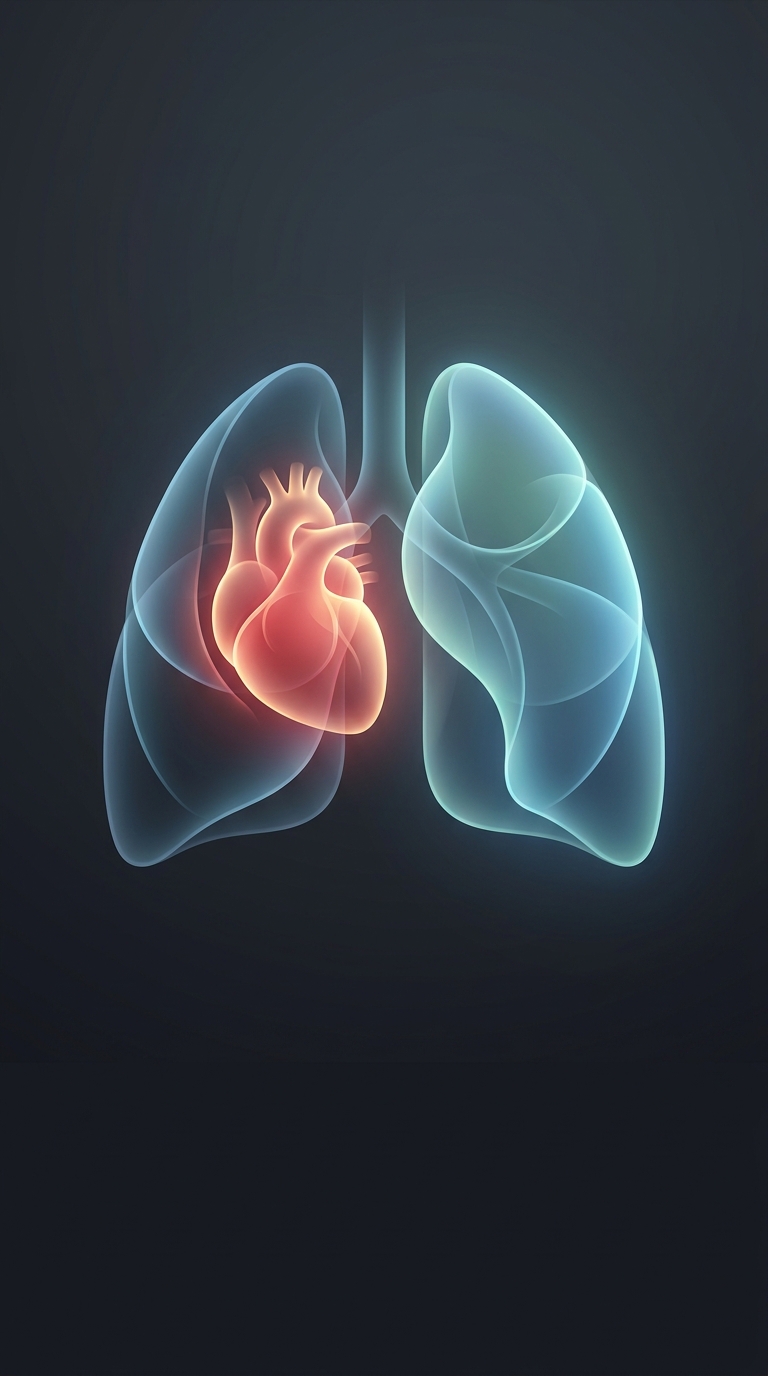
An inhaled breath travels through branching airways until it reaches alveoli—microscopic, thin-walled air sacs at the ends of the lung’s smallest passages. Each sac is bordered by a fine mesh of capillaries, the narrowest blood vessels in the body. Their close contact creates a short route between fresh air and moving blood.
A Thin Barrier Makes Exchange Possible
Oxygen does not need to pass through a long tube or be pumped directly into the blood. It moves across the delicate tissue separating an alveolus from a capillary, traveling from a place where oxygen is more concentrated—the air inside the sac—to a place where it is less concentrated—the incoming blood. This movement is called diffusion.
At the same time, carbon dioxide travels in the opposite direction, from blood into the air sac. The next exhalation carries much of it out of the body. The exchange depends on both sides being replenished: breathing brings in fresh air, while circulation carries oxygen-poor blood to the lungs and moves oxygen-rich blood away.
Why the Network Is So Extensive
A single capillary is too small to carry much blood, but countless tiny vessels spread around the air sacs. This branching arrangement brings blood close to a large amount of air without requiring one enormous vessel. It also distributes the exchange across the lungs, so oxygen can enter the bloodstream as blood flows through many small pathways.
The striking scale is hidden because the vessels are packed into a compact organ. The lungs make gas exchange efficient not with one giant passage, but by placing an immense network of blood beside an immense number of tiny air spaces.