How a song becomes a cue to your past
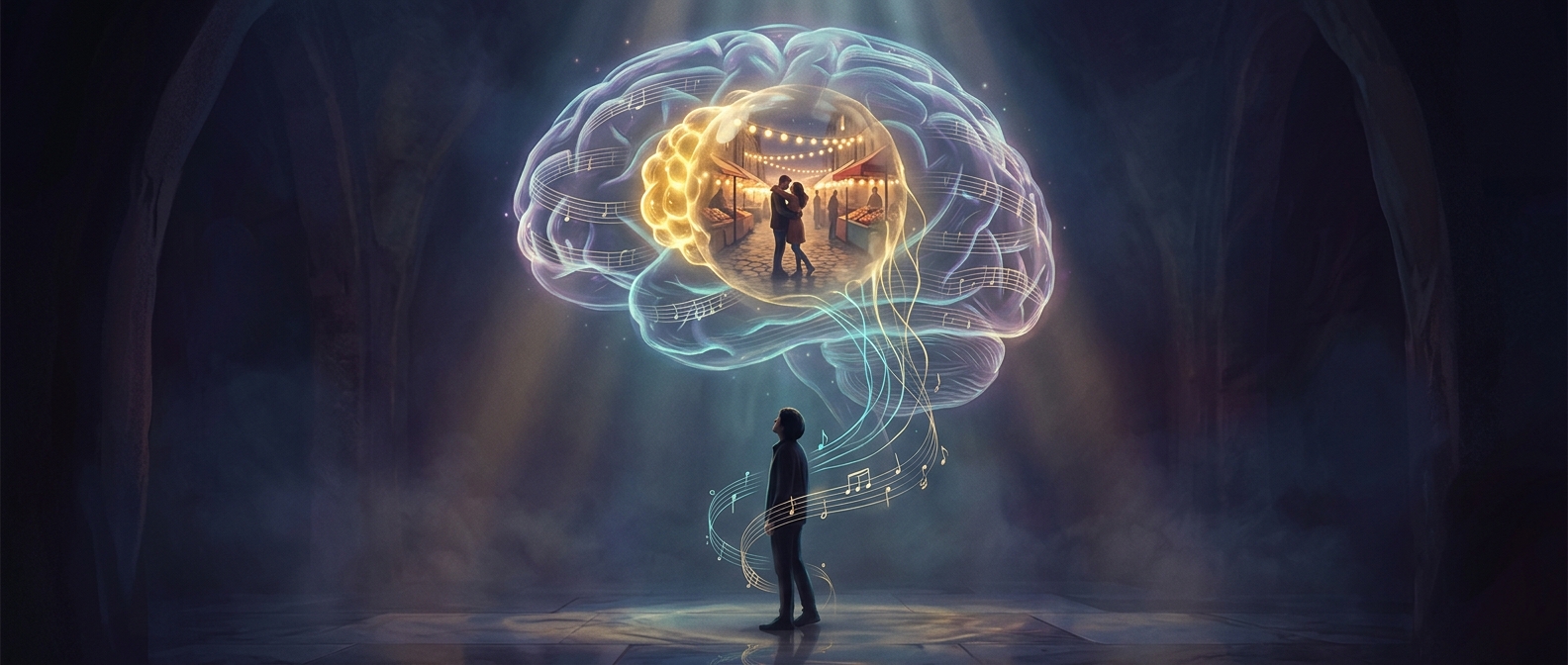
A memory is not stored like a complete recording that can simply be replayed. Remembering involves rebuilding an event from pieces: where you were, who was there, what you felt, and details that were present at the time. A song can become one of those details. Hearing it later provides a cue that helps the mind find the larger episode attached to it.
That is why a familiar track can bring back more than its melody. It may call up the cramped back seat, a friend’s laugh, or the feeling of waiting for someone—details that were never part of the song itself but were linked to listening at the time.
Why music can bring feeling with it
Music combines several memorable features: sound, rhythm, words, and repeated passages. If a song plays during an emotionally important stretch of life, hearing it again can reconnect the sound with that period. Repetition matters, too: a track heard over and over can become closely associated with ordinary routines and particular people, not just with one dramatic event.
The feeling that returns is part of the memory, not proof that the past is being reproduced exactly. Memory is reconstructive: the song can make an old scene feel vivid while details shift or remain out of reach. Sometimes the listener knows the mood before remembering the occasion that gave the music its meaning.
Why a favorite can feel personal
Preference and memory can reinforce each other. A song tied to a rewarding, comforting, or important time may become appealing partly because of those associations. In turn, choosing to play it again strengthens its place in a person’s own history. The track is then doing two jobs at once: it is music in the present and a route into a remembered chapter.
That link helps explain why two people can hear the same chorus and experience entirely different things. One hears a melody; the other hears the beginning of a long drive, with the people and feelings that came along.