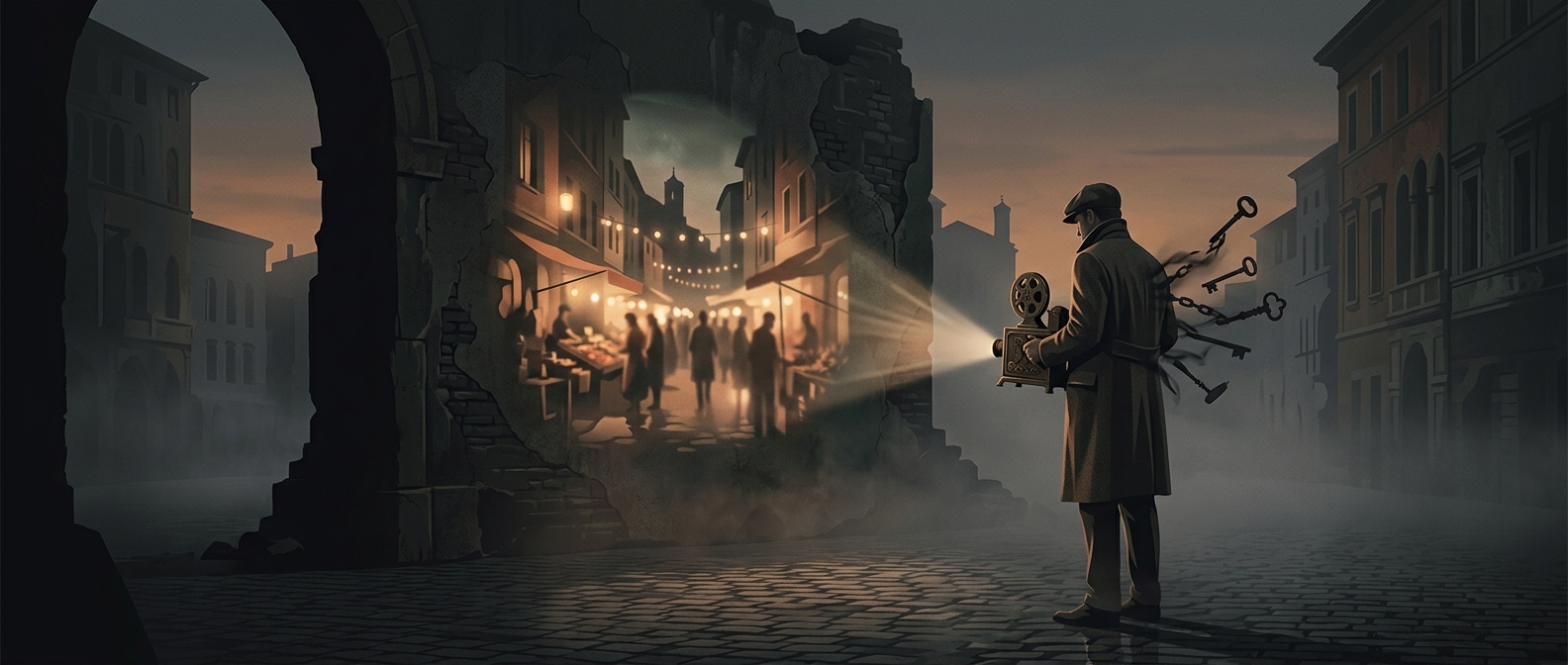
How a moment slips past while it is still happening
Being present is not the same as taking in every detail. Attention helps the brain select what to process from the stream of sights, sounds, and thoughts arriving at once. When it is occupied—by a phone, a worry, or the effort to follow a conversation—other details may receive too little processing to become a clear memory.
Attention shapes what memory can keep
Memory is not a complete recording that the brain replays later. A detail usually has to be noticed and encoded—turned into a representation the brain can retain—before it can be recalled. If attention is elsewhere when someone changes expression or a joke lands, that detail may never become a distinct memory, even though the eyes or ears were exposed to it.
This is related to inattentional blindness: failing to notice something visible because attention is focused on something else. The term does not mean a person is literally blind; it describes how selective attention can leave a noticeable event outside awareness.
The gap can feel like a missing piece
A conversation may remain easy to remember overall while one small beat is absent. Later, someone else can mention the expression or joke, and it may seem surprising that it went unnoticed. The event happened; the attention needed to register it was engaged elsewhere. That is how a moment can be missed before it is over—and why being in the room does not guarantee remembering everything that happened there.