Why Iron Man’s display feels like a pilot’s tool
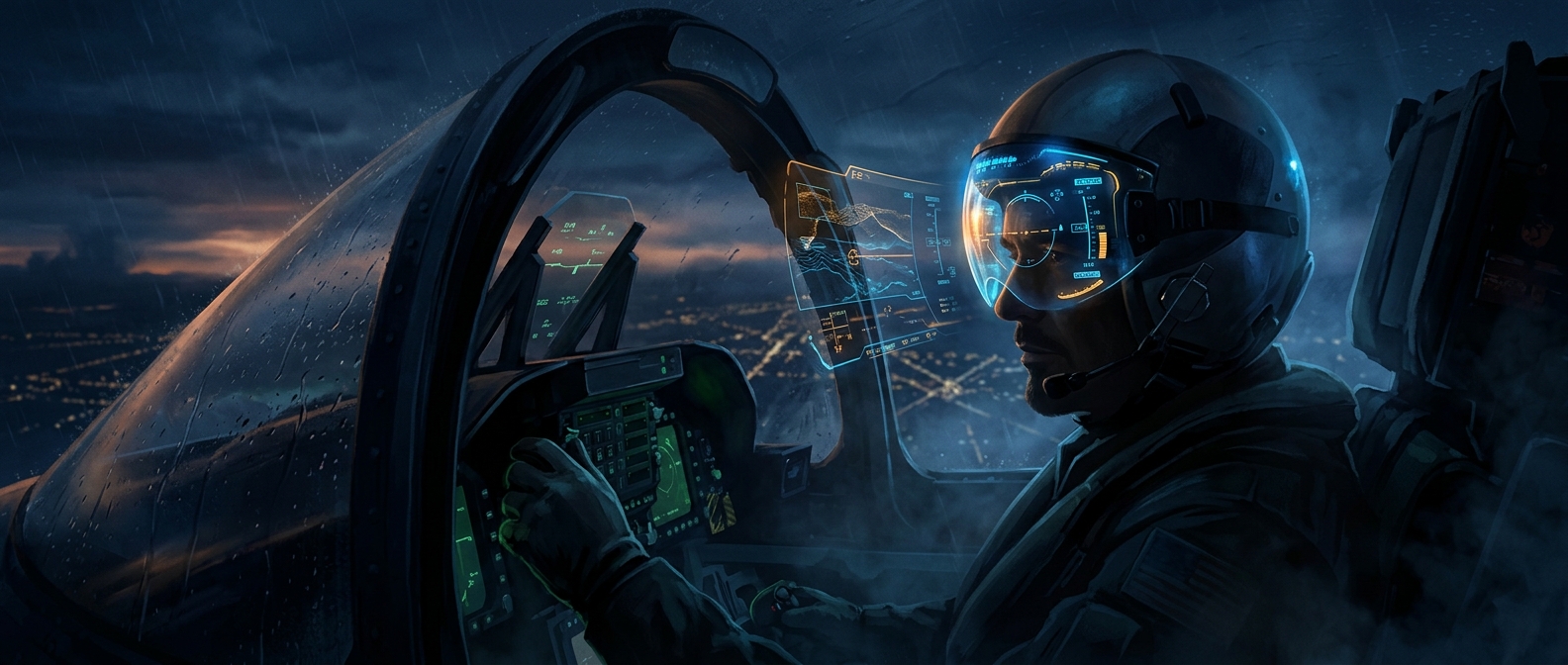
A fighter pilot cannot afford to keep looking down at instruments while tracking an aircraft or navigating. The F-35’s helmet-mounted display puts flight information in the pilot’s field of view, so key readings can be checked without shifting attention to a separate panel. That makes the helmet more than a screen: it is a way to keep information close to whatever the pilot is looking at.
Marvel’s designers drew on that real aviation approach when shaping Iron Man’s fictional heads-up display, or HUD—the graphics layered over a view of the world. Coordinates and altitude readings suggest measurements tied to a moving body in space, rather than decoration floating across a screen.
Turning aviation cues into a character interface
The translation also serves a storytelling purpose. Iron Man’s armor is meant to read as a machine Tony Stark operates, so navigation-style data helps make its glowing graphics feel functional. Viewers can infer that the suit is locating, measuring, or tracking something even when the film does not pause to explain every number.
The resemblance is a design reference, not evidence that the fictional armor works like an F-35. The useful borrowing is the principle: put information where the operator needs it, and make the display feel connected to the world being observed. That is why a few aviation-like readings can make a superhero interface seem less like ornament and more like equipment.