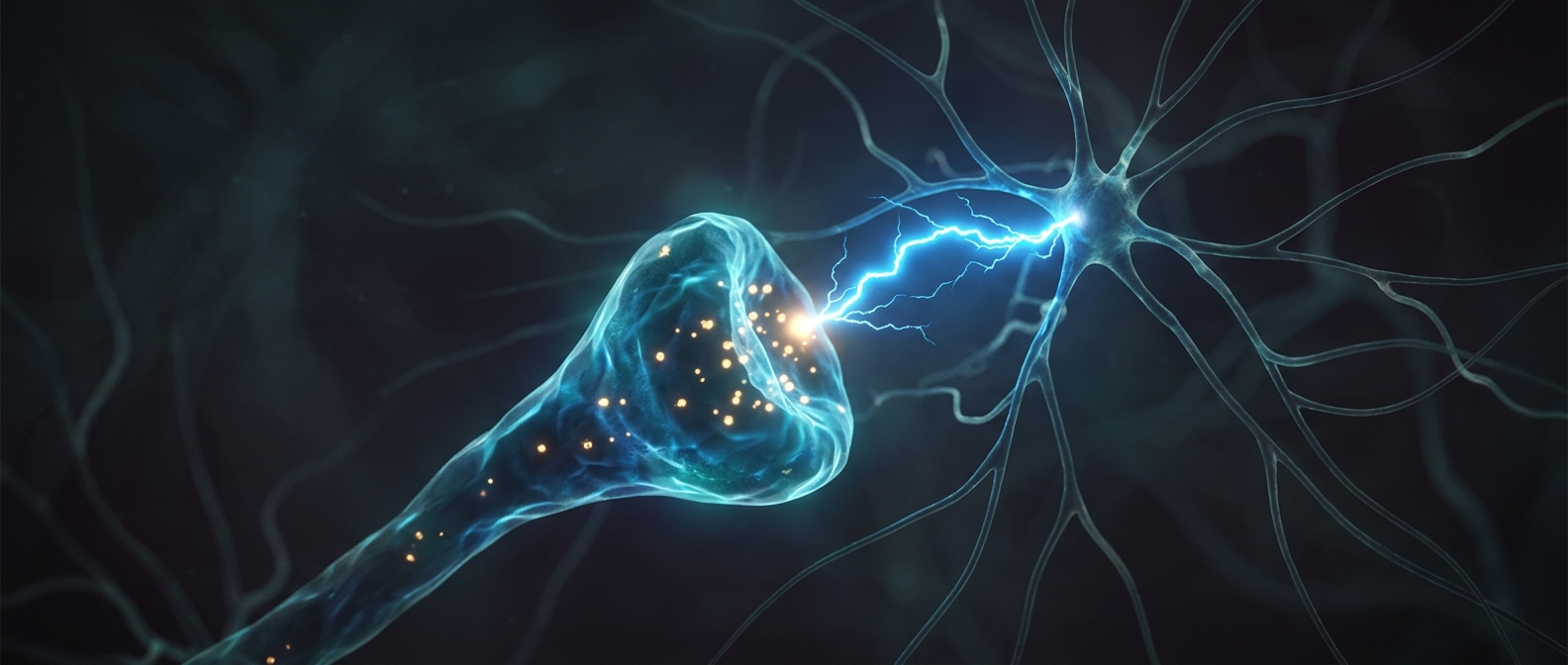
How a nerve signal starts—and resets
A nerve cell keeps more potassium inside than outside, while maintaining the opposite pattern for sodium. Its membrane—the thin boundary around the cell—acts as a gatekeeper, with protein channels that let particular charged particles cross. This uneven distribution stores electrical potential, much like a small, rechargeable battery.
When a nerve signal arrives, channels open in sequence. Sodium flows into the cell, briefly changing the voltage across the membrane. That change travels along the nerve fiber as neighboring channels open. Potassium channels then open, allowing potassium to flow out and helping restore the membrane’s usual electrical state. The cell is then ready to send another signal.
Why potassium balance matters for movement
The signal does not make a muscle contract by itself. It prompts a nerve ending to release a chemical messenger that carries the instruction to a muscle cell. The muscle then generates its own electrical response, which sets contraction in motion. Reliable potassium gradients help nerve and muscle cells produce these rapid, repeatable changes in voltage.
If potassium levels in the blood become severely abnormal, the electrical behavior of cells can be disrupted. Nerve messages and muscle responses may become unreliable, affecting strength and coordination; serious disturbances can also interfere with the heart’s electrical rhythm. The key point is that potassium is not simply a spark: its carefully maintained difference across cell membranes helps each signal happen, stop, and happen again.