A Small Image With a Lot at Stake
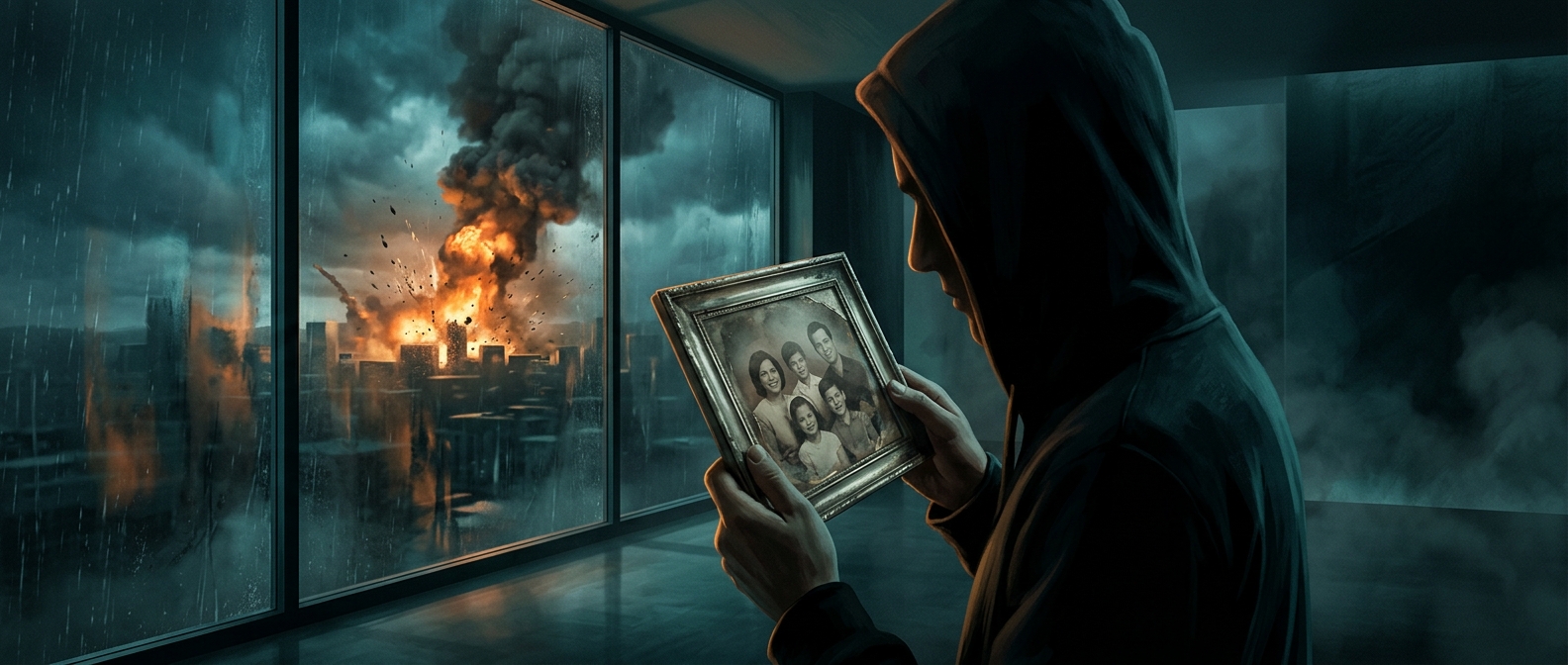
A family photograph can do the work of several lines of dialogue. In a glance, it tells viewers that the character has relationships and a life beyond the immediate danger. The picture makes those attachments visible without requiring the character to explain them.
That matters in a movie, where a crisis often arrives quickly and the audience has little time to learn what the protagonist cares about. A photo offers a compact piece of visual storytelling: the viewer recognizes a loved one, sees the character pause, and understands that survival would protect something meaningful.
Why the Glance Creates Suspense
The image also changes how viewers read the scene. Before the danger arrives, the character may seem to be having a quiet, ordinary moment. But once the story has established what could be lost, the same moment can feel like a warning. Viewers begin anticipating the threat before it appears—a form of dramatic irony, in which the audience senses a consequence the character may not yet see.
The photograph can also make a later loss feel personal. A danger is abstract when described as a threat to “someone’s family”; it becomes specific when viewers have already seen the faces that matter to this character. The picture gives the audience an emotional reference point to carry into the action.
A Familiar Device, Not a Guarantee
Because the image is so quickly legible, filmmakers can use it as efficient setup. But it is a convention, not a rule: a character might look at a photo for comfort, remembrance, or no ominous reason at all. Its effect depends on what the surrounding scene teaches viewers to expect.
When the cue works, the photograph’s stillness becomes part of the tension. The people in it cannot change as the crisis unfolds, while the character’s future with them suddenly feels uncertain.