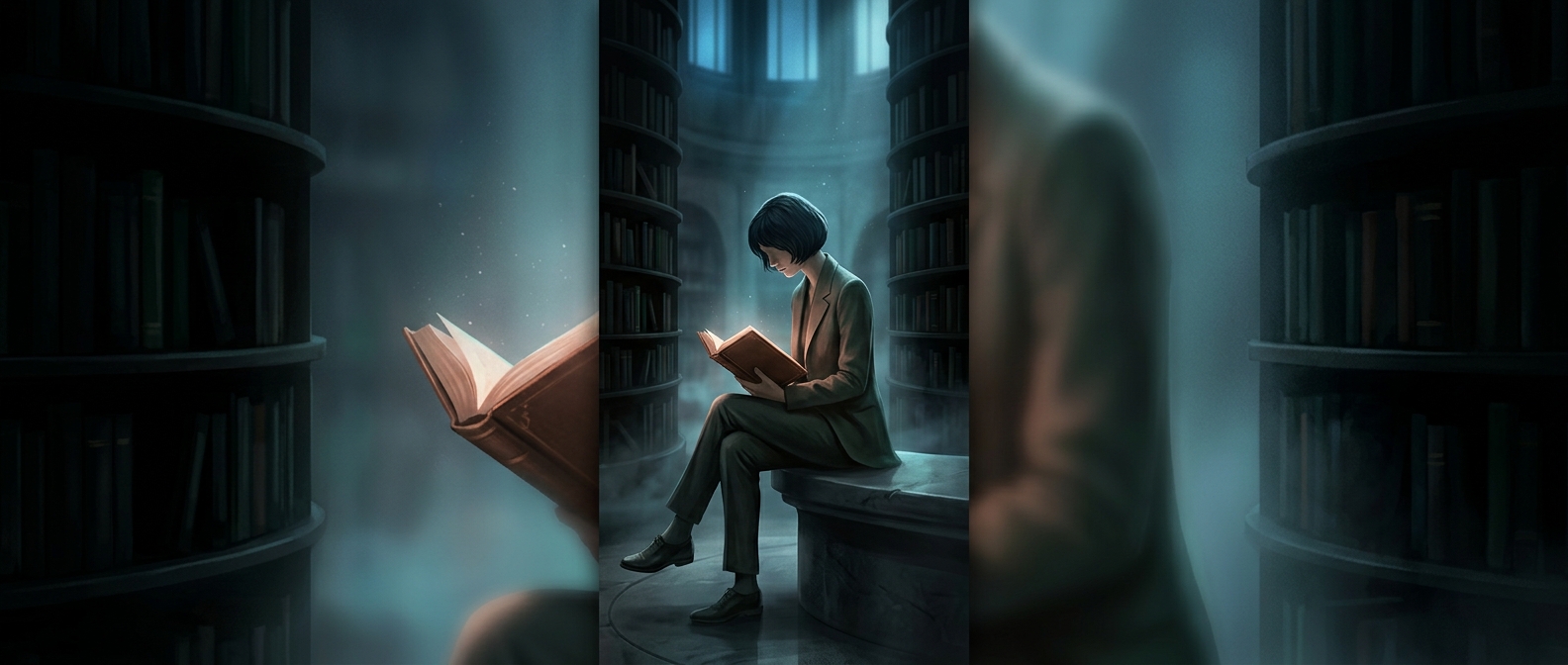
Why a Book Can Look Like a Shield—or a Signal
Reading in public is an unusual social act: the reader is physically among other people but appears to be attending to a private world. A novel gives someone a ready-made reason not to make eye contact or join a conversation. For a shy person, that can make a crowded café or train feel easier to manage without requiring an explanation.
The same visible choice can also invite a different reading. A book’s cover, title, or literary reputation can communicate taste, education, or seriousness to people nearby. In that setting, reading may look less like retreat and more like a quiet display of identity. The signal does not have to be consciously planned; observers can read meaning into an ordinary activity either way.
The Object Doesn’t Reveal the Motive
The ambiguity comes from the gap between what others can see and what they cannot. They see a person with a book, but not whether that person is trying to avoid interaction, pass the time, enjoy a story, or cultivate an intellectual image. A thick classic may prompt assumptions that a paperback thriller would not, yet neither cover proves why its reader chose it.
That is why the stereotype works as a joke about appearances, not as a reliable way to diagnose character. The novel can genuinely provide privacy while also making the reader more noticeable. On a train, the person holding it may be using the book to disappear from the crowd—and, to someone watching, seeming to stand apart from it.