How One Small Circle Filled Many Magazines
A magazine could look like the work of a broad literary world while depending on a surprisingly small group of contributors. The Wellesley Index to Victorian Periodicals spent decades identifying writers who had published under pen names or no clear personal name at all. Once those concealed identities were connected, pieces that seemed to come from many different hands could be traced back to the same authors.
Why the Hidden Names Matter
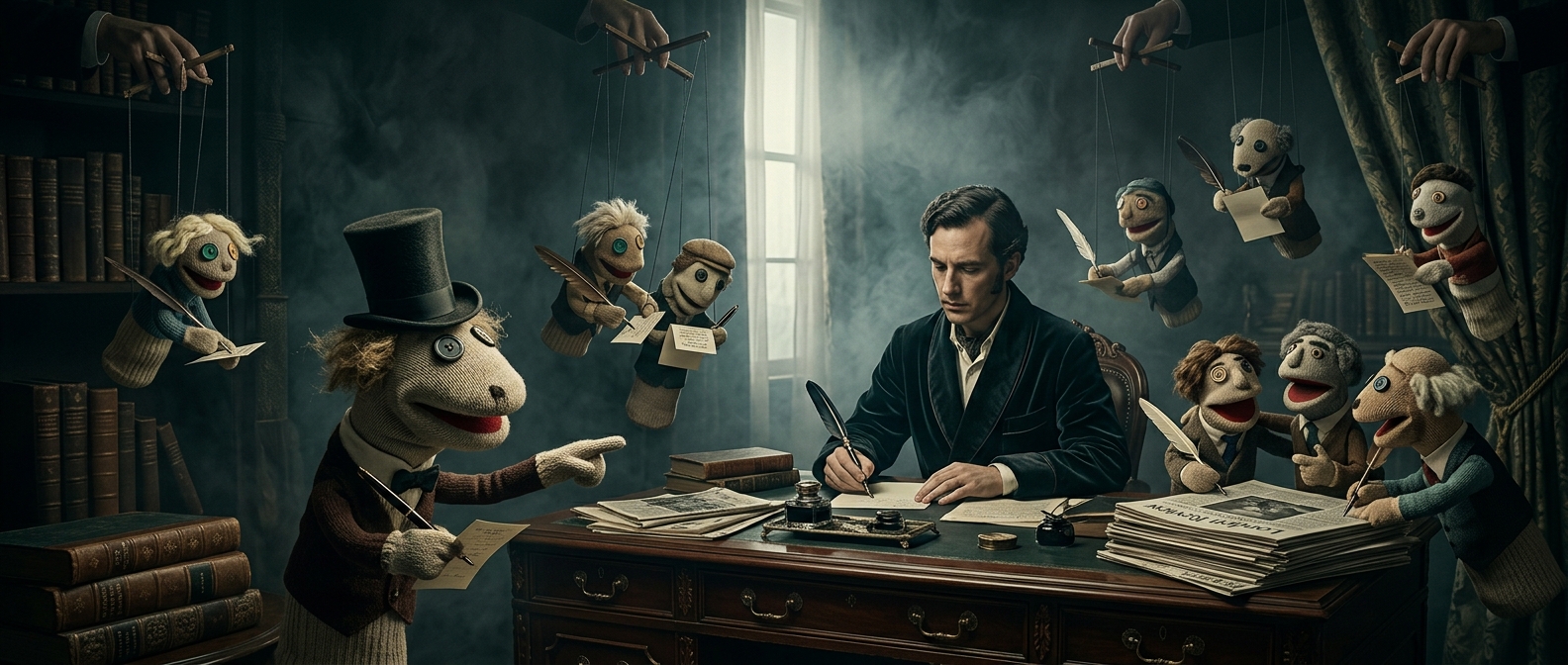
A pseudonym is a substitute name used in place of an author’s own. It can make an individual writer difficult to recognize—and make one writer’s contributions appear to be several people’s work. That matters when historians ask who actually shaped a periodical: counting visible names alone can exaggerate how many voices were involved.
The Index’s findings showed that many highbrow Victorian magazines drew on the same small circle of writers. Their apparent variety, in other words, did not necessarily mean a large or independent pool of contributors. A few people could help supply the ideas and prose across multiple publications, even when readers could not see the overlap.
A Different Map of Victorian Publishing
Identifying authors changes the picture from a row of separate magazines to a connected network of writers. It also gives readers a reason to treat anonymity as more than a curiosity: concealed bylines can hide how concentrated a publication’s intellectual labor was. The lasting surprise is that a crowded magazine page may have represented far fewer distinct voices than its names suggested.