Why Glass Became a Shortcut for On-Screen Genius
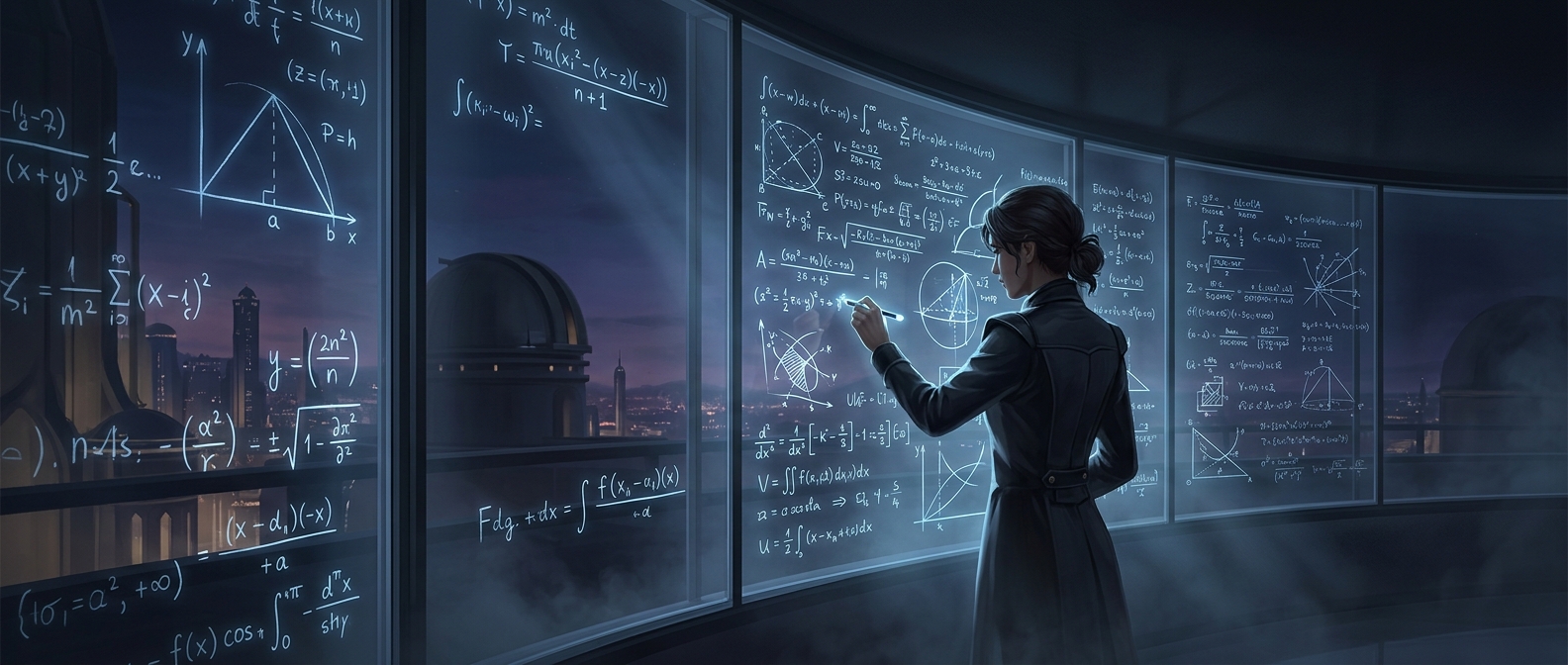
A chalkboard covered in equations can look like the result of ordinary work. Glass changes the impression: it lets the camera show a character’s face and the writing at the same time, making the ideas seem to occupy the same space as the thinker. The character appears to be reasoning in real time, not merely presenting a finished answer.
The Camera Can See Both Sides
A transparent board gives filmmakers a useful visual compromise. With an opaque board, writing may hide an actor’s face; with paper or a notebook, the audience may not see enough of the work. Glass keeps the performer visible behind layers of symbols, so a shot can frame the person, the equations, and the act of writing together.
The effect also turns an abstract skill into readable action. A character adds a term, circles a result, or fills a pane while speaking. Viewers may not be able to follow the mathematics, but they can see its volume and speed. The writing becomes visual evidence of concentration and expertise.
Why the Equations Often Face Backward
Writing on the side of the glass facing the camera can put the marks between the lens and the actor. That makes them easy to photograph, but the performer may have to write in reverse or work from the far side so the symbols read correctly to viewers. Either way, the unusual arrangement adds to the sense that the character is operating by rules ordinary people do not share.
The trick is less about demonstrating a genuine calculation than about staging intelligence. A screenwriter can show a leap of thought in a few seconds by letting the board fill up; the audience gets the impression of a mind moving faster than the conversation around it.