Why the First Breath Becomes a Scene
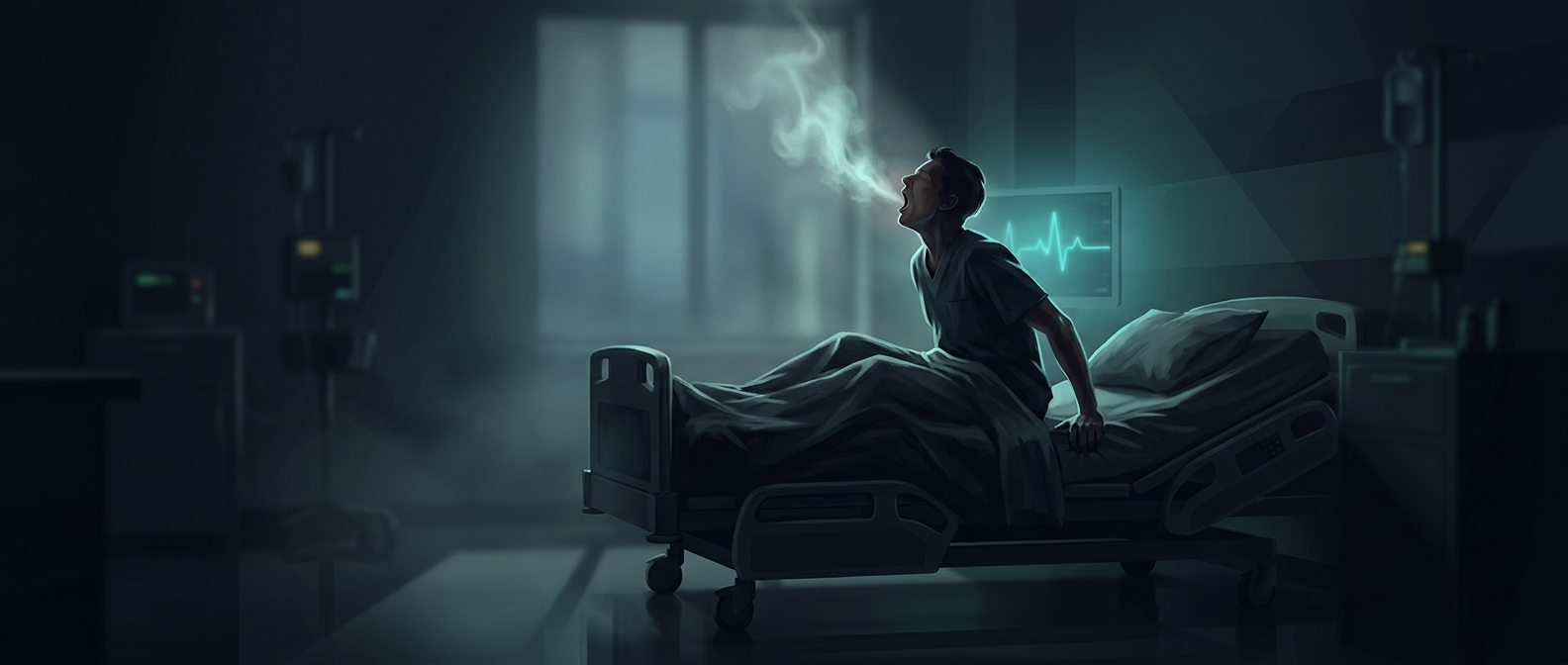
A gasp gives a screen audience an immediate signal: something has changed. A character who had seemed unreachable suddenly moves air, and the sharp sound turns an invisible shift in consciousness into a visible, audible event. It also gives the actor a clear physical transition—from stillness to effort—in a single beat.
The gesture carries a familiar underwater image: breaking the surface and drawing breath. That makes the character’s return feel like a passage from one state to another, even when the story has shown little about what happened during the unconscious spell.
The Drama Compresses a Longer Process
In real life, waking after a period of unconsciousness is not necessarily a clean, gasp-marked moment. The cause and duration matter, and a person may become responsive gradually or remain confused and weak. A gasp can occur in some circumstances, but it is not a standard sign that someone has recovered.
On screen, the single breath is useful precisely because it compresses uncertainty into a cue viewers recognize. The character’s first gasp makes the return feel sudden; what follows—recognition, speech, or the discovery of how much time has passed—can unfold as the next part of the story.