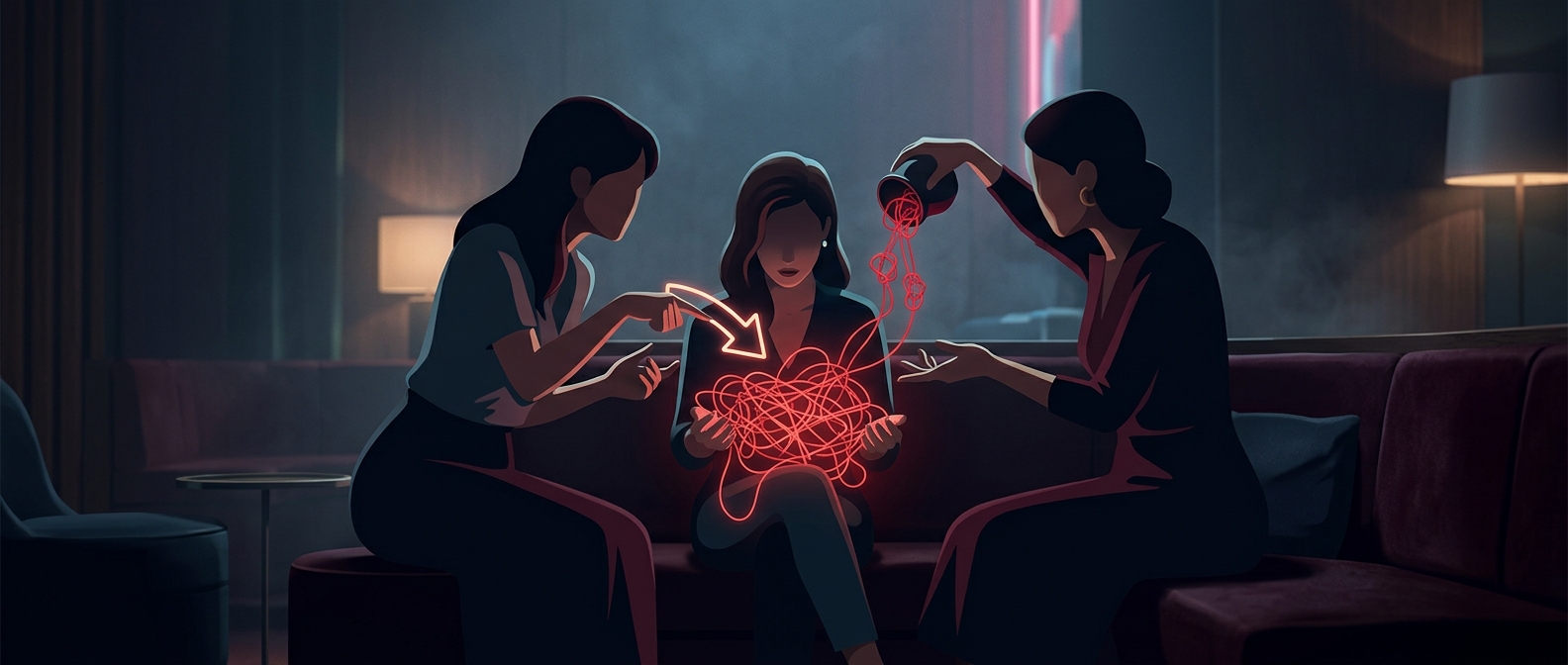
The Best Friend as a Plot Lever
A movie has limited time to show how its main character makes choices. A best friend can turn private confusion into a scene: the protagonist explains a crush, hears a confident suggestion, and acts before thinking it through. The advice does not have to be sensible. It has to make the next mistake feel like a choice the character could plausibly make.
That is why the friend’s counsel often fits the protagonist’s weakness. Someone afraid of rejection may be urged to play it cool; someone who avoids honest conversations may be told to stage a grand gesture instead. The friend’s bad idea gives the lead a nudge, but the resulting trouble also exposes a flaw the story can develop.
Why the Friend’s Own Story Disappears
Giving the side character a substantial romance, career problem, or private ambition would take time away from the central relationship. In a tightly paced comedy or romance, the friend is often designed to keep the lead’s story moving rather than compete with it. A few scenes can establish loyalty and comic confidence without requiring a second storyline.
The tradeoff is that the friend can feel less like a full person and more like a convenient mechanism. But the device serves a clear dramatic purpose: it helps push the protagonist into a decision, then lets the consequences reveal what the protagonist actually needs to learn. The advice may be terrible; its most useful effect is that it forces the lead to stop hovering at the edge of the story and do something.