Why the Glasses Push Signals “I’m Smarter Than You”
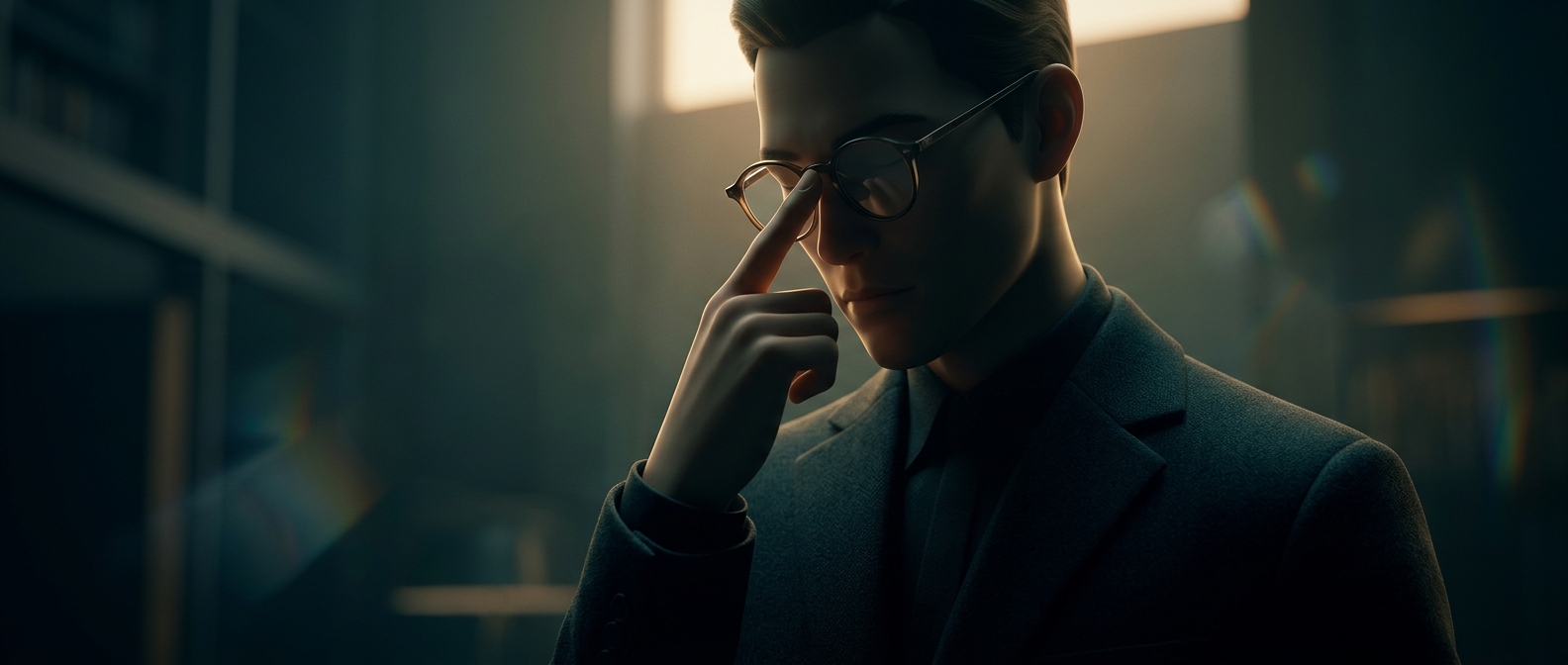
In film, television, and animation, a small gesture can do the work of a long introduction. A character nudges their glasses up, then explains why everyone else has misunderstood a plan. The movement becomes a visual cue: this person is precise, self-assured, and ready to prove it.
That meaning comes from the scene around the gesture, not from glasses themselves. A deliberate adjustment gives the character a beat to pause before speaking, as if arranging both their thoughts and the room’s attention. When paired with a calm or patronizing explanation, the pause reads as control—and can make confidence look like arrogance.
A quick visual shortcut
Writers and performers use recognizable gestures to communicate personality quickly. The glasses push is especially convenient because it is easy to see, easy to repeat, and can be timed to a reveal: the character adjusts the frames, then lays out the supposedly obvious solution. In animation, the movement can be enlarged for comic emphasis; in live action, a restrained version can suggest cool calculation.
The joke often depends on a gap between the character’s self-image and how others see them. They may truly have a clever plan, but the smug delivery turns competence into a performance of superiority. That is why the gesture can make an explanation feel less like help and more like a lecture.