Turning a Dry Meal Back Into Food
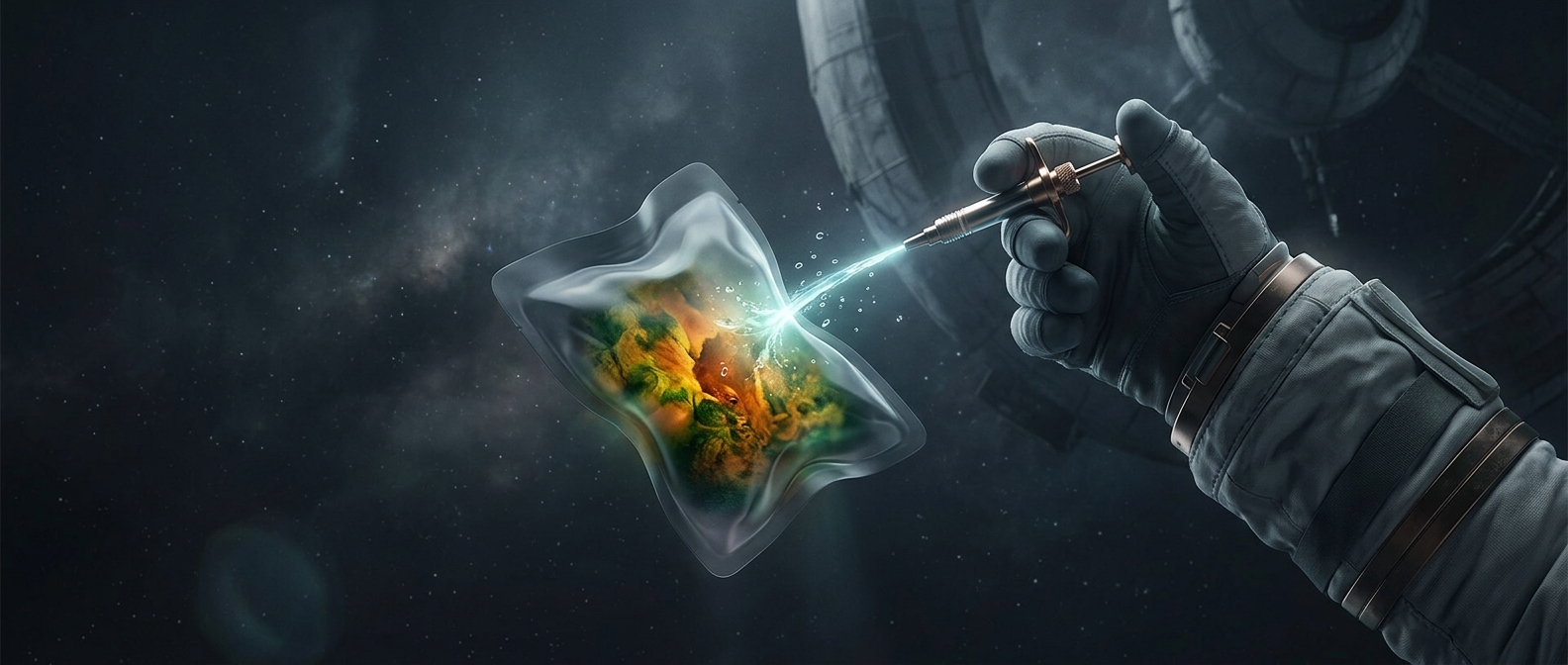
Freeze-drying removes most of a meal’s water before it is packed. That makes the food lighter and easier to store, but it also leaves it too dry to eat as prepared. In orbit, the crew restores it by adding water directly to the sealed package rather than pouring it into a bowl.
The dispenser’s nozzle mates with the bag’s small valve and sends water inside. The valve is designed to admit the water while keeping the opening closed around the connection; once the nozzle is removed, it helps keep the contents contained. The astronaut can then work the water through the meal inside its bag, instead of handling loose pieces in the cabin.
Why the Bag Matters in Orbit
On Earth, gravity pulls a spill down toward a counter or floor. In a spacecraft, a released droplet can drift away, and crumbs can become a nuisance around equipment. A sealed bag turns rehydration into a controlled transfer: water goes into the food, and the meal stays in its container while it softens.
That small valve solves a practical problem created by weightlessness. It lets astronauts prepare a meal without needing an open cup or a cleanup surface—because in orbit, even adding water is a task of keeping every drop where it belongs.