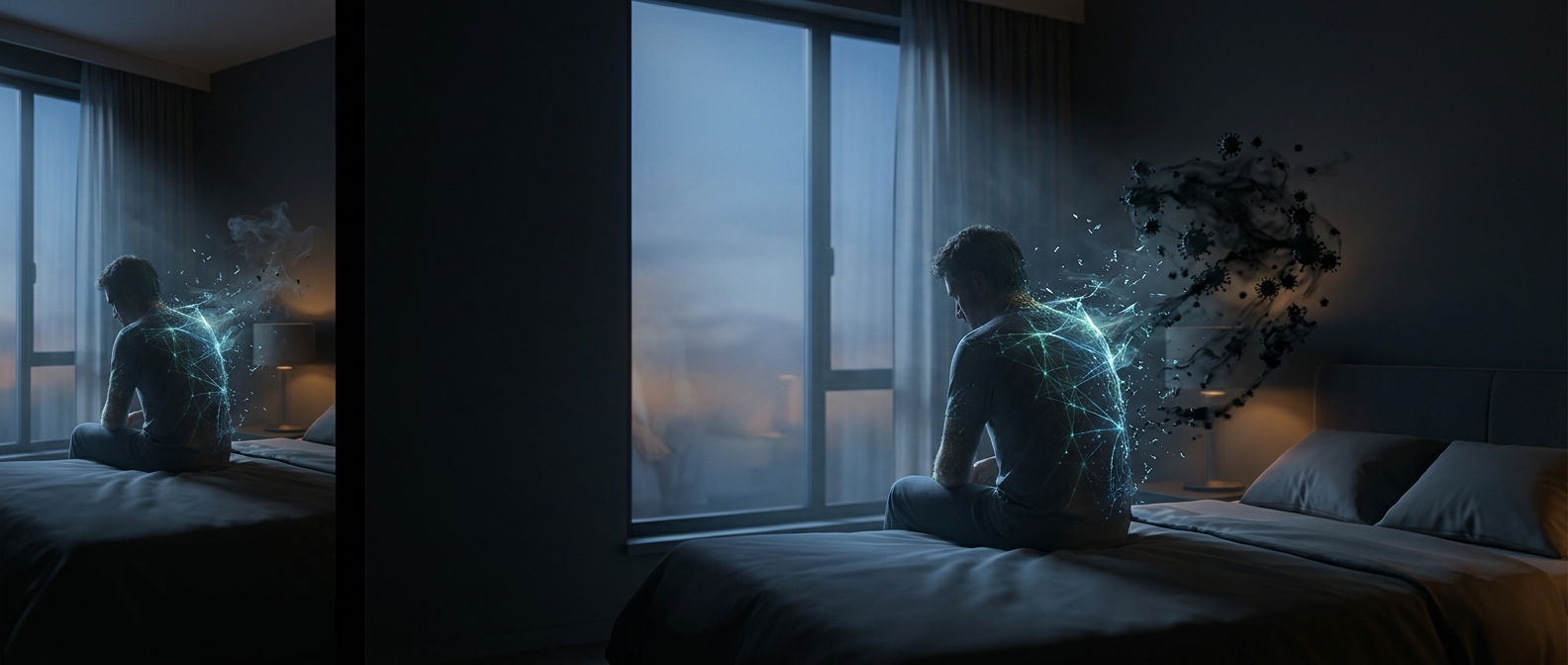
How a lost night can alter immune readiness
The immune system is not simply switched on or off. It relies on different kinds of cells and proteins that detect threats, coordinate a response, and help target invading microbes. Sleep helps regulate the signals that keep these defenses organized. After a night without sleep, levels or activity of some immune components can shift, leaving parts of the system less prepared than usual.
The connection runs through the body’s daily rhythms
Immune activity changes over the course of a day. During sleep, the body adjusts hormones and chemical messengers that influence where immune cells travel and how strongly they respond. Staying awake through the night disrupts that timing. The result can be a measurable change in circulating immune cells or antibodies—the proteins that recognize specific threats—not an across-the-board collapse of immunity.
That distinction matters: a lower reading for one component is evidence of altered readiness, not a direct measure of whether someone will catch an infection. Exposure to a virus and many other factors also shape that outcome.
Why one night is still worth noticing
The body can recover from an isolated sleepless night, but the episode shows how closely immune regulation is tied to sleep. Repeatedly cutting sleep short may keep disturbing the rhythms that help coordinate defenses. A single rough night does not make illness inevitable; it can, however, temporarily change the conditions under which the immune system responds.