Why fluorine had to be made in a sealed, carefully controlled setup
Fluorine was not simply waiting to be collected from a mineral. In nature, it is usually bound into compounds because free fluorine reacts so readily with other substances. Even water and many materials used to build laboratory equipment can become part of the problem: the gas may react with them before it can be gathered.
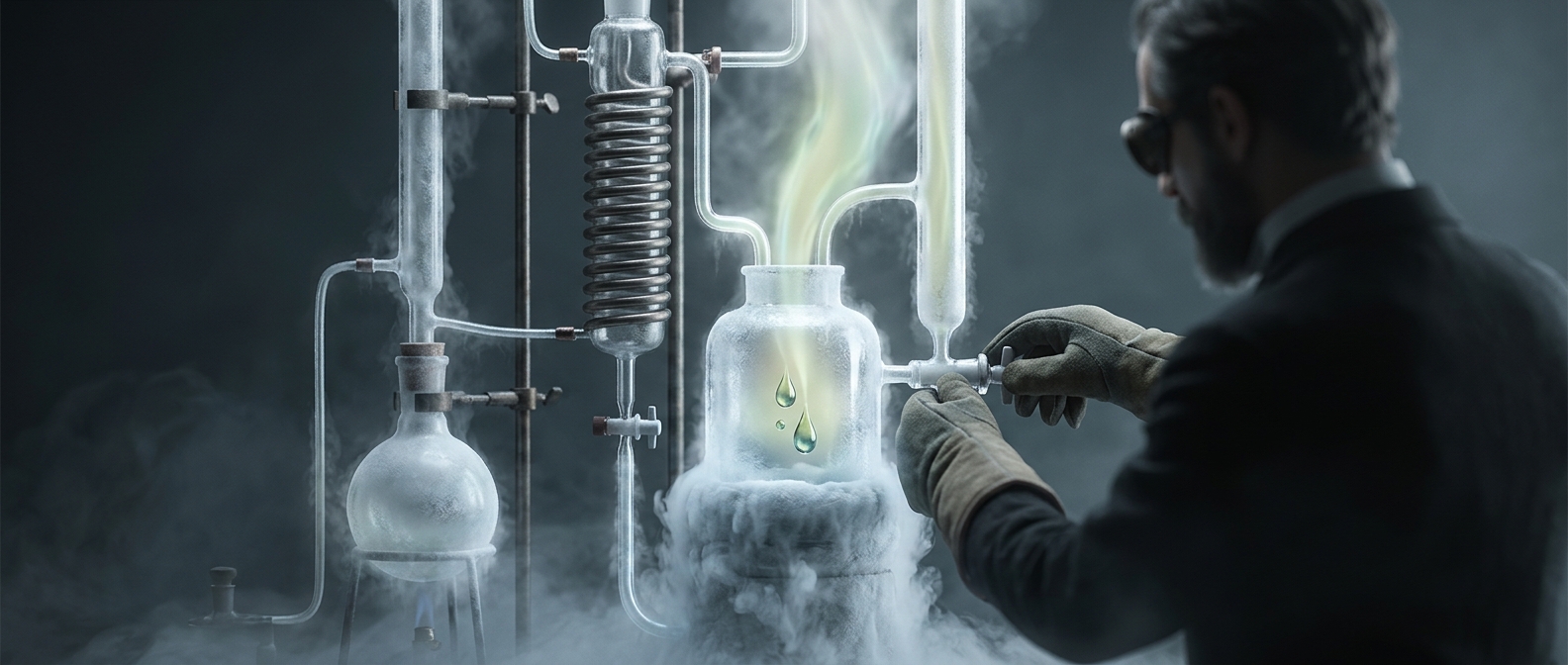
Henri Moissan’s solution was to generate fluorine from hydrogen fluoride by electrolysis—using an electric current to split a chemical compound. He worked with exceptionally dry materials and a specially prepared apparatus, limiting the opportunities for the newly formed gas to react with moisture or its surroundings.
What the cold changed—and what it could not
Cooling the apparatus slowed unwanted chemical reactions, making the process more manageable. It did not eliminate fluorine’s reactivity, so Moissan still had to control what the gas touched and keep the conditions suitable for producing and collecting it. Cold was a way to buy a narrower working window, not a way to make the element safe.
That distinction mattered beyond the immediate experiment. Isolating fluorine made it possible to study the element itself rather than infer its properties from compounds. The achievement depended not on finding a container that fluorine could never attack, but on arranging the experiment so the gas could be produced and handled before reactions with its surroundings took over.