Why muscles become fixed after death
A muscle contracts when tiny protein filaments slide past one another. One set of filaments forms myosin, whose heads attach to actin, the other set. ATP—the molecule cells use to transfer energy—lets myosin detach again. Repeated attachment and release are what make a muscle shorten and then relax.
What changes when ATP runs out
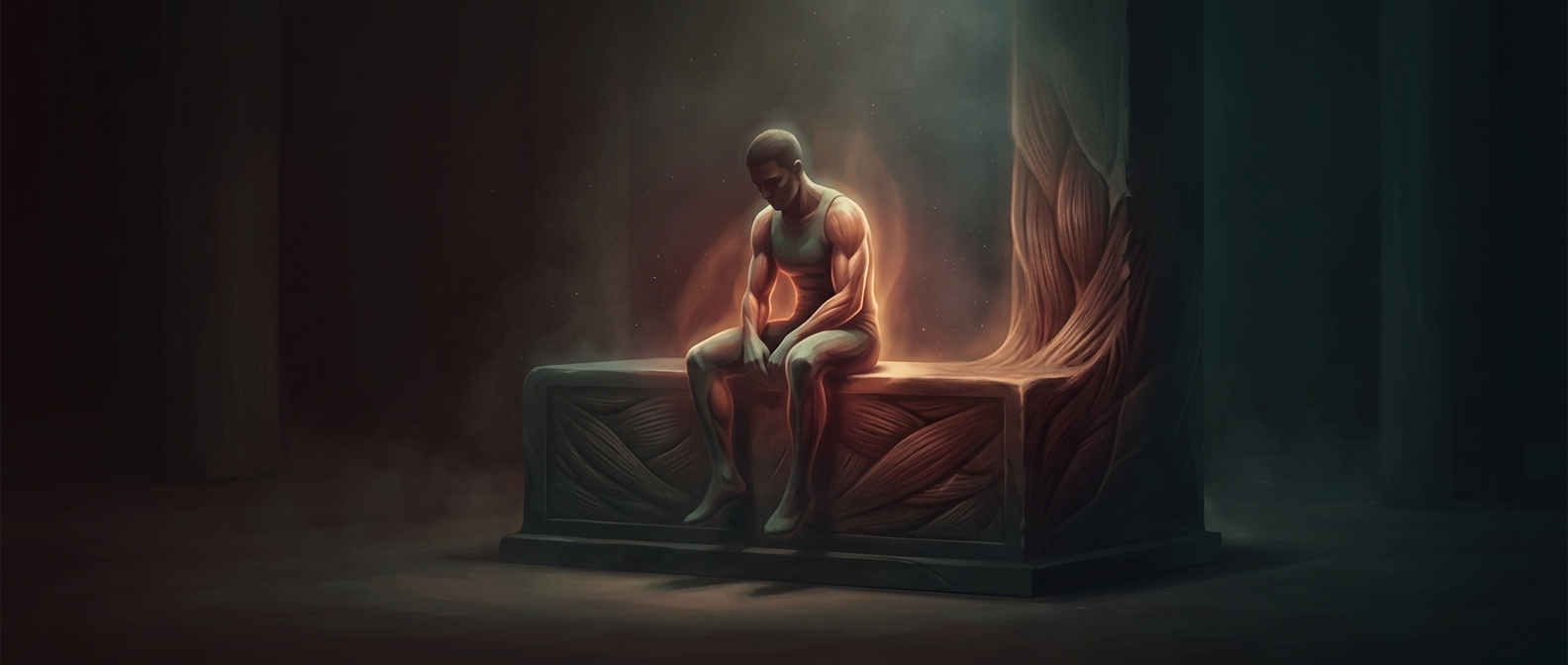
After circulation stops, muscle cells no longer receive oxygen and nutrients needed to keep making ATP. The ATP already in the cells is used up. Myosin can still attach to actin, but without ATP it cannot let go, leaving many microscopic grips stuck in place. That is why rigor mortis is not a final, deliberate muscle contraction: it is a failure of the normal release mechanism.
The same energy shortage also disrupts the cell’s control of calcium, a mineral that helps switch contraction on. Calcium leaks into the muscle fibers and encourages more binding between actin and myosin. Together, the stuck grips and disrupted control produce the familiar stiffness.
Why the stiffness eventually fades
Rigor mortis is temporary because the muscle’s structure does not remain intact indefinitely. Enzymes within cells and other natural processes gradually break down proteins and surrounding tissues. As the filaments lose their organized structure, they can no longer hold the muscles rigidly in place.
So the body’s progression from limpness to stiffness and eventually back toward looseness reflects changing chemistry and tissue breakdown—not muscles continuing to work after death.