How a muscle fiber turns a signal into force
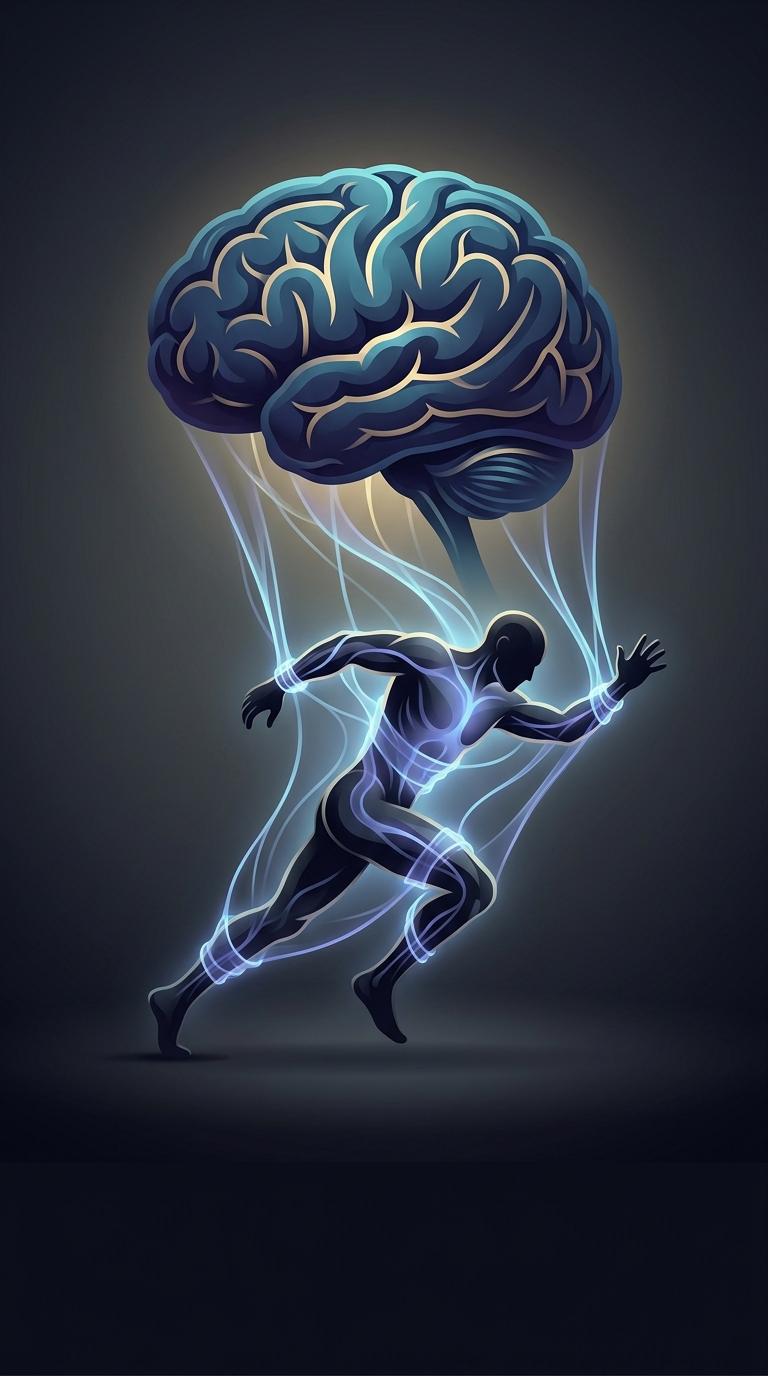
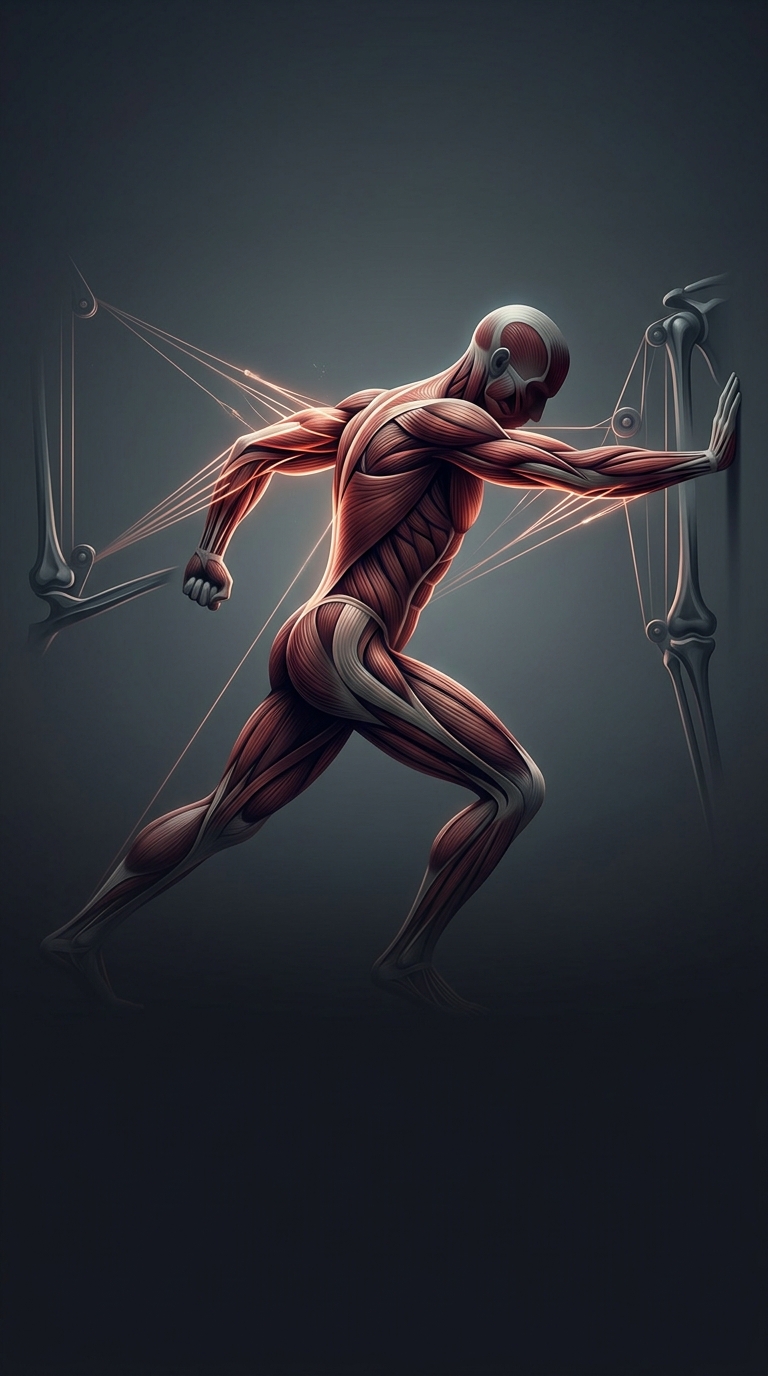
Most of the body’s muscle mass is skeletal muscle: the tissue attached to bones that lets you walk, lift, breathe, and hold your posture. A nerve signal prompts a muscle fiber to release calcium inside the cell. Calcium allows tiny protein filaments—actin and myosin—to grip and slide past one another, using energy from ATP. The fiber develops tension; when enough fibers work together, that tension moves a bone or steadies a joint.
A muscle does not have to visibly shorten to be working. When you hold a heavy bag still, for example, its fibers generate force to resist the pull of gravity. Muscles also work in opposing groups: one group can produce a movement while another controls or brakes it, keeping motion from becoming a fall or a jerk.
Muscle is working tissue, not just a motor
Muscle helps regulate the body beyond movement. It uses glucose for energy and stores some of it in a form called glycogen, which can be drawn on during activity. Muscle contractions also produce heat—a reason shivering, which consists of rapid contractions, can help warm the body.
The share of body mass made up of muscle varies with factors such as age, sex, body size, and training. That percentage alone does not tell how strong or capable someone is: strength also depends on how effectively the nervous system recruits fibers, how muscles coordinate, and what the task demands. The striking implication is that a large part of the body is continuously serving several jobs at once: producing force, stabilizing movement, and helping manage energy and heat.