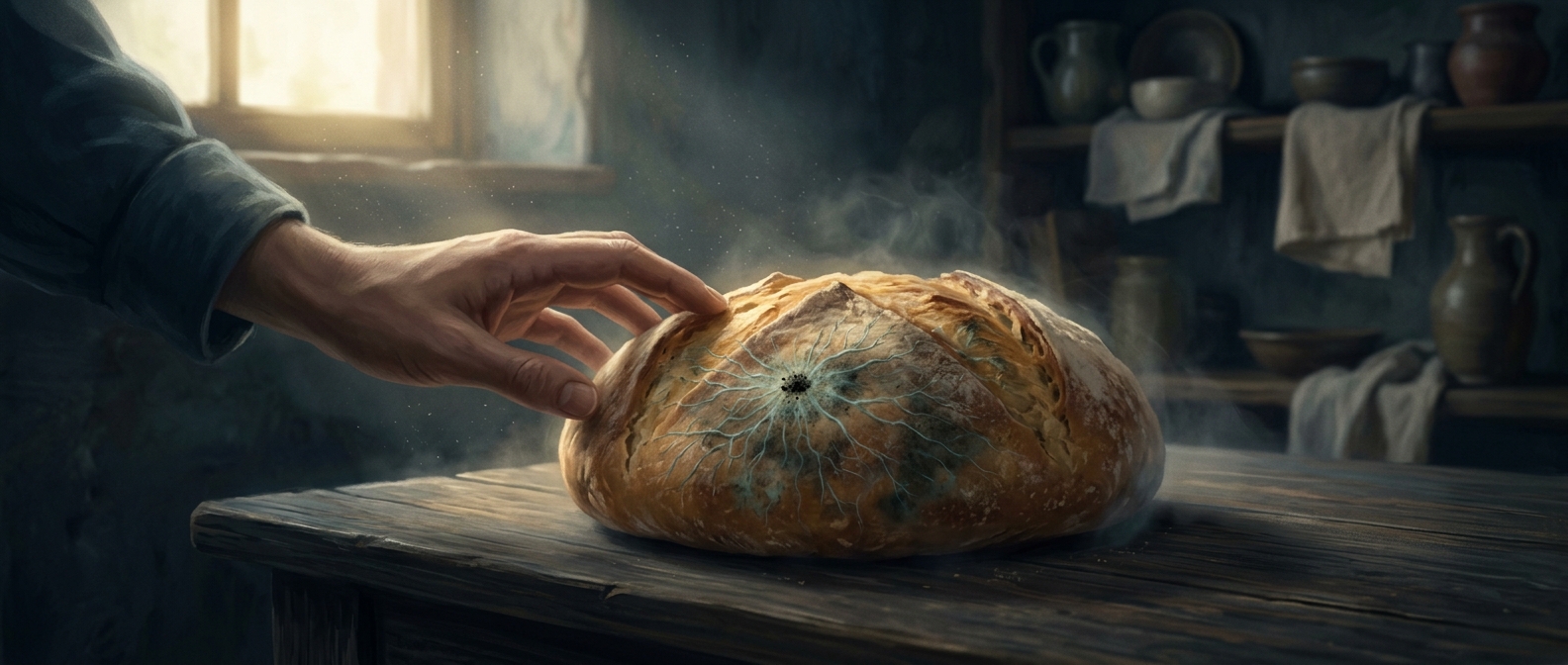
The visible spot is only the surface of a colony
A mold colony grows through bread with microscopic filaments called hyphae. They spread into the crumb’s tiny air spaces, drawing nutrients from the bread as they go. The colored patch is the part that has grown conspicuous—not a reliable outline of everything the mold has reached.
Bread’s soft, porous structure makes this different from mold on a firm food such as a hard cheese: there is no dependable way to trim away a contaminated section while knowing the rest is clear. The filaments can be too small to see, and growth may extend beneath apparently clean areas.
Why trimming is not a safe fix
A knife removes what it touches, but it cannot show where the hidden growth ends. Mold can also release spores—tiny particles that help it reproduce—which may spread to other parts of the loaf or nearby food during handling. The bread may look and smell normal in those places, but that does not establish that they are mold-free.
The practical choice is to discard the whole loaf rather than cut around the spot. That matters especially when bread is stored together in a bag: one visible patch is a reason to check nearby slices, not proof that only the discolored piece needs attention.