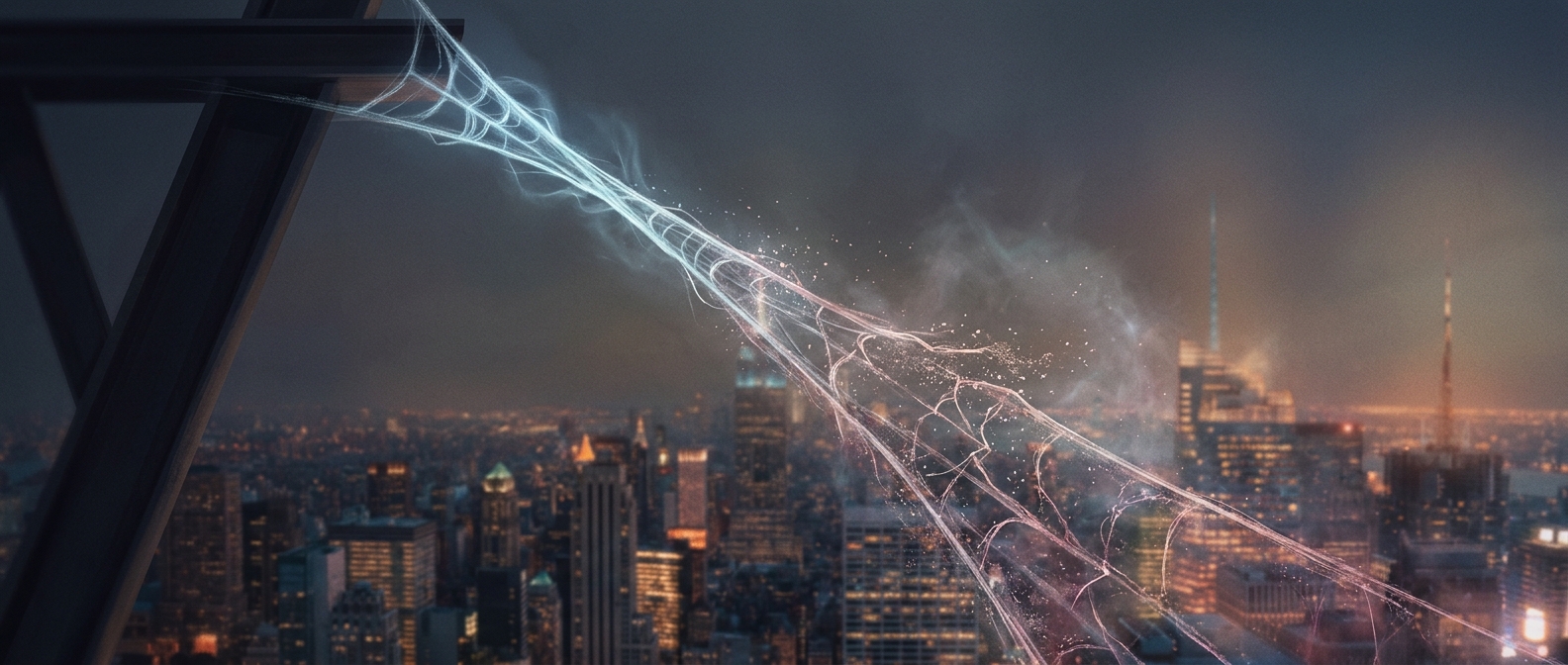
A temporary tool, not permanent infrastructure
Spider-Man’s webbing has to do two jobs that pull in opposite directions: hold a person or object firmly in the moment, then stop being a problem afterward. A strand strong enough to restrain a moving opponent could otherwise become litter, block a drain, or leave a building covered in difficult-to-remove material.
The timed breakdown makes the web fluid part of the design rather than just a convenient superpower. Peter can use it to stop danger quickly without turning every rescue or fight into a cleanup job that lasts for years. Its brief lifetime also keeps his equipment suited to improvisation: webbing can serve as a restraint, a line, or a temporary support without being treated as a lasting repair.
The limit shapes how Spider-Man uses it
The webbing is useful precisely because it is temporary, but that also means it cannot substitute for a permanent fix. A web holding something in place is a short-term measure; someone still has to address the underlying danger before the strands disappear.
That small design choice makes Spider-Man’s inventions feel tailored to his role. He intervenes, buys people time, and moves on—without leaving the city to inherit his sticky footprints.