A sandwich built around its filling
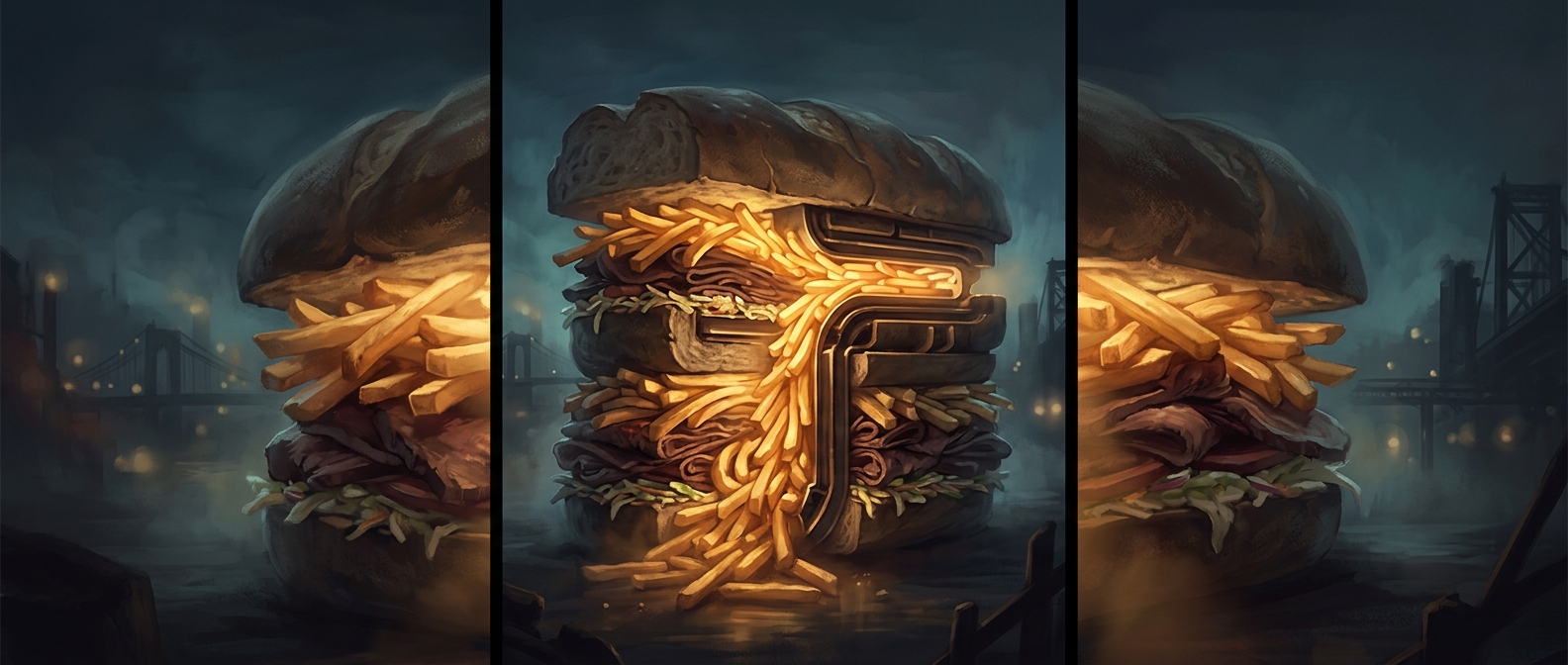
In Pittsburgh, fries are not merely served beside certain sandwiches; they are packed into the sandwich itself. The arrangement turns a plate meal into a single bundle: bread holds the meat and toppings together, while the fries add a substantial layer without requiring a separate side dish.
That design suits a quick meal on the move. A worker can hold the sandwich in one hand instead of balancing a plate, fork, and separate portion of fries. The bread also gives the filling a practical boundary, keeping the meal together as it is carried and eaten.
Why add coleslaw, too?
The slaw is more than another topping. Its vinegar tang and crisp texture offset the weight of bread, meat, and fried potatoes. Together, the fries and slaw make the sandwich feel like a full meal while giving it contrasting textures: soft bread, crisp fries, and cool, crunchy cabbage.
The combination is a small piece of Pittsburgh food culture with a clear practical logic. What might elsewhere arrive as sandwich, fries, and slaw on a tray becomes one handheld order—its sides folded into the thing you came to eat.