Why Tampa puts salami in its Cuban sandwich
In Tampa, the extra layer of salami points to the city’s history as a meeting place for Cuban, Spanish, and Italian communities. The sandwich took shape in Ybor City, Tampa’s historic cigar-making district, where workers from different backgrounds lived and ate alongside one another. Salami became part of the local recipe—not as a garnish, but as a marker of the city that made the sandwich its own.
A small change with a local logic
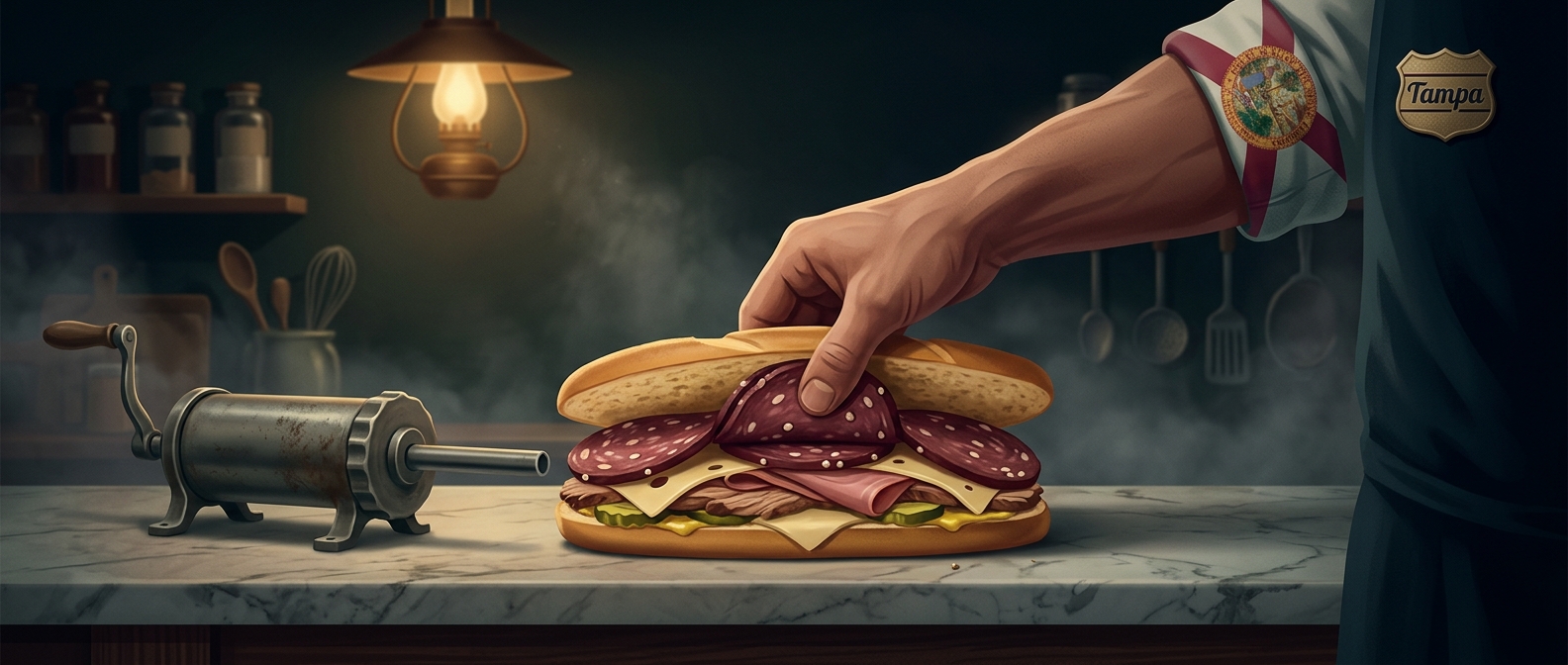
Salami brings a richer, more savory flavor to the pressed sandwich, which already combines pork, cheese, pickles, and mustard. Pressing warms the filling and crisps the bread, bringing the ingredients together; the salami adds another layer rather than replacing the roast pork or ham.
Miami’s customary version leaves it out. That difference is less a question of which sandwich is authentic than of how a shared food changes as it settles into different communities. Recipes travel, but the everyday ingredients people adopt can become local tradition.
More than a menu distinction
The salami is an easy way to recognize Tampa’s take, and ordering a Cuban there often means getting that fuller, distinctly local combination. In a city shaped by several immigrant communities, one slice of salami tells a compact story about how their foodways met.