A monster built from what the camera could not explain
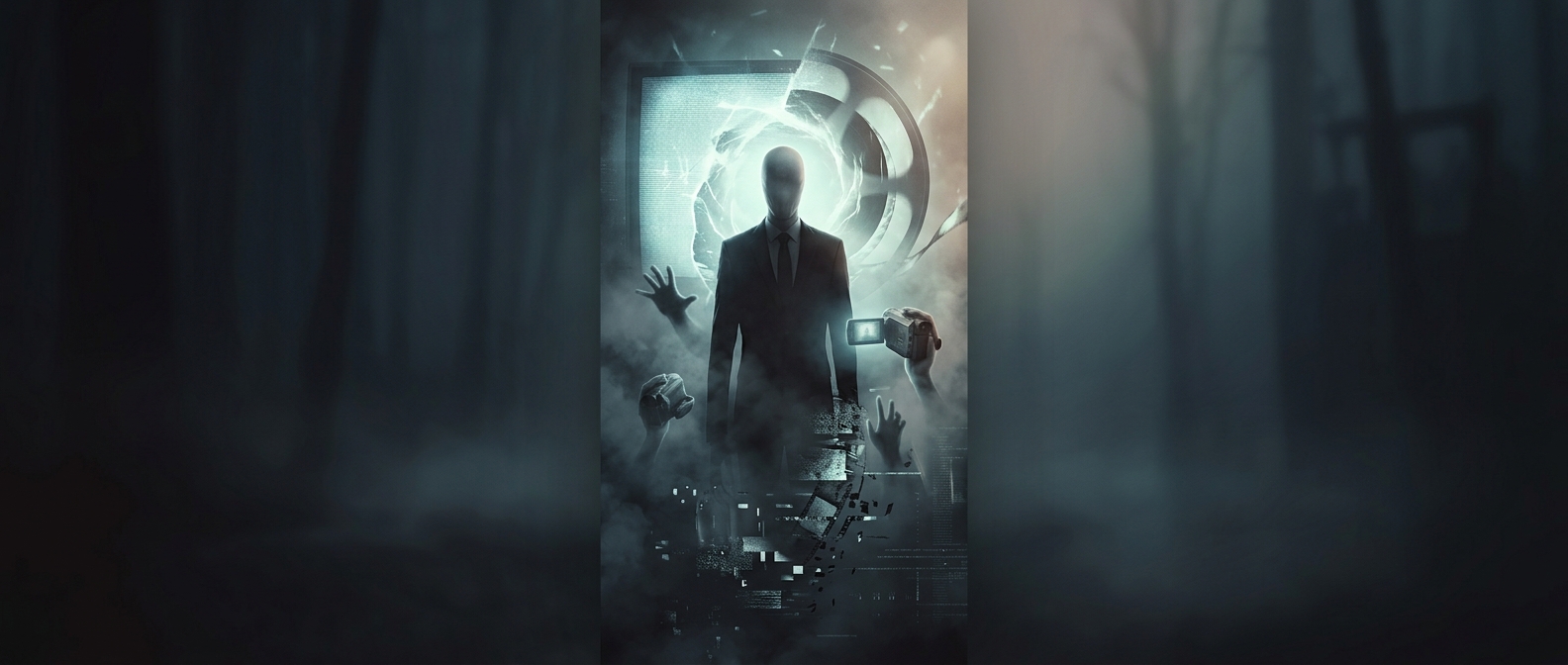
Marble Hornets made Slender Man frightening less through a clear origin story than through a problem of evidence: the characters had recordings, but the recordings never gave them a complete answer. The web series presents much of its story as recovered video from a troubled student film project. As the footage accumulates, ordinary images—an empty street, a figure at a distance, a moment of static—start to look like clues.
That format gives the audience the same limited tools as the characters. A camera can preserve an encounter, but it can also lose focus, break up, or stop recording at the worst moment. The distortion turns a technical failure into part of the threat: viewers strain to see what the characters may have seen, while the interruption denies them certainty.
A symbol and a trail of fragments
The Operator symbol gave the series a compact visual marker. It could appear in a frame or elsewhere in the story without explaining itself, so viewers could recognize a connection before they understood what that connection meant. The symbol functioned like a recurring piece of evidence, not a full explanation.
The series also spread its narrative across vlogs and hidden online channels. That made watching feel less like following a single, finished film and more like assembling a case from scattered updates. Each new fragment could revise the meaning of an earlier one, and gaps invited viewers to compare details and speculate together.
Why the format traveled
This structure suited the internet: videos could arrive over time, and viewers could revisit them, pause on a frame, and discuss possible links. The monster’s limited visibility was an advantage. A fully explained creature would close off questions; a partly seen figure, a recurring mark, and unreliable footage left room for the audience to keep searching.
The result was a horror icon defined not just by how he looked, but by the way people encountered him: through incomplete recordings that seemed to contain one more clue than they could confidently prove.