How a Sea Star Rebuilds an Arm
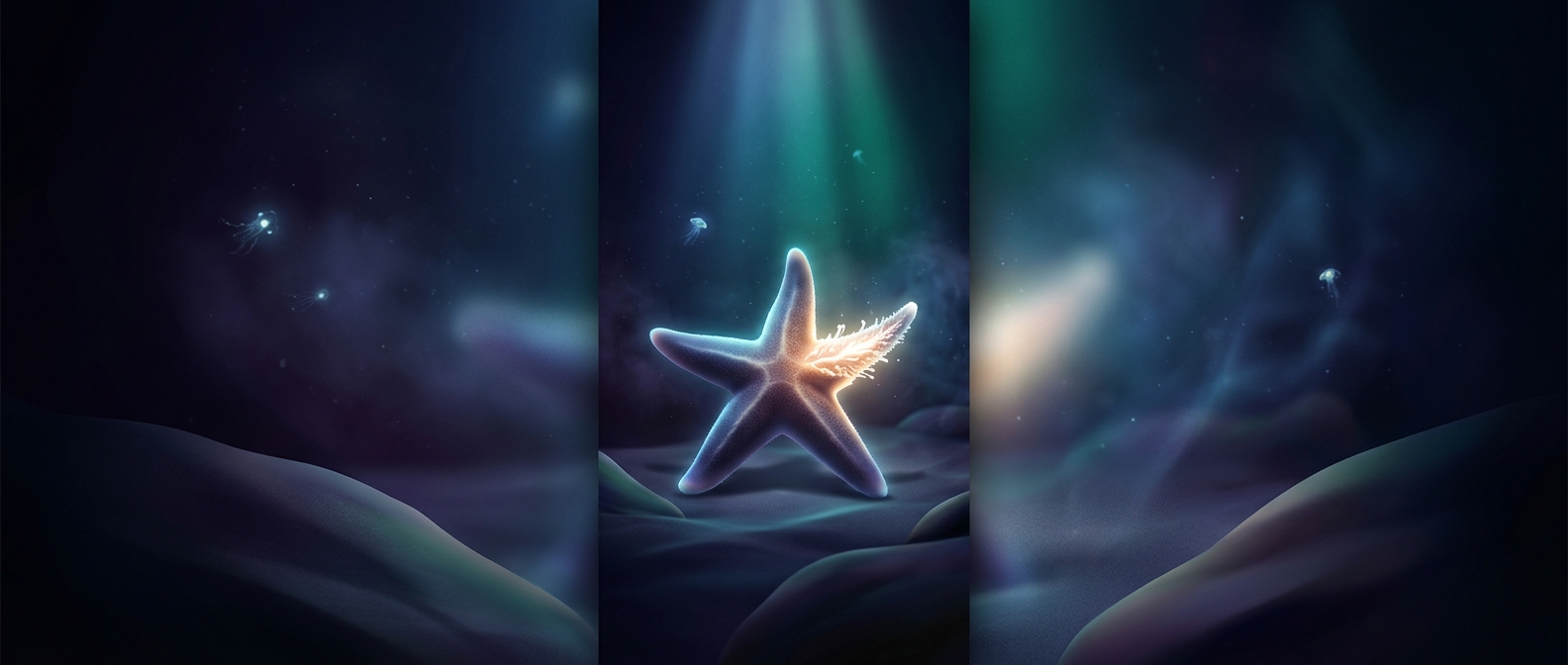
Losing an arm is not simply a matter of growing a replacement limb. The animal first has to close the wound, then rebuild a complex structure containing skeletal plates, muscles, nerves, and tube feet—the small, suction-cup-like appendages it uses to move and handle food. Cells near the injury help form new tissue, while surviving tissues supply the cells and signals needed to organize the replacement.
The new arm develops gradually. At first it may be a small projection, and it takes time for its internal structures and working tube feet to form. Regrowth is therefore a repair process, not an instant swap for a lost part.
Why the Central Disk Matters
The central disk is the body’s hub, where the arms meet and essential structures are concentrated. A detached arm may contain plenty of living tissue, but that does not necessarily give it the organization needed to become a complete animal. In species capable of forming a new sea star from a fragment, the piece generally needs to include part of the disk as well as an arm.
That disk tissue provides more than a connection point: it includes the starting material for rebuilding the body’s central region. Without it, an arm can be a remarkable piece of regrowth in progress—or simply a lost limb, rather than a starter kit for another sea star.
Regeneration Has Limits
The ability varies among sea stars, and even a capable species needs the right tissues to survive and rebuild. Regenerating an arm restores a missing part; producing a whole new animal requires a much more demanding reconstruction. The distinction is why a detached limb is not automatically a second sea star.