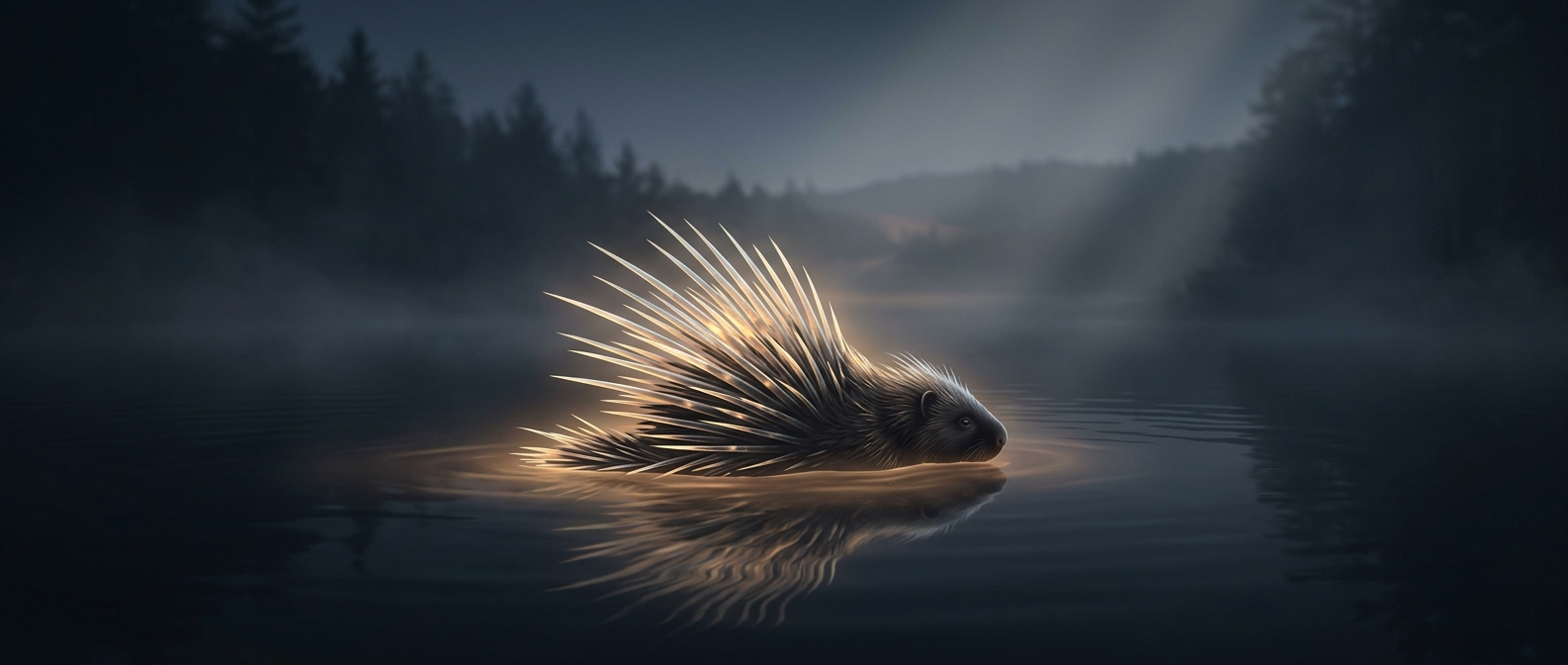
How a Porcupine’s Coat Traps Air
A porcupine’s quills are modified hairs, and their layered coat can hold pockets of air close to the animal’s body. Air is much less dense than water, so trapping it adds buoyancy: the coat helps push the porcupine upward rather than letting it sink as readily. The effect is a bit like the air trapped in a life jacket, though the quills themselves are not sealed flotation chambers.
Buoyancy Is Not the Same as Swimming
Floating only keeps an animal at the surface; it does not move it in a useful direction. A porcupine still has to paddle with its limbs to travel through water and steer. Its coat supplies lift, while its legs provide propulsion—the same basic division of jobs found in many floating animals, even when their bodies are built very differently.
The distinction matters because a buoyant coat can make swimming less demanding without making a porcupine an especially fast or graceful swimmer. It helps the animal stay up; the strokes still have to do the work of getting it across.